
Kratom Extracts vs Powders: A Buyer’s Guide to Potency & Usage
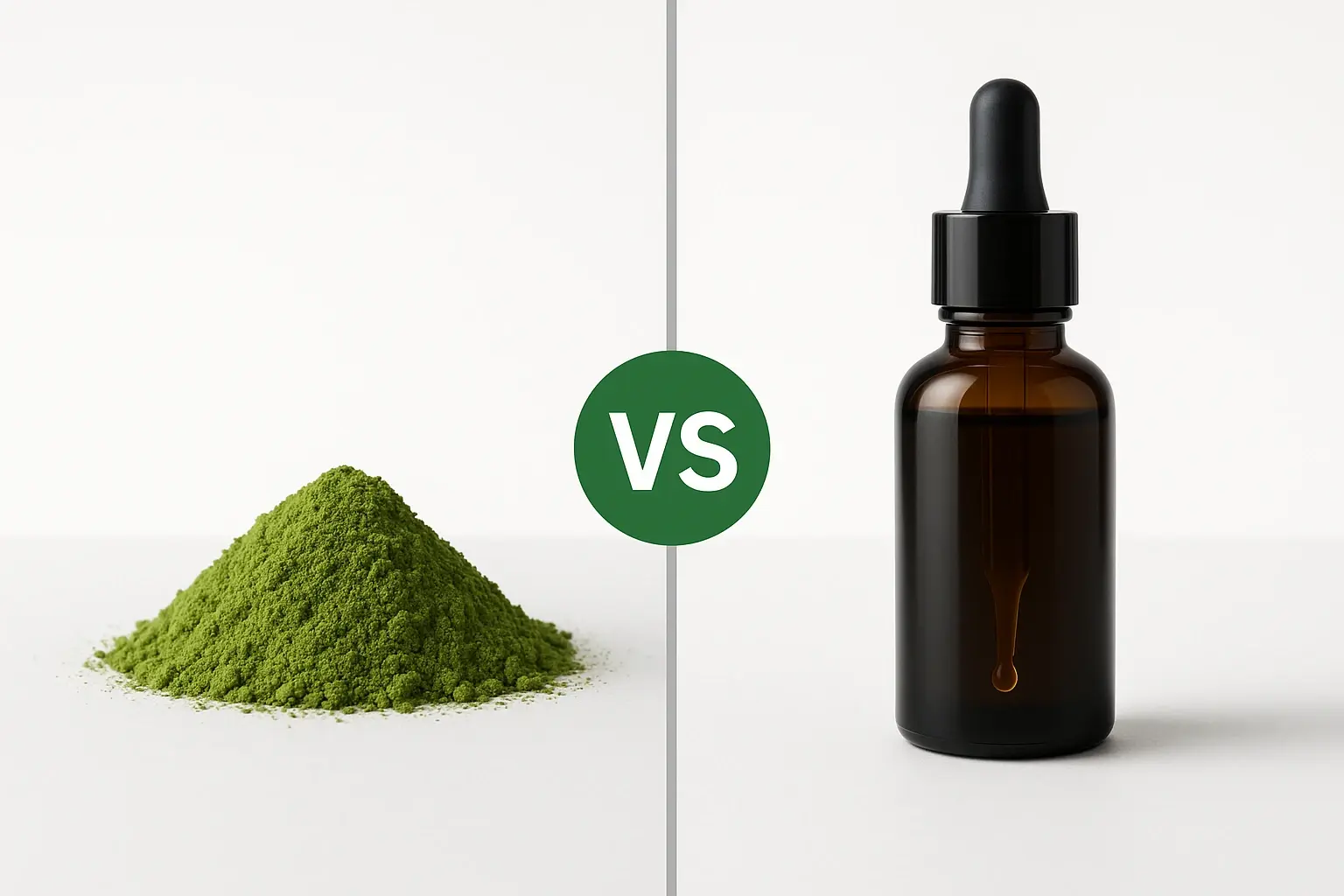
You’ve likely reached a point in your kratom journey where the standard routine isn’t quite hitting the mark, or perhaps the sheer volume of powder required to achieve your desired results has become cumbersome. This is the pivot point where most users start eyeing extracts. But looking at the price tags and the intimidating “50x” or “100x” labels often leads to hesitation.
Is the higher cost of an extract justified by the efficiency? Or is the traditional powder still the superior “full-spectrum” choice for your specific biology?
To make this decision, you don’t need marketing hype—you need a framework. The liquid extract market is projected to grow significantly over the next decade as users seek convenience, but moving from raw leaf to concentrated alkaloids changes more than just your dosage. It alters the onset time, the duration of effects, and the risk profile regarding tolerance.
This guide provides the technical comparison you need to evaluate whether to stick with the ritual of powder or upgrade to the precision of extracts.
The Core Difference: Concentration vs. Complexity
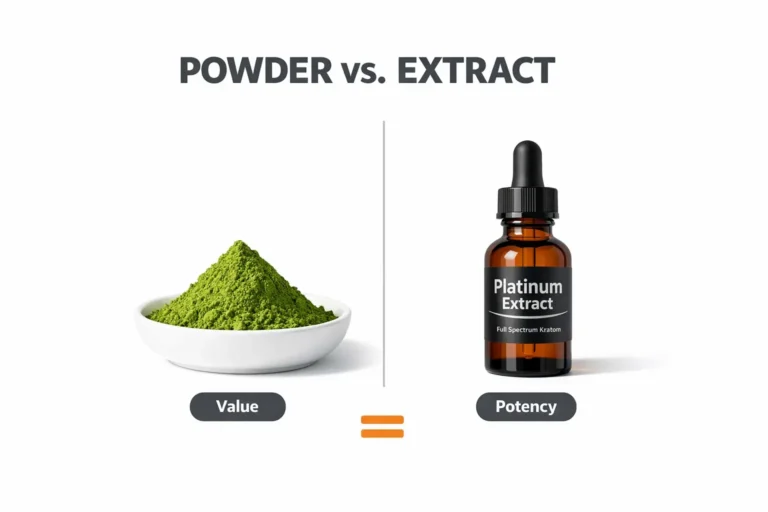
At a fundamental level, the choice between powder and extract is a trade-off between the “entourage effect” and targeted potency.
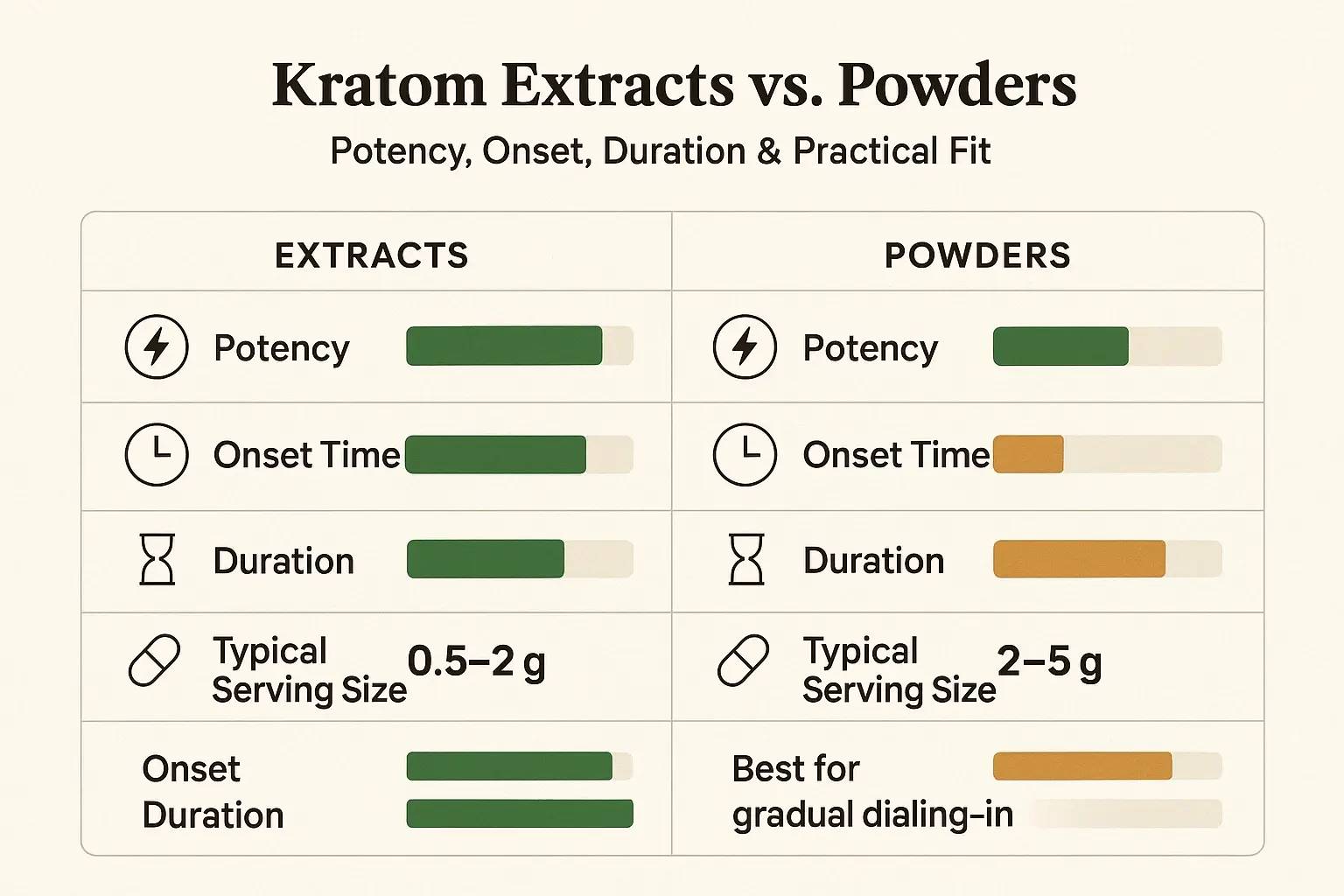
Kratom Powder is the raw, dried leaf of the Mitragyna speciosa tree, ground into a fine dust. When you consume powder, you are ingesting the entire plant matter. This means you are getting the full spectrum of over 40 alkaloids, not just the heavy hitters. This complexity is why powder often provides a “rounder,” longer-lasting experience—the minor alkaloids modulate the effects of the major ones.
Kratom Extract is the result of processing that raw leaf (usually through ethanol or CO2 extraction) to isolate and concentrate specific alkaloids, primarily Mitragynine and 7-hydroxymitragynine. The goal is to remove the plant matter (cellulose) and leave behind the active engine.
Decoding the Potency: The “X” vs. Percentage Myth
The most confusing aspect of buying extracts is the labeling. You will often see products labeled as “100x” or “Gold Reserve.” Here is the reality check that most vendors won’t give you:
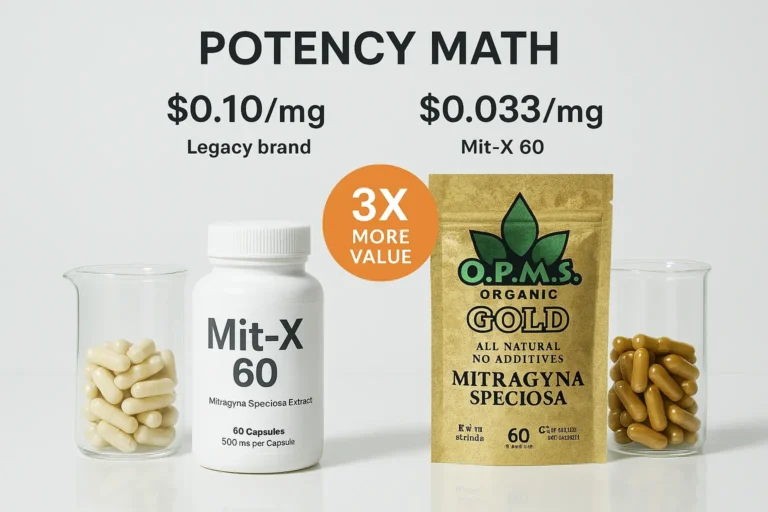
“100x” is a manufacturing ratio, not a potency guarantee.It simply means 100 kilograms of raw leaf were used to make 1 kilogram of extract. If the starting leaf was low quality, the resulting “100x” extract will still be mediocre.
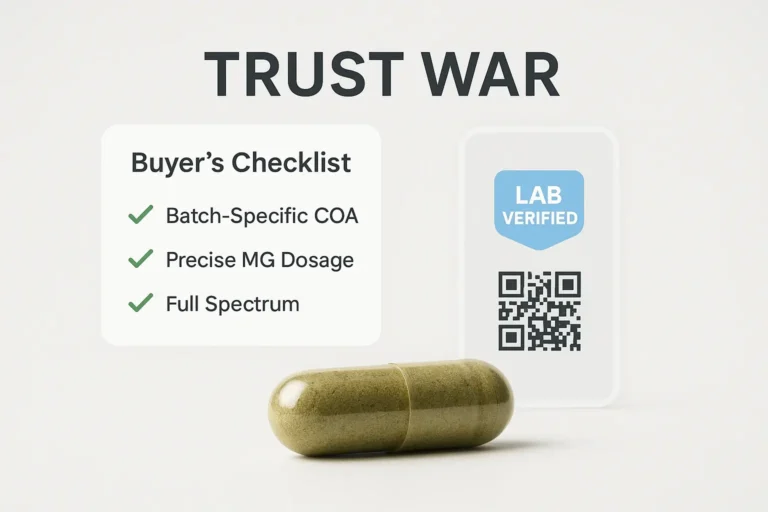
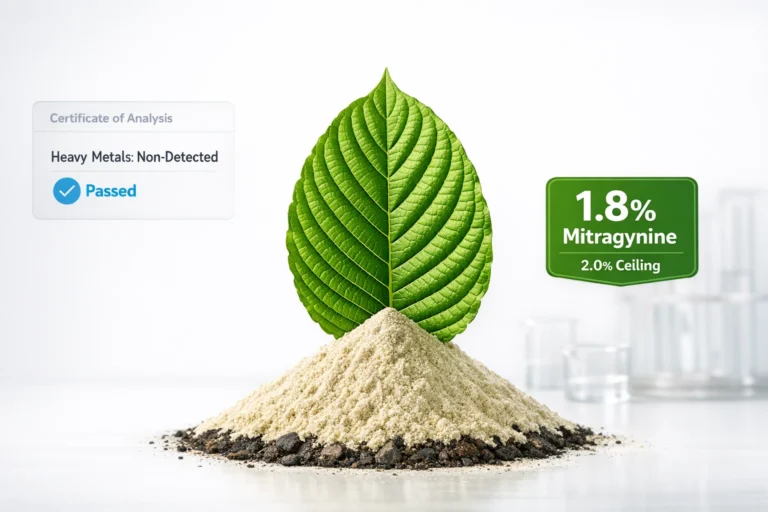
To evaluate potency accurately, you must ignore the “X” and look for the % Mitragynine or Total Alkaloid Content (TAC) listed on the product’s Certificate of Analysis (COA).
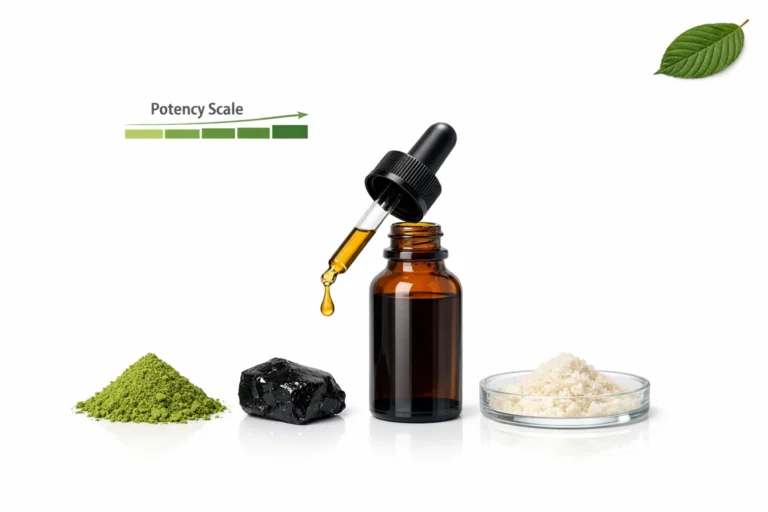
- Average Powder: Typically contains 1.2% to 1.8% Mitragynine.
- Standard Extract: Can range from 20% to 45% Mitragynine.
- Isolates: Can reach upwards of 80% purity.
If you don’t look at the percentage, you are essentially buying a car based on the size of the gas tank rather than the horsepower of the engine.
The Mitragynine Math: A Quantitative Framework
This is where we remove the guesswork that leads to bad experiences. Many users accidentally take too much extract because they treat it like a “stronger tea.” It isn’t. It is a concentrate.
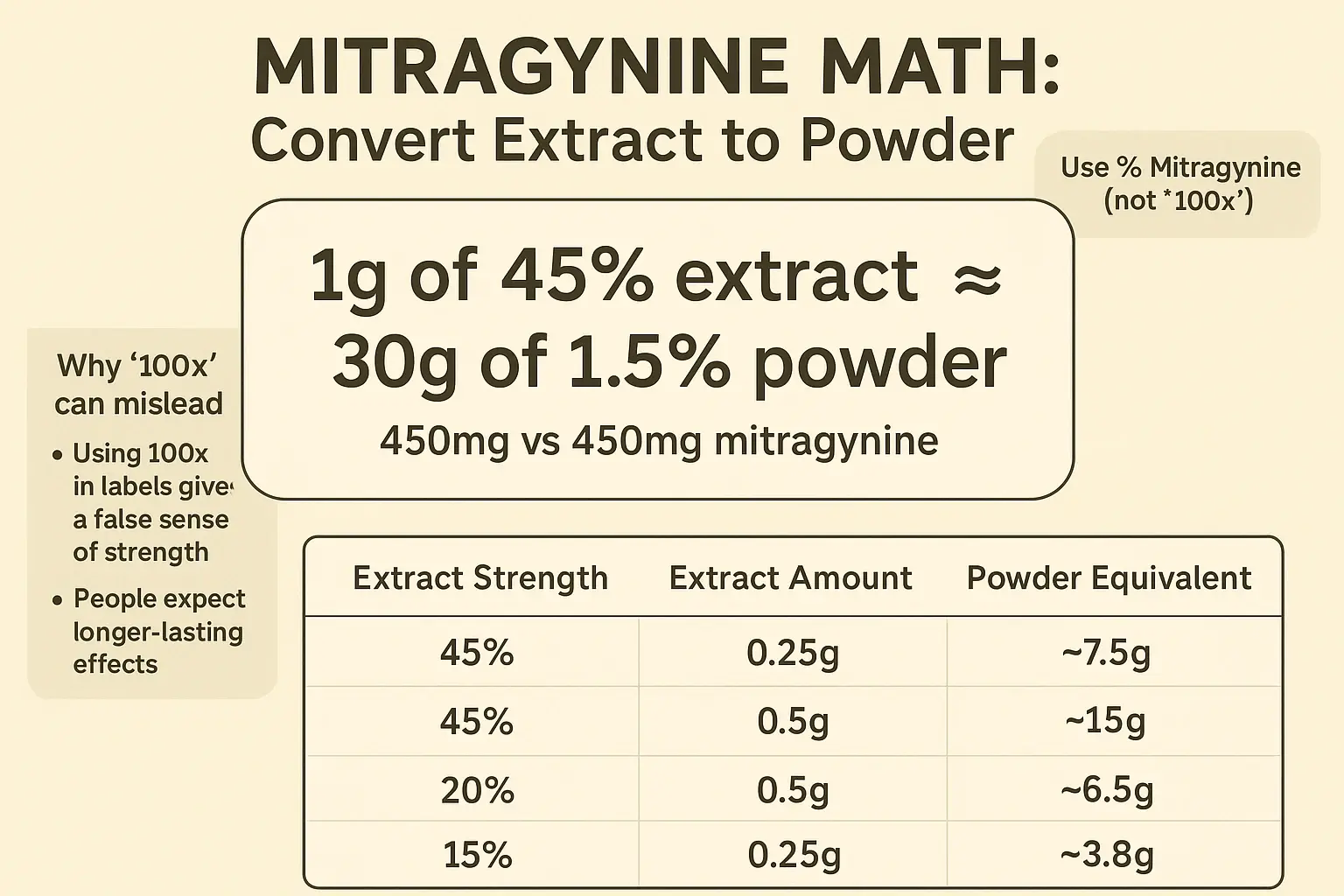
To switch safely, you need to calculate your Mitragynine Equivalent.
Let’s say your standard dose is 5 grams of Maeng Da powder.
- 5 grams of powder @ 1.5% Mitragynine = 75mg of active Mitragynine.
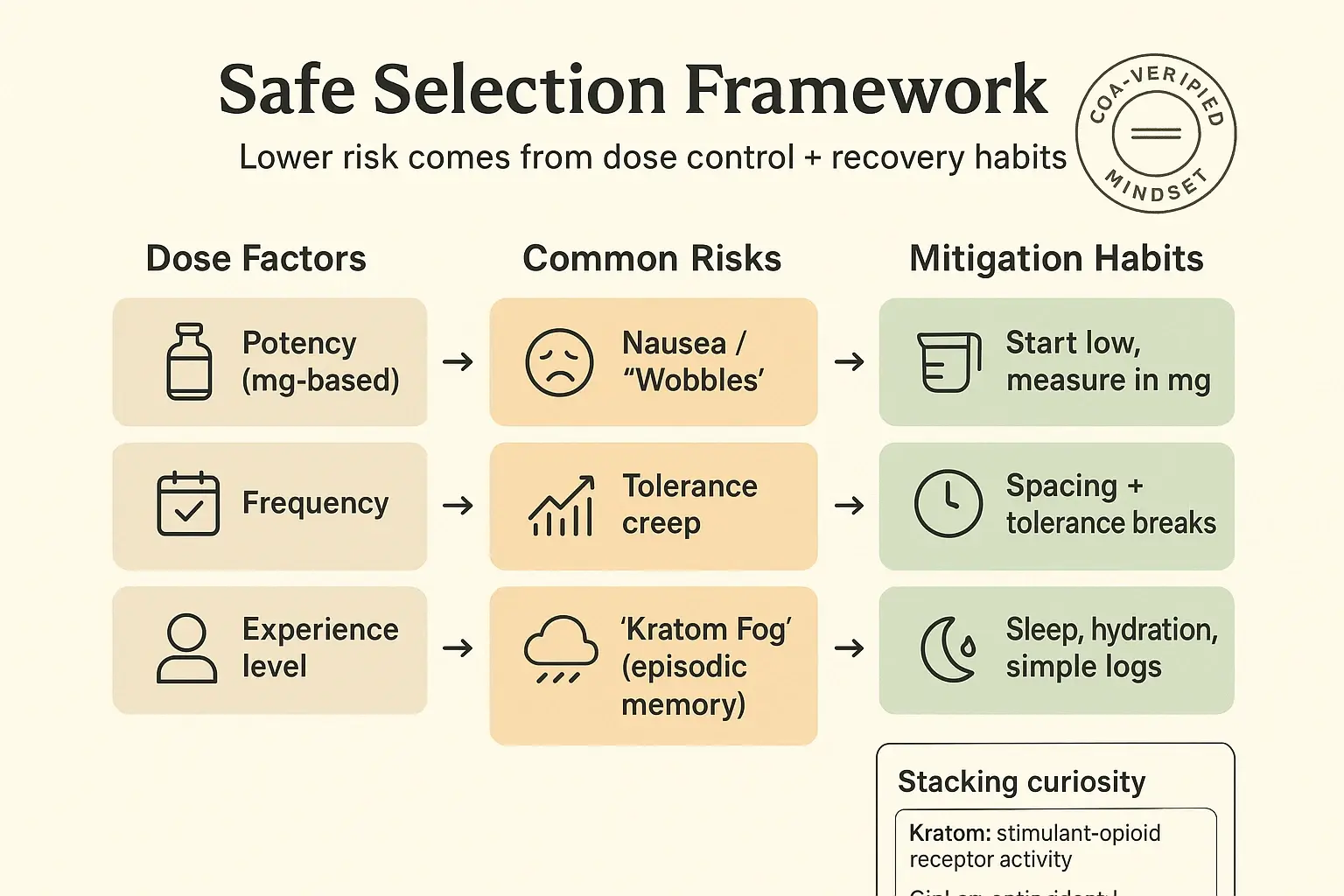
If you buy a liquid extract shot that contains 150mg of Mitragynine per bottle, and you drink the whole thing, you have just doubled your usual dose. This is the primary cause of the “wobbles” (nausea, dizziness, and eye-wobble).
Use this framework to calibrate your switch:
Safety, Cognitive Health, and Tolerance
Moving to extracts requires a higher degree of responsibility. Because extracts bypass the digestion of raw plant fiber, the alkaloids hit your bloodstream faster and in higher concentrations.
The “Kratom Fog” and Memory
Research into kratom exposure has indicated links between chronic high-dose usage and deficits in visual episodic memory. In simpler terms, if you are using high-potency extracts daily without breaks, you may experience “brain fog” or difficulty retaining new visual information. This is a sign that your dosage is too high or your frequency is too intense.
The Stacking Strategy
Sophisticated users often look to bridge their wellness routine with neuroprotective supplements. For example, some research suggests Ginkgo Biloba may offer antioxidant properties that support neurological health, which is why you will sometimes see it discussed in forums alongside kratom use. While kratom acts on dopamine receptors, ensuring your broader supplement stack supports general cognitive function is a smart “insurance policy” for long-term users.
Managing Tolerance
The golden rule of extracts: Do not let them become your “new normal.”Because extracts saturate receptors so quickly, they spike tolerance faster than powder.
- The Strategy: Use extracts for specific, high-need situations (e.g., severe discomfort, intense work focus), and stick to powder for daily maintenance.
- The Reset: If you find 5g of powder no longer works after using extracts, take a 48-hour break to reset your baseline.
Comparison Summary: Which Fits Your Lifestyle?
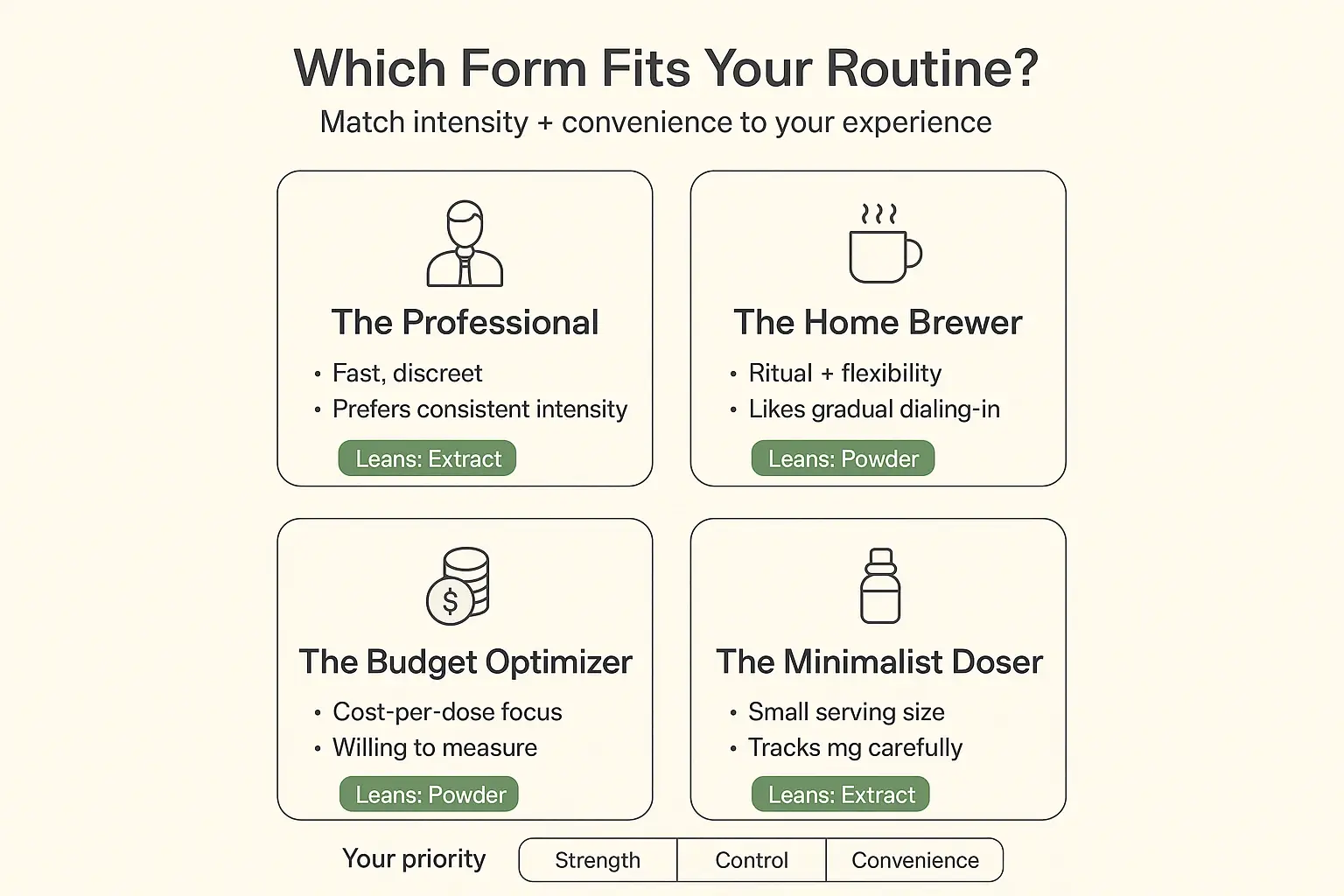
Your choice shouldn’t just be about strength; it should be about utility.
Choose Powder If:
- You value the “Entourage Effect”: You want the balanced, longer-lasting effects that come from the full spectrum of alkaloids.
- Cost is a priority: Powder remains the most economical way to use kratom.
- You possess a “Purist” mindset: You prefer the plant in its uncompromised, natural state.
Choose Extracts If:
- Digestion is an issue: You are sensitive to consuming large amounts of plant fiber (which can cause bloating).
- You need precision: You want to know exactly how many milligrams of Mitragynine you are taking, down to the decimal.
- Convenience is King: You need a portable solution that doesn’t require scales, spoons, and preparation time.
Frequently Asked Questions
Can I mix powder and extract?
Yes, this is often called “spiking.” Many users add a very small amount of extract (0.1g) to a reduced dose of powder. This enhances the potency while retaining the full-spectrum profile of the leaf. However, this requires careful math to avoid “wobbles.”
Why do extracts make me nauseous but powder doesn’t?
Nausea with extracts is almost always a math error. Because the onset is rapid (10-15 minutes vs. 45 minutes for powder), the peak hits your system all at once. If you miscalculated the Mitragynine content, your body rejects the overload. Always calculate your dose based on milligrams of Mitragynine, not the volume of liquid.
Are liquid shots different from extract powders?
Chemically, they are similar, but liquid shots are often water-based tinctures that may absorb even faster than dry extract powders. Liquid shots are also more likely to contain other additives for flavor or preservation, so always check the label for “unaltered” ingredients.
Final Thoughts
The transition from powder to extract isn’t just a purchase—it’s a step up in how you manage your regimen. Whether you stick to the uncompromised tradition of raw powder or utilize the targeted efficiency of extracts, the goal remains the same: informed, safe, and effective usage.
If you are ready to evaluate options, start by checking the Mitragynine percentage on our extracts to find the perfect match for your current tolerance level.