
Choosing the Best White Maeng Da Kratom: Purity, Potency, and Value Comparison Guide
You’ve likely noticed a discrepancy in the kratom market. One month, a bag of White Maeng Da provides the clean, focused energy you expect; the next month, a bag with the exact same label from a different vendor feels lackluster or, worse, jittery.
If you are evaluating White Maeng Da (WMD) beyond the “gas station” impulse buy, you are likely looking for consistency. You aren’t just buying a powder; you are investing in productivity, focus, and a specific alkaloid profile.
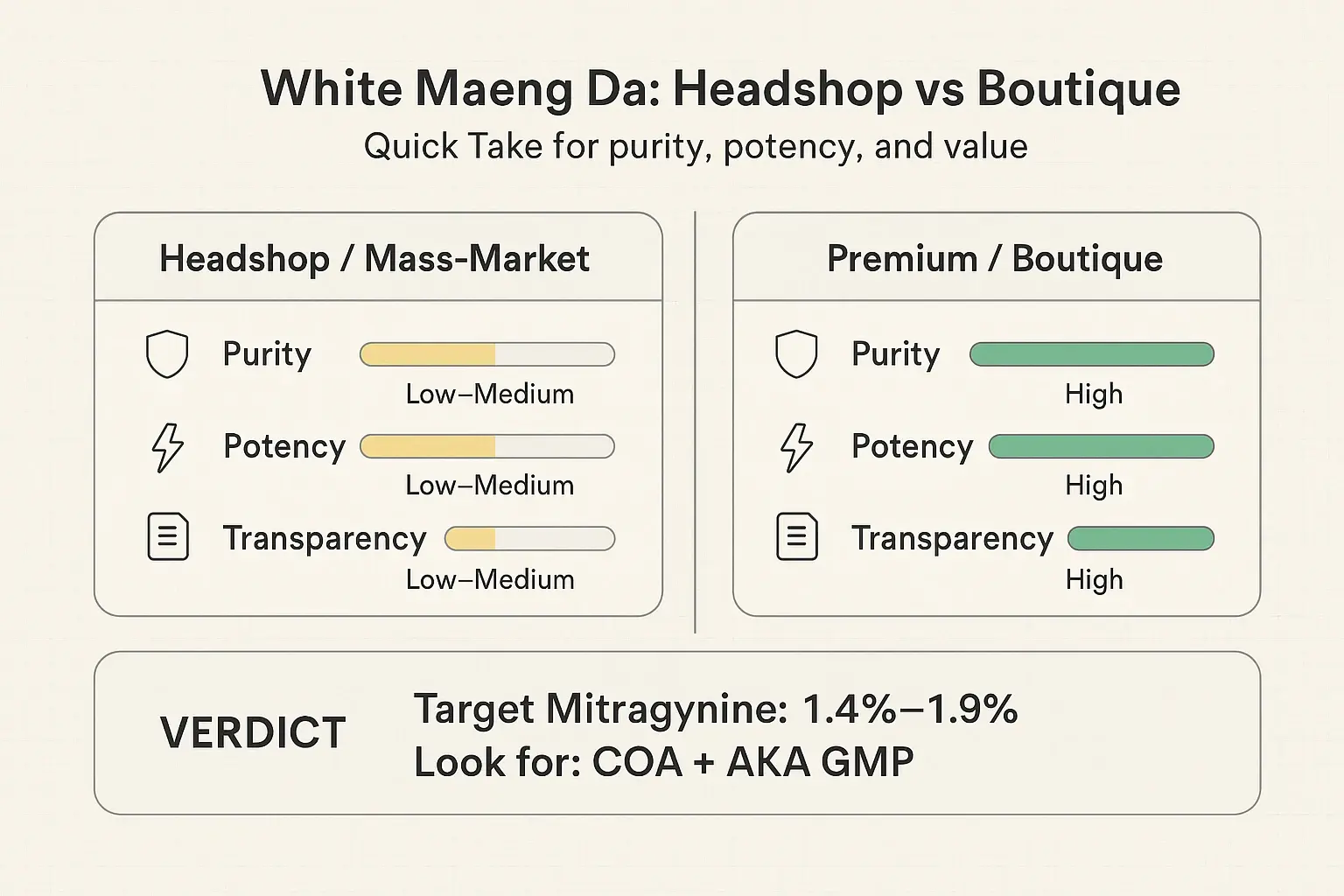
The reality is that the WMD market is currently split. On one side, you have “Mass-Market” brands readily available in physical retail shops. On the other, you have “Premium/Boutique” vendors operating with strict lab transparency. This guide cuts through the marketing noise to help you evaluate purity, potency, and value, ensuring your next purchase is based on data, not just packaging.
The Quick Take: Mass-Market vs. Boutique Quality
Before diving into the alkaloid science, it helps to understand the landscape. Most users start with accessible brands like Krave or other headshop staples. These offer convenience but often lack the specialized batch data required by high-intent users.
When you transition to a specialized online vendor, the conversation shifts from “availability” to “precision.”
What is White Maeng Da, Really? The “Hybrid” Reveal
Here is the industry secret that few mass-market brands will tell you: White Maeng Da is rarely a single strain. In the kratom industry, “Maeng Da” loosely translates to “Pimp Grade”—a marketing term originally used to denote high potency.
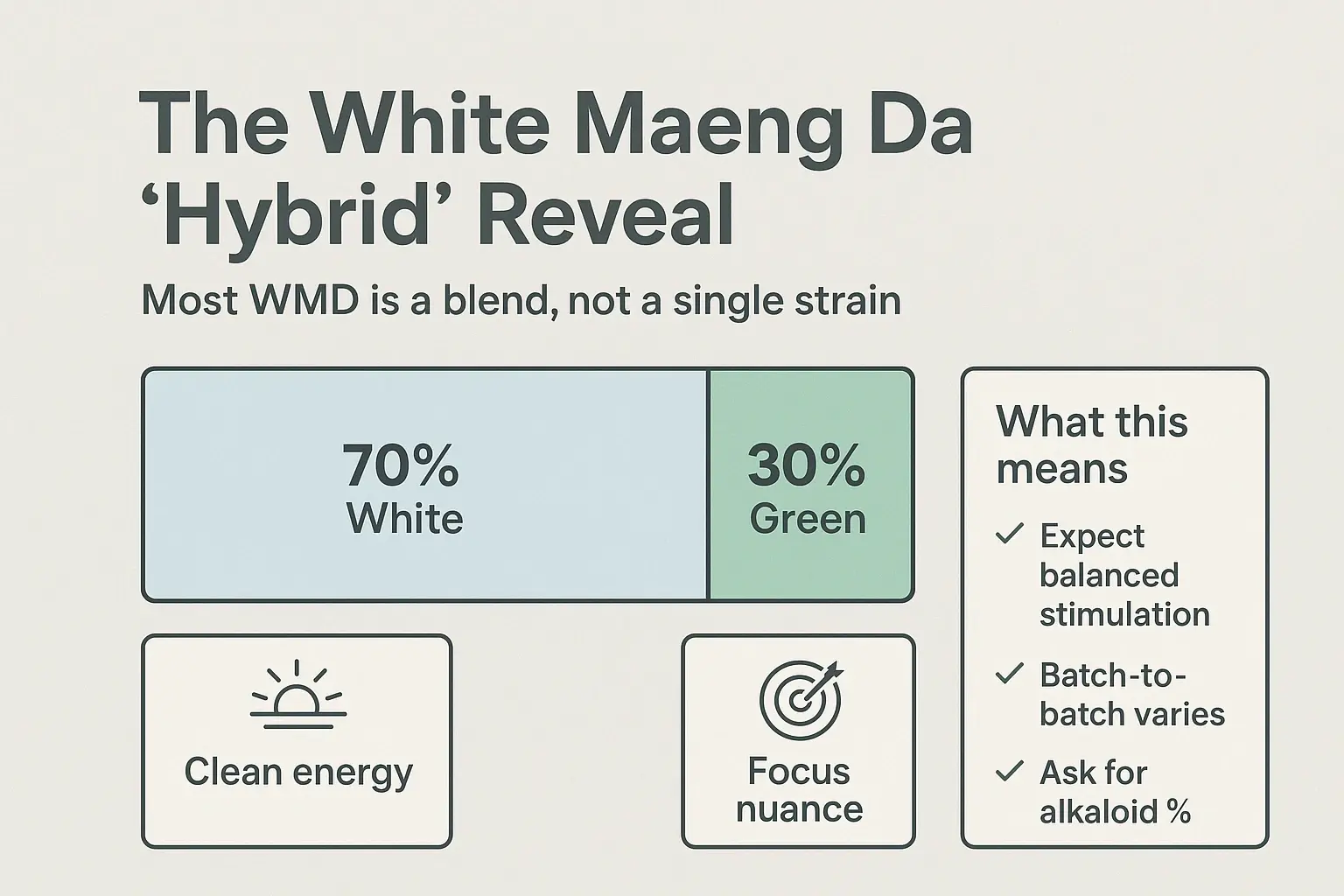
To achieve the signature effects of WMD—high energy without the overwhelming jitters of a pure white vein—premium vendors utilize a Blended Hybrid approach.
The 70/30 Ratio
A true, premium White Maeng Da is typically crafted using a specific ratio:
- 70% White Vein Kratom: Provides the primary “clean energy” and alertness.
- 30% Green Vein Kratom: Adds “legs” (duration) and mood-enhancing nuance to balance the stimulation.
This intentional blending is why a high-quality online batch feels different than a generic retail batch. Mass-market versions often skip this precision, resulting in a product that feels “flat” or overly aggressive. When evaluating a vendor, you are looking for this balance—a product that is unaltered by fillers but heavily curated in its alkaloid profile.
The Purity Audit: How to Read a COA Like a Pro
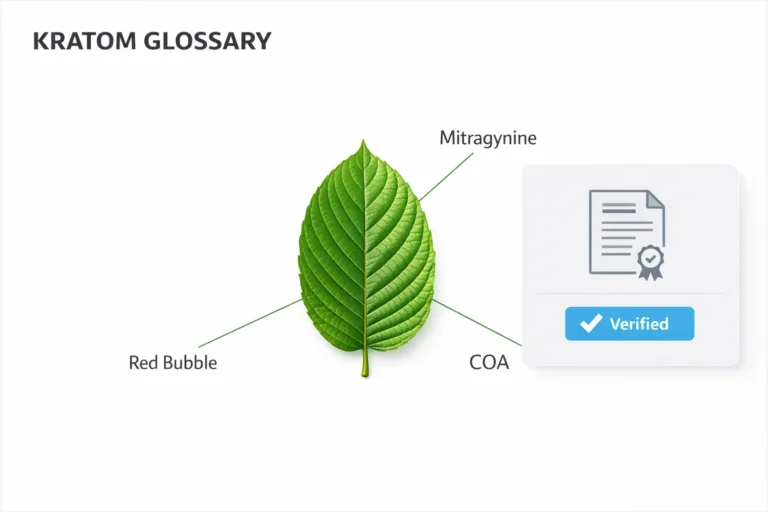
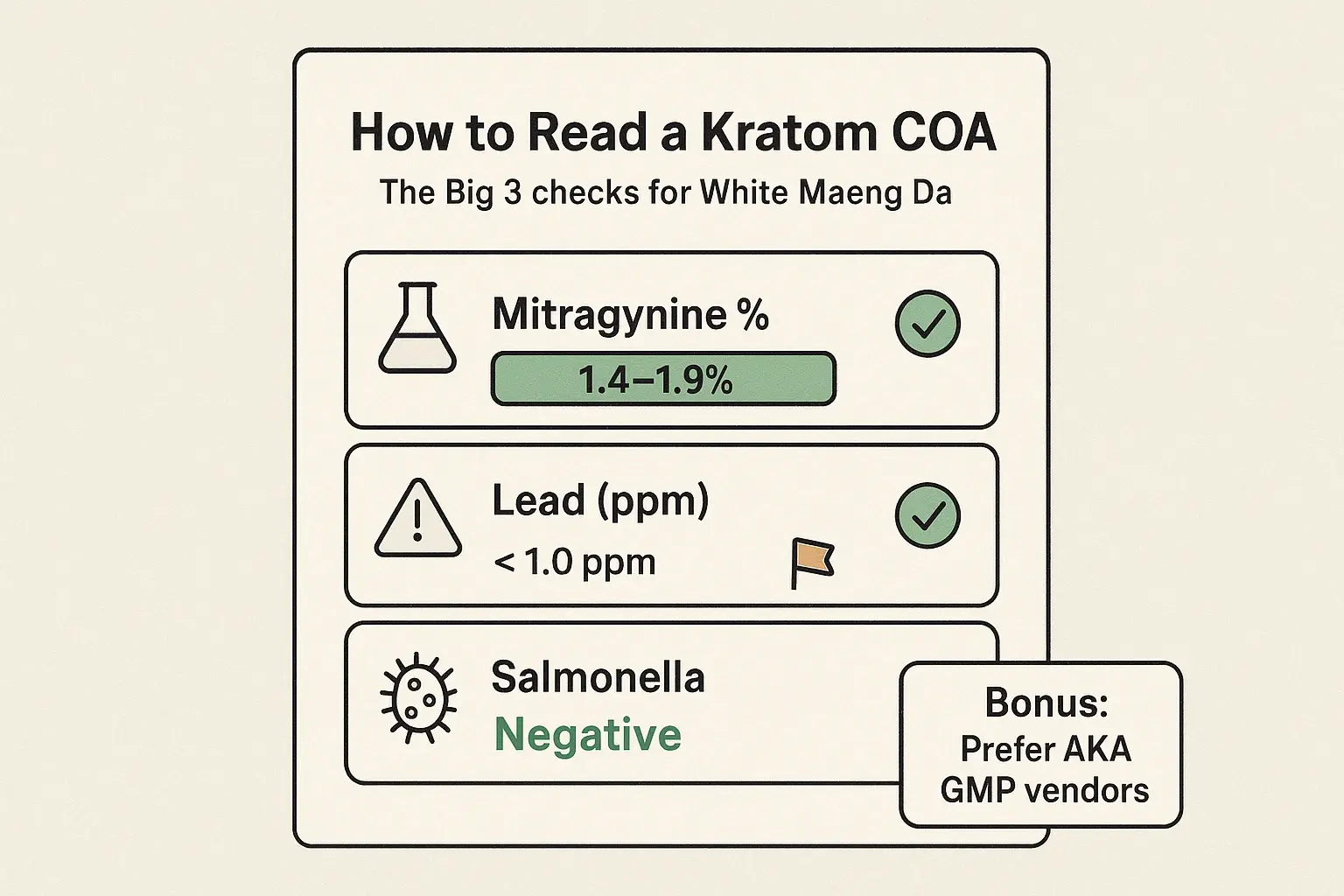
The most critical step in your evaluation journey is the Certificate of Analysis (COA). In a post-2024 landscape, simply having a COA is not enough; you need to know how to interpret it to ensure you aren’t consuming heavy metals or weak leaf.
Many competitors link to COAs, but few explain the danger zones. Here is your “Purity Scorecard” for auditing any vendor:
1. The Mitragynine Benchmark
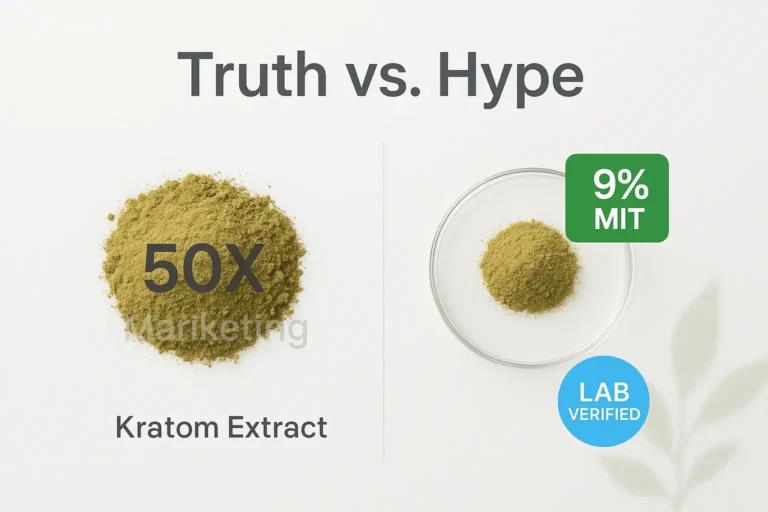
For White Maeng Da, you are “potency hacking.” You aren’t just buying powder; you are buying Mitragynine.
- Weak/Standard: < 1.2% Mitragynine
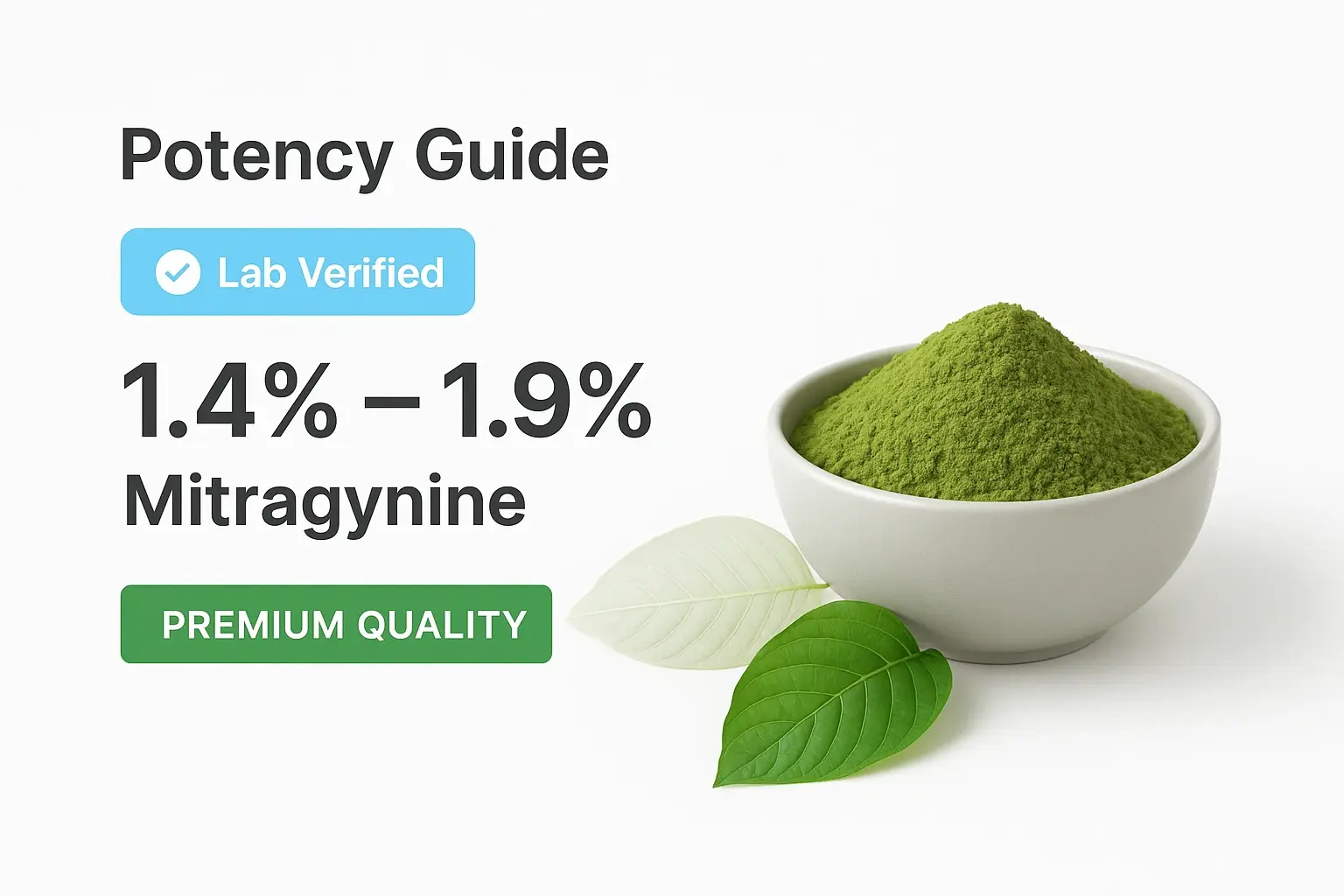
- Premium Target: 1.4% to 1.9% Mitragynine
- Significance: If a vendor charges premium prices for a batch testing at 1.1%, you are overpaying for the active ingredient.
2. The Lead Threshold
Recent investigations (including reports from the Tampa Bay Times) have highlighted that lead is the most common heavy metal found in non-GMP batches.
- The Danger Zone: Anything approaching the limit without strict oversight.
- The Safety Standard: Look for results significantly below 1.0 ppm (parts per million).
- Context: Because daily users might consume 3g to 25g, low-level contaminants can accumulate. A “Pass” on a lab report isn’t enough; look at the actual numbers.
3. Biological Safety
It sounds basic, but Salmonella and E. Coli must be marked as “Negative” or “Not Detected.” This is non-negotiable and the primary reason to avoid unverified sources.
The Experience Framework: Usage and Expectations
Once you have verified the purity, the next evaluation criteria is the usage experience. Because premium White Maeng Da is more potent than standard strains, your approach to dosage must adapt.
The “Start at 1.5g” Rule
If you are accustomed to generic store-bought brands, you may be used to taking 5 to 7 grams to feel an effect. With premium, unaltered kratom testing above 1.5% Mitragynine, that dosage is likely too high.
- Recommendation: Start with 1.5g to 2g.
- Why: WMD is significantly more energetic than strains like Red Bali. Taking too much can lead to the “wobbles” rather than the desired productivity boost.
The Temperature Warning
A common mistake for new premium users is brewing their WMD into tea with boiling water.
- The Science: Alkaloids, specifically 7-hydroxymitragynine, can degrade at high temperatures.
- The Fix: Keep water temperature below 104°F (40°C). If you are paying for premium potency, don’t destroy the alkaloids in your kettle.
The Economics of Potency: Why “Cheap” Kratom Costs More
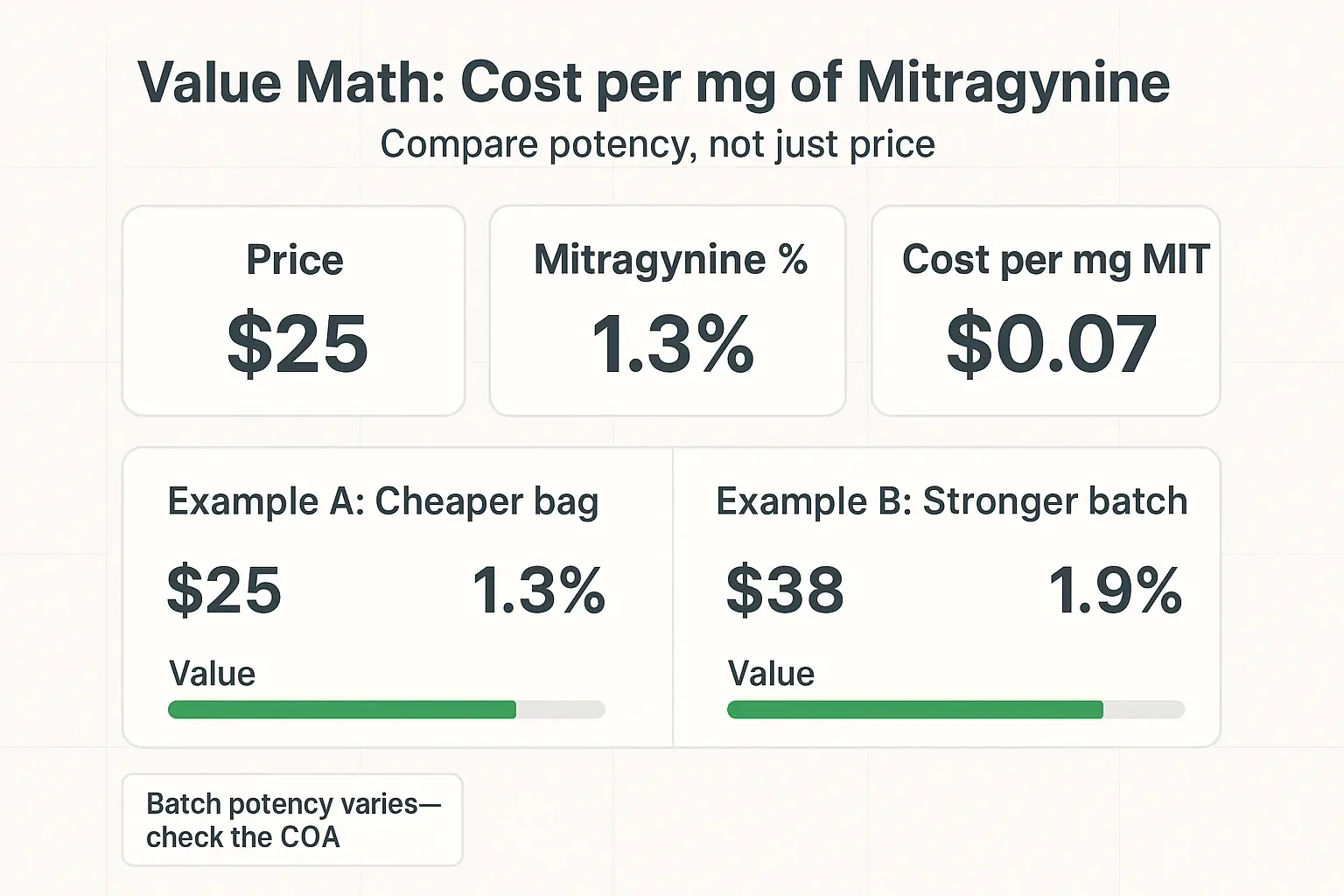
The final factor in your decision is value. It is easy to look at a $20 bag versus a $30 bag and assume the cheaper option saves you money. However, smart buyers calculate the Cost per Milligram of Mitragynine.
If you buy a “cheap” bag that requires a 10g dose to achieve effects, you will burn through your supply twice as fast as a premium bag that requires only a 5g dose.
- Mass-Market Brand: Lower potency = Higher consumption rate = Higher long-term cost.
- Premium Vendor: Higher potency = Lower consumption rate = Better value per dose.
Frequently Asked Questions
Is White Maeng Da the strongest kratom strain?
Generally, yes, regarding stimulation and energy. The “Maeng Da” designation usually implies high-alkaloid content. However, for pain relief or sedation, a Red Maeng Da might be considered “stronger” in a different context. White Maeng Da is the king of focus.
How does White Maeng Da compare to White Borneo?
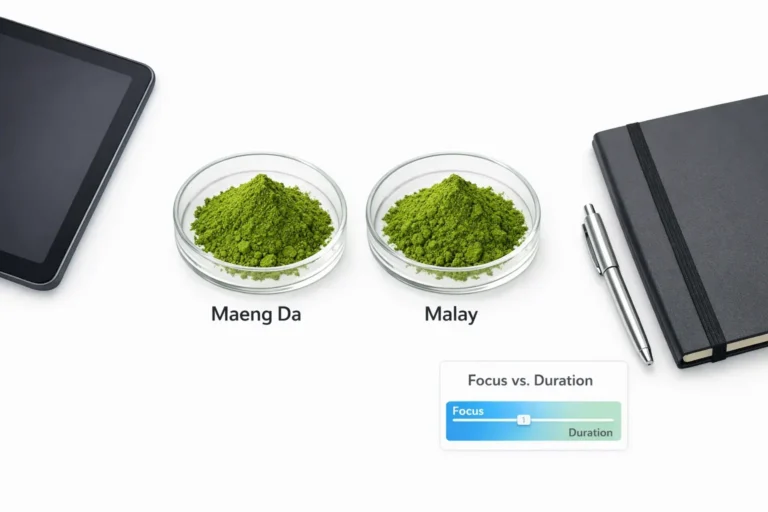
White Borneo is often described as a “softer” energy, better for mood elevation and moderate focus. White Maeng Da is a “harder” energy, preferred for demanding tasks, physical labor, or replacing coffee.
Why does the color of the powder vary between vendors?
Because White Maeng Da is a blend (usually 70% White / 30% Green), color can vary based on the exact ratio and the drying process used by the farmers. However, a bright, vibrant green color usually indicates fresh, indoor-dried leaf, whereas a brownish tint may indicate oxidation or old stock.
Making Your Decision
Choosing the best White Maeng Da isn’t about finding the coolest packaging; it’s about auditing the supply chain. You need a vendor that offers the transparency of a lab partner and the product consistency of a trusted boutique.
When you are ready to move away from the uncertainty of mass-market blends and experience the precision of unaltered, high-potency kratom, check the COA, verify the Mitragynine content, and trust the data.