
How to Identify High-Quality Kratom Extract Capsules: A Buyer’s Checklist
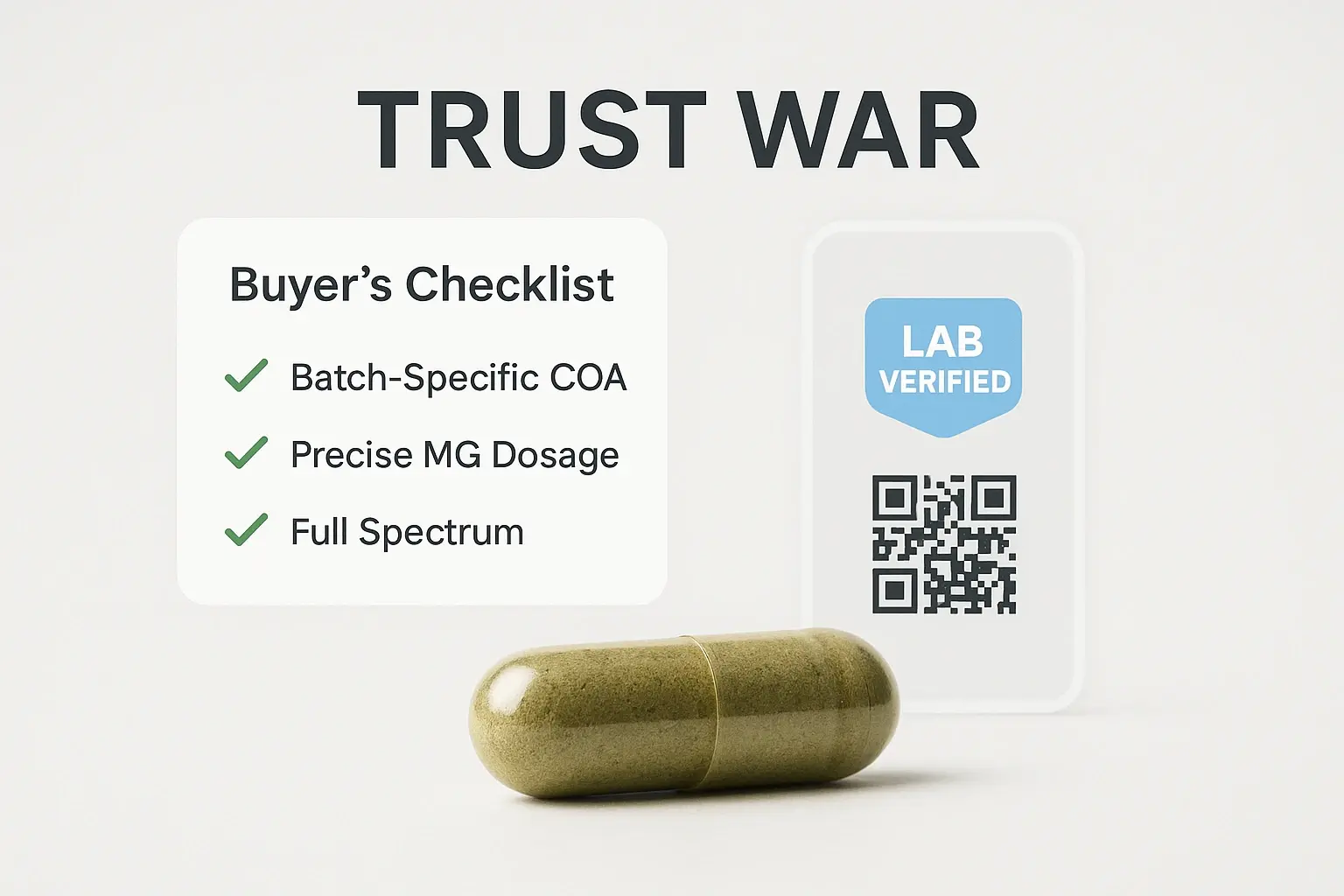
You are currently navigating what industry insiders call the “Trust War.”
If you have been browsing for kratom extracts recently, you have likely noticed a shift. The market is migrating away from flashy, legacy “gas station” brands—many of which are accused of inconsistency—toward transparent, lab-verified vendors. You aren’t just looking for a buzz; you are looking for reliability, safety, and a product that respects your physiology.
Finding a high-quality extract capsule isn’t about finding the coolest packaging. It is a technical evaluation process. Whether you are a seasoned enthusiast or a newcomer looking for a more potent alternative to powder, you need a framework to cut through the marketing noise.
This guide serves as your consultation. We will dismantle the deceptive marketing tactics used by low-tier vendors and give you the criteria to identify professional-grade kratom, like the industry-standard Mit-X 60.
The “Trust War”: Why Verification Is Non-Negotiable
In an unregulated market, the burden of safety falls on you, the buyer. The biggest risk isn’t just low potency—it’s adulteration. Low-quality extracts often use synthetic boosters (like elevated 7-hydroxymitragynine) to mimic strength, or they fail to filter out heavy metals and residual solvents from the extraction process.
The only way to win the Trust War is to demand evidence. A “Professional’s Choice” product doesn’t ask you to trust the brand; it asks you to trust the data.
The Third-Party Lab Standard
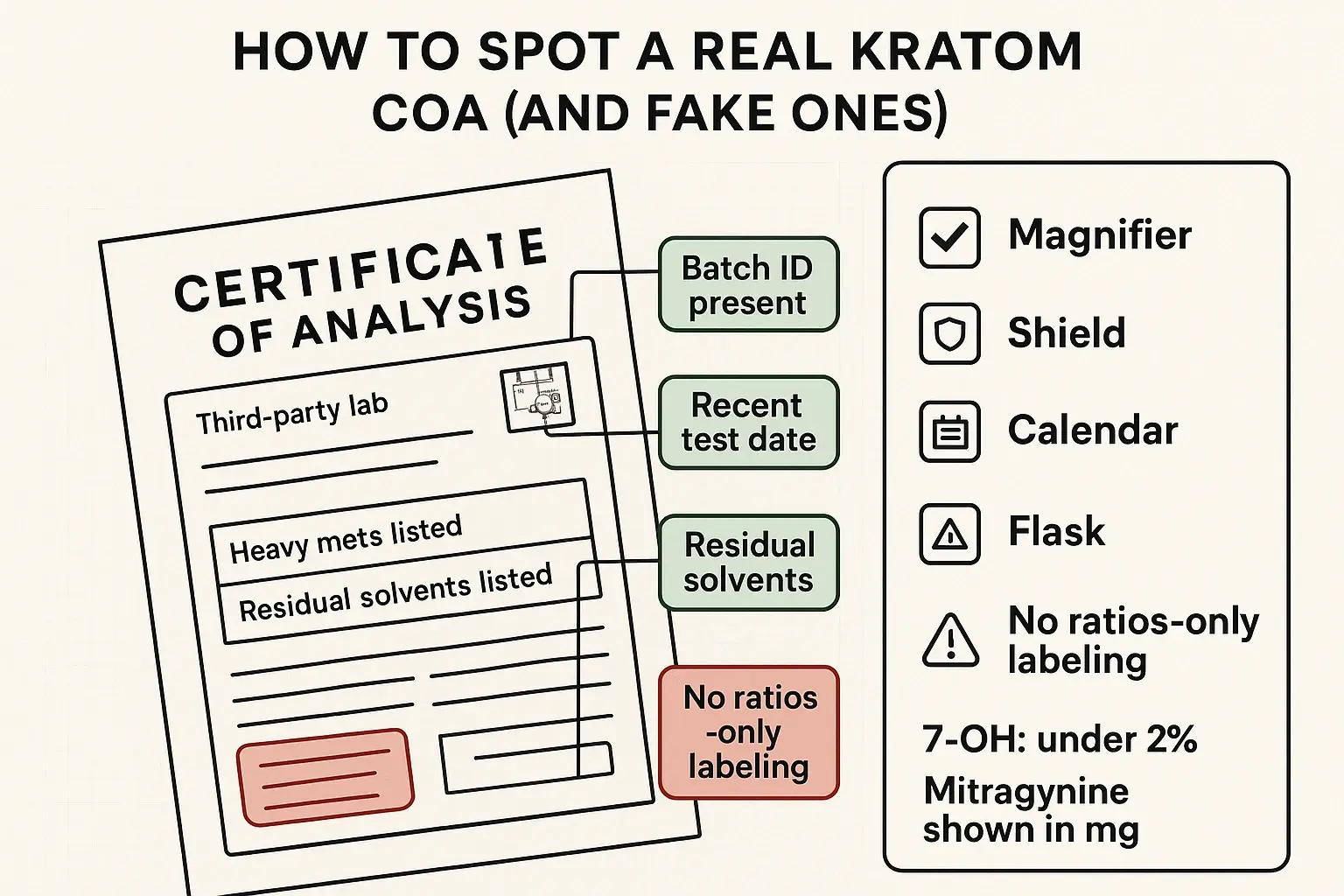
If a vendor cannot provide a Certificate of Analysis (COA) from an accredited third-party laboratory, close the tab. But simply having a COA isn’t enough; you need to know how to read it.
- Batch Specificity: Generic sample tests from 2021 don’t prove your current bottle is safe. Look for batch codes on the packaging that match the lab report.
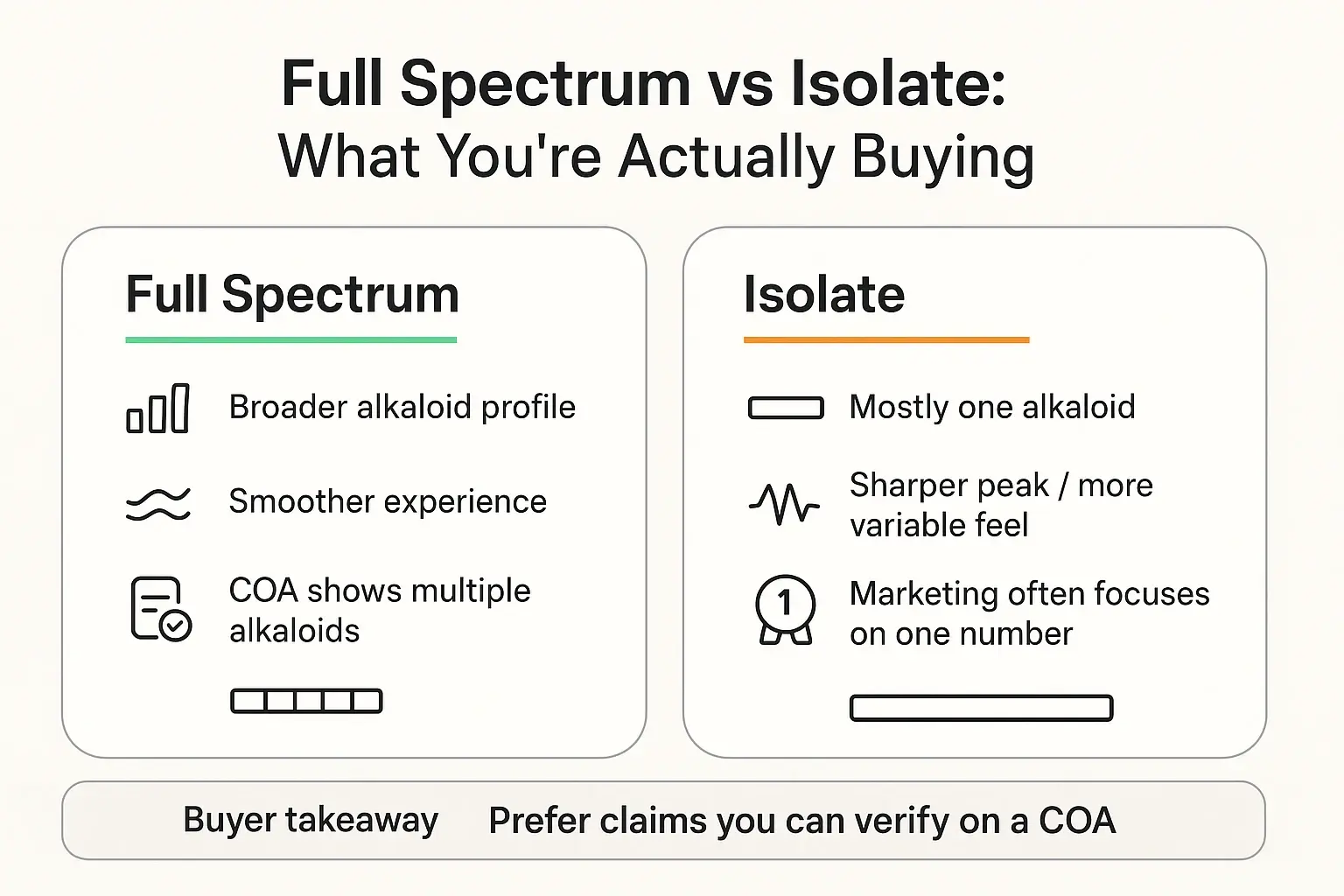
- The 7-OH Safety Limit: 7-hydroxymitragynine is a potent alkaloid. While it occurs naturally in trace amounts, levels exceeding 2% are a major red flag. This often indicates the product has been synthetically enhanced or oxidized improperly, pushing it into “unsafe” territory.
- Solvent Screening: Extracts are made using solvents. A clean COA must prove those solvents (like ethanol) have been fully purged to safe parts-per-million (PPM) levels.
The Deception Audit: “50:1” Ratios vs. Precise Potency
One of the most common traps in the industry is the “Ratio Game.” You will see bottles screaming “50:1 Extract!” It sounds impressive, implying that 50 kilograms of leaf were used to make 1 kilogram of extract.
Here is the problem: 50kg of weak, low-quality leaf still results in a weak extract. A ratio tells you nothing about the final potency. It is a marketing gimmick designed to hide the actual alkaloid content.
The Power of Precise Dosage
High-quality manufacturers disclose the exact milligram count of Mitragynine per capsule. This is the only way to ensure a consistent experience.
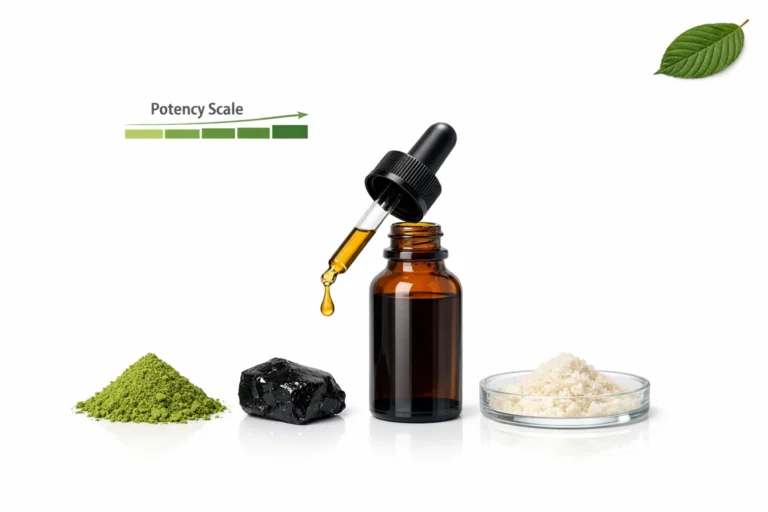
- The Black Extracts: Often hit 148mg+ per capsule. For many users, this is overwhelmingly potent and can lead to tolerance spikes or nausea.
- The Weak Proprietary Blends: Often hide low dosages (10-20mg) behind fancy names.
- The Professional Sweet Spot: Products like Mit-X 60 are standardized to 60mg of Mitragynine. This bridges the gap, offering a robust, professional-strength experience without the volatility of the “black” market products.
Understanding Extract Architecture: Full Spectrum vs. Isolate
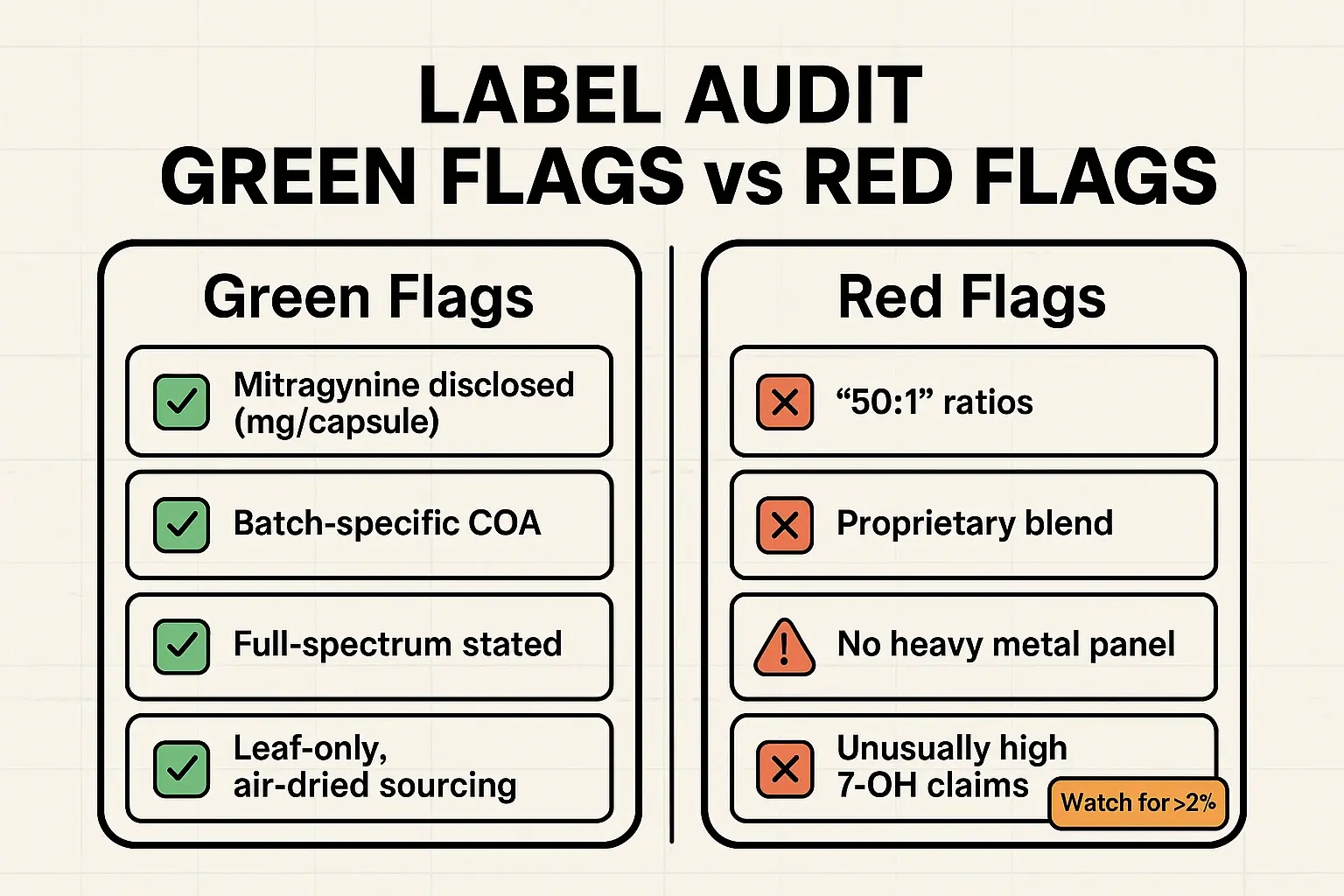
When evaluating capsules, you must determine if the product is a “Full Spectrum” extract or an “Isolate.” This distinction dictates how the product will feel.
The Crash of Isolates
Isolates strip away everything except the primary alkaloid, Mitragynine. While this creates a high purity percentage, it often results in a “flat” experience that spikes quickly and crashes hard. It lacks the balance nature intended.
The Harmony of Full Spectrum
A Full Spectrum extract retains the secondary alkaloids (like Paynantheine and Speciogynine) found in the leaf. This creates an “entourage effect,” where the alkaloids work synergistically to provide a smoother, more sustained aroma.
Authentic quality implies “Unaltered, Untouched, Uncompromised.” We avoid isolates because they disrupt the natural profile of the plant. A 45% Mitragynine density in a full-spectrum base is generally considered the gold standard for premium extracts.
Sourcing: The Invisible Quality Factor
You cannot test quality into a product; it has to be there from the harvest. The final pillar of your evaluation checklist is the sourcing methodology.
1. Leaf-Only Processing
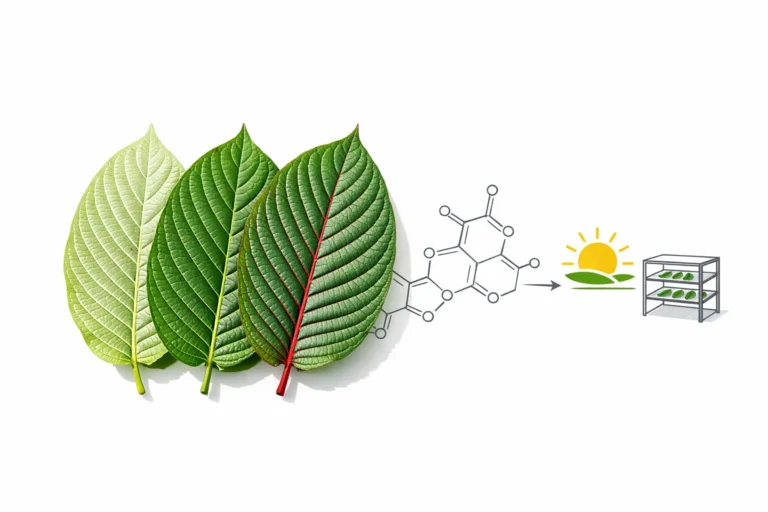
Many bulk manufacturers grind the entire branch—stems, veins, and all—to increase volume. Stems contain almost no alkaloids and contribute to a bitter taste and potential gastric discomfort. Premium extracts are derived from leaf-only material, ensuring that every milligram of extract is potent.
2. The Air-Dried Difference
How the leaf is dried matters. Industrial UV drying is fast but can degrade alkaloids. Air-drying (often indoors or in the shade) is a slower, more expensive process, but it preserves the alkaloid profile and prevents oxidation.
3. Organic Sourcing
While “Organic” is a buzzword, in the kratom world, it means freedom from pesticides. A clean COA should always include a pesticide panel. If a vendor skips this test, you have to ask yourself why.
The Buyer’s Scorecard: Your Decision Framework
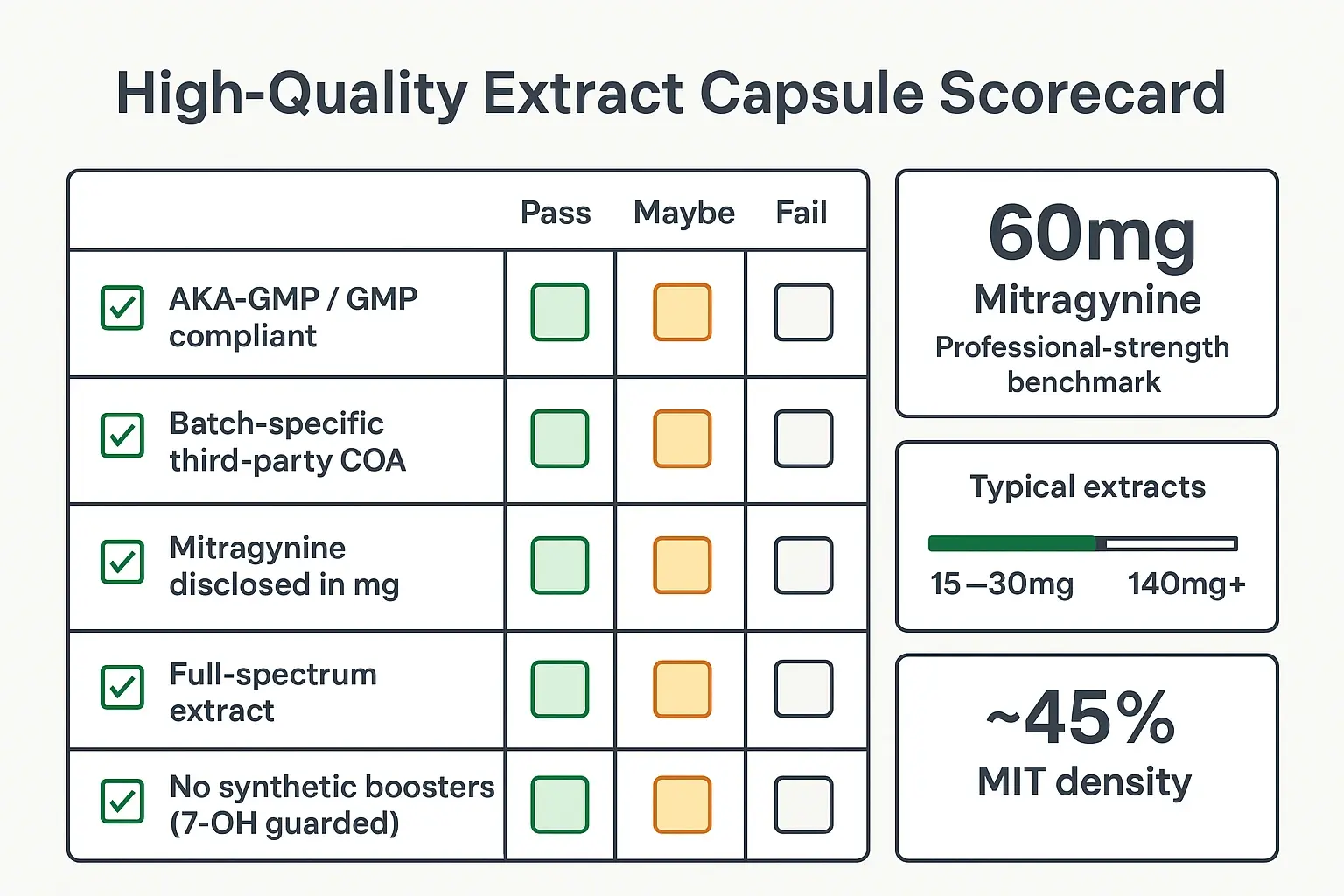
You are now equipped to navigate the market. Don’t settle for “Proprietary Blends” or vague promises. Use this scorecard to evaluate any product before you buy.
- Is the manufacturer GMP Qualified? (Look for the seal).
- Is there a Batch-Specific COA? (Scan the QR code).
- Is the dosage disclosed in MG? (Avoid ratios).
- Is it Full Spectrum? (Avoid isolates).
- Are 7-OH levels below 2%? (Ensure safety).
The Professional’s Choice: Mit-X 60
When you apply this strict framework, the options narrow significantly. This is the exact standard we used to develop Mit-X 60.
By standardizing to exactly 60mg of Mitragynine, we provide a consistent, measurable experience that stands apart from the inconsistencies of headshop brands. It is fully tested, full-spectrum, and ethically sourced—designed for the buyer who values transparency over hype.
Frequently Asked Questions
How does a 60mg extract capsule compare to powder?
Potency varies by strain, but generally, standard kratom powder contains about 1.2% to 1.5% Mitragynine. This means a 60mg extract capsule is roughly equivalent to 4-5 grams of high-quality powder, but in a cleaner, more convenient form without the plant matter.
Why is 7-Hydroxymitragynine (7-OH) considered a red flag?
7-OH is a minor alkaloid with different effects than Mitragynine. When levels are artificially inflated (above 2%), it significantly increases the risk of tolerance build-up and adverse effects. Responsible vendors keep 7-OH levels low to maintain the natural safety profile of the plant.
Can I trust products without a QR code?
No. In the current market, transparency is the only currency. If a vendor does not provide direct access to lab results via a QR code or a readily available link, you cannot verify the purity, potency, or safety of the product.
What is the advantage of air-dried kratom?
Air-drying prevents the breakdown of delicate alkaloids that can occur with high-heat or UV drying methods. It results in a fresher, more chemically complex extract that stays true to the plant’s original profile.
Ready to experience the difference transparency makes? Don’t guess with your wellness. Choose a verified, precise, and full-spectrum solution. Explore the Mit-X 60 collection today and elevate your standard.