
Kratom Extraction Methods: Science, Processes, and Premium Extract Quality
The days of casually dropping $20 on a generic “50x” kratom extract are over. As the kratom extract market accelerates toward a projected $1.9 billion valuation by 2027, today’s informed consumers are no longer just chasing potency—they are demanding transparency, batch-specific data, and scientific accountability.
If you’re currently comparing premium concentrates, you already know the stakes. A high-quality extract provides a clean, predictable experience, while a poorly manufactured one can introduce residual solvents or an unbalanced alkaloid profile that leads to the dreaded “wobbles.”
To make a confident decision, you need to understand exactly what happens to the Mitragyna speciosa leaf between the farm and the bottle. By functioning as your technical auditor, this guide strips away the marketing fluff and breaks down the exact methodologies, bioavailability mechanics, and safety metrics separating elite extracts from the rest.
What Are Kratom Extraction Methods?
Kratom extraction methods are the scientific processes used to separate, concentrate, and preserve naturally occurring alkaloids from Mitragyna speciosa leaves. Different extraction techniques influence the concentration of mitragynine, the retention of secondary alkaloids, overall product consistency, and the characteristics of the finished extract.
While all extraction methods pursue the same objective—producing concentrated botanical extracts—the technologies used can vary significantly. Water-based systems, ethanol extraction, supercritical CO₂ processing, and other specialized techniques each emphasize different aspects of alkaloid recovery, purification, and standardization.
Understanding kratom extraction methods allows consumers to evaluate products based on measurable manufacturing practices rather than marketing terminology alone.
Why Extraction Methods Matter
The extraction method influences nearly every characteristic of a finished kratom extract, including alkaloid concentration, product consistency, purity, and laboratory verification. Manufacturing decisions made during extraction affect both the preservation of naturally occurring compounds and the overall reproducibility of future production batches.
As the industry increasingly adopts standardized manufacturing practices, extraction methodology has become one of the primary indicators of product quality. Consumers comparing concentrated extracts benefit from understanding how different production techniques influence alkaloid profiles, extraction efficiency, and quality assurance procedures.
Understanding Botanical Extraction
Botanical extraction is the process of isolating naturally occurring plant compounds from raw botanical material using carefully controlled physical or chemical techniques. Within kratom manufacturing, extraction focuses primarily on concentrating alkaloids while minimizing impurities and preserving desirable phytochemical characteristics whenever possible.
Extraction systems may use solvents, pressure, temperature, filtration, or combinations of these variables to maximize alkaloid recovery. The effectiveness of each process depends not only on the extraction technology itself but also on raw material quality, manufacturing controls, and post-processing purification.
The Physics of Potency: Unpacking Extraction Methodologies
Before you can accurately evaluate a potent kratom extract powder, you must understand the physics of how alkaloids are pulled from the raw plant material. The methodology dictates everything from onset speed to the presence of secondary alkaloids.
Comparing Extraction Methods
Modern kratom extraction methods include several distinct approaches, each designed to optimize different aspects of botanical processing. Supercritical CO₂ systems, ethanol extraction, cold-water processing, solvent-assisted techniques, and emerging technologies such as ultrasonic extraction all offer unique advantages depending on manufacturing objectives.
Rather than assuming one method is universally superior, consumers should consider extraction efficiency, standardized alkaloid concentrations, laboratory verification, and overall manufacturing transparency when comparing products produced using different technologies.
The CO2 Myth and the “Co-Solvent” Reality
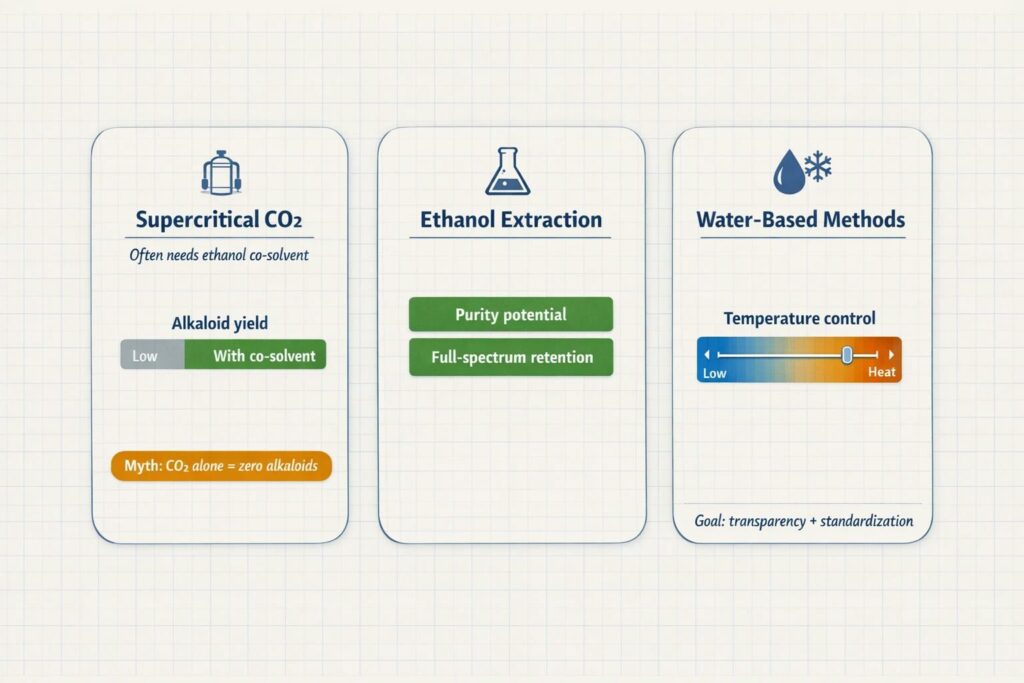
In 2026, one of the most prominent marketing claims in the industry is “100% Supercritical CO2 Extraction.” It sounds incredibly clean and advanced. There’s just one problem: scientific research on the Supercritical Fluid Extraction (SFE) of Mitragyna speciosa reveals that 100% supercritical CO2 extracts practically zero functional alkaloids from the leaf.
To actually yield mitragynine, CO2 extraction requires an ethanol co-solvent. Brands that claim a purely CO2 process are either misinformed or purposefully obfuscating their methods. When looking for genuine quality, seek out vendors who transparently disclose their co-solvent parameters.
Cold-Water High-Pressure Extraction
Water-based extractions utilize extreme pressure and precise cold temperatures to rupture cell walls without relying heavily on harsh chemical solvents. This method is incredibly effective at preserving the delicate alkaloid “entourage”—meaning secondary alkaloids like Speciogynine and Paynantheine survive the process. Without excessive heat to degrade these compounds, water-extracted kratom often feels more “full-spectrum.”
Advanced Ethanol & Solvent Extraction
Food-grade ethanol is the most efficient solvent for stripping alkaloids from kratom leaf mass. Modern labs use Accelerated Solvent Extraction (ASE) to pull maximum yield. The ethanol is later purged through evaporation to create pure crystallized extracts. The critical evaluation factor here is the purging process; elite facilities test rigorously to ensure zero residual solvents remain in the final product.
Extraction Efficiency Explained
Extraction efficiency refers to how effectively naturally occurring alkaloids are recovered and retained throughout the manufacturing process. Variables including solvent selection, temperature control, pressure, filtration, purification, and processing duration all influence the final alkaloid profile and overall extract consistency.
High extraction efficiency is not simply about maximizing yield. Premium manufacturers also prioritize preserving desirable alkaloids, minimizing degradation, and producing standardized extracts supported by comprehensive laboratory testing. These factors contribute to consistent production quality while strengthening confidence in finished botanical extracts.
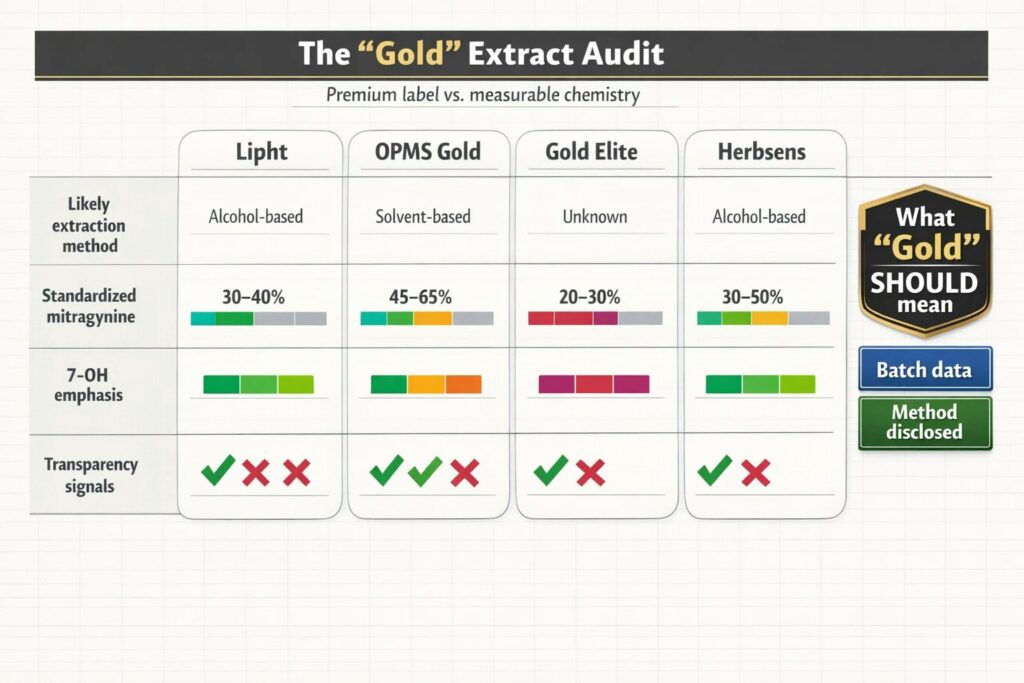
The “Gold” Audit: Decoding Premium Brand Formulations
Walk into any botanical shop or browse kratom shots online, and you will be inundated with products labeled “Gold.” But what does “Gold” actually mean?
Scientifically speaking, nothing. It is a marketing modifier signaling a premium, highly refined product. Because “Gold” lacks a standardized scientific definition, you have to look under the hood at the brand’s extraction metrics to see if the price point is justified.
Understanding Full-Spectrum Extraction
Full-spectrum extraction aims to preserve a broader range of naturally occurring alkaloids rather than isolating a single compound. In addition to mitragynine, manufacturers attempt to retain secondary alkaloids that contribute to the overall botanical profile of the finished extract.
Producing a consistent full-spectrum extract presents significant manufacturing challenges because different alkaloids exhibit varying chemical properties and extraction behavior. As a result, advanced extraction methods often combine multiple processing techniques to maximize alkaloid preservation while maintaining product consistency.
Consumers comparing standardized extracts should recognize that full-spectrum products are evaluated not only by mitragynine concentration but also by manufacturing transparency, laboratory verification, and reproducible alkaloid profiles.
Let’s cross-compare how top-tier brands handle their premium formulations:
- OPMS (e.g., OPMS Gold): The market leader relies heavily on a proprietary cold-water, high-pressure extraction process. This preserves a robust full-spectrum profile, which is why users report a highly distinct onset. However, due to their massive brand footprint, evaluating kratom vs opms often requires looking past the label and relying on third-party residual testing to verify batch consistency.
- Gold Elite & Lipht: These brands typically utilize advanced ethanol/co-solvent methodologies. Their “Gold” status generally refers to a specific purification stage where lipids and plant waxes are meticulously scrubbed out, leaving a higher concentration of isolated mitragynine.
- Herbsens: Often leaning into highly standardized liquid suspensions, Herbsens utilizes precise solvent extraction aimed at creating a highly bioavailable liquid carrier, ensuring fast absorption.
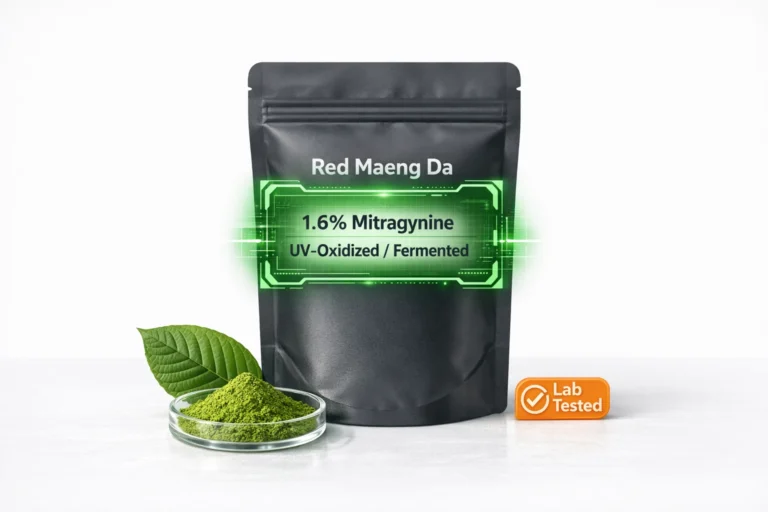
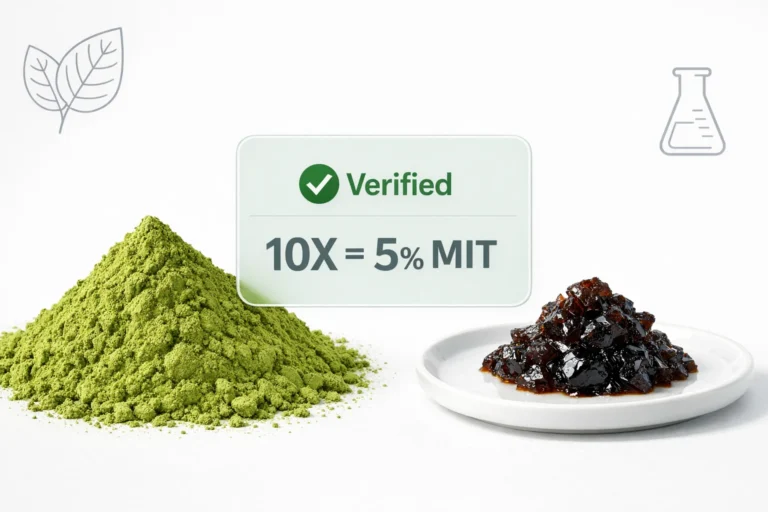
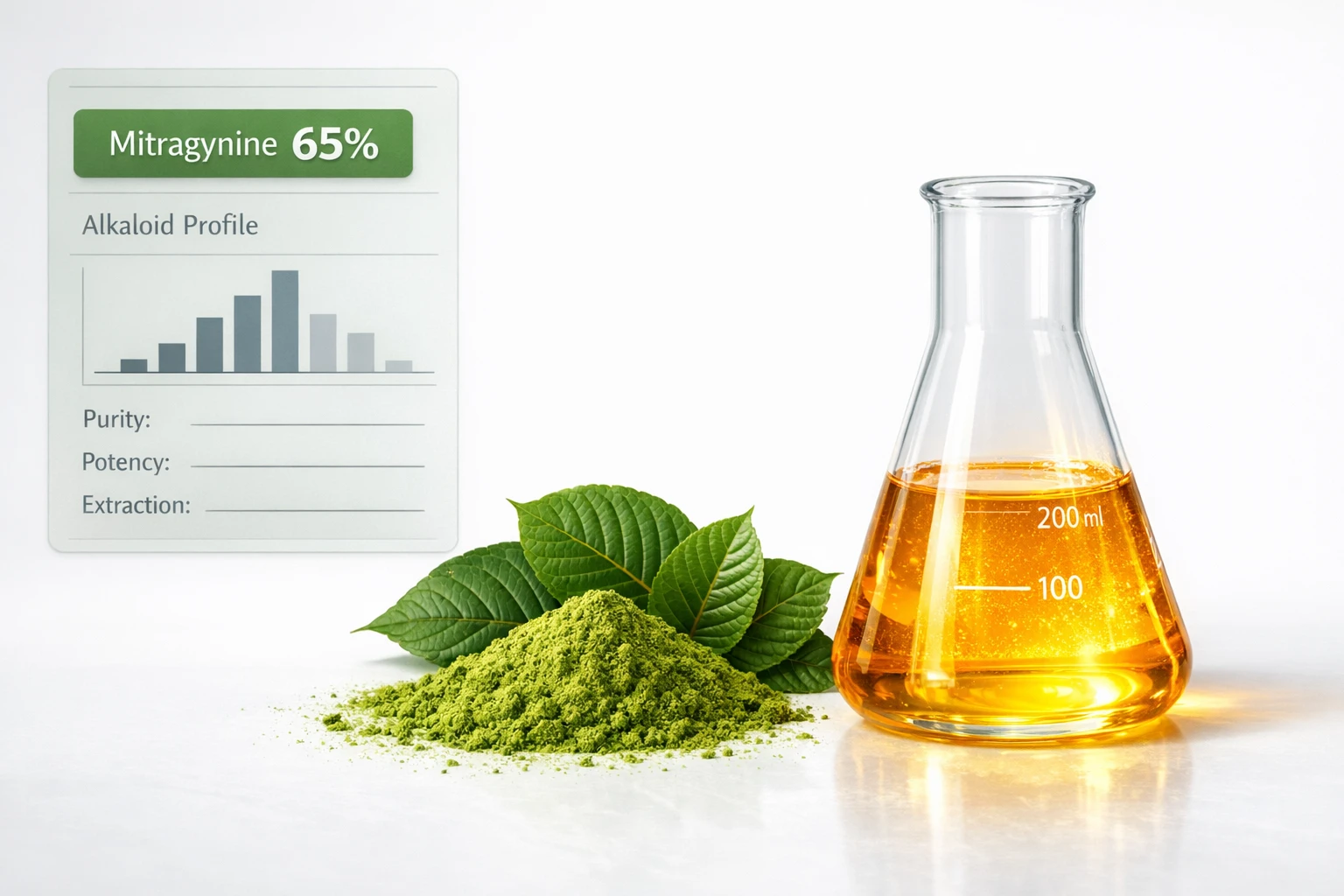
While standard kratom powder contains a typical mitragynine content in kratom powder percentage of about 1% to 2%, today’s elite “Gold” extracts are standardizing their profiles to an exact 45% to 65% Mitragynine. This batch consistency is what truly separates a top-tier extract from a poorly regulated competitor.
How Extraction Influences Potency
Extraction methodology directly affects alkaloid concentration, compound preservation, and final product standardization. While potency is frequently associated with high mitragynine percentages, the extraction process also determines how effectively naturally occurring alkaloids are retained throughout production.
Carefully controlled manufacturing methods support greater batch consistency while reducing unnecessary variability between production runs. Standardized extraction processes also make laboratory verification more meaningful by producing reproducible alkaloid concentrations that consumers can compare objectively across different products.
Verification and Risk Mitigation: The Solvent Safety Standard
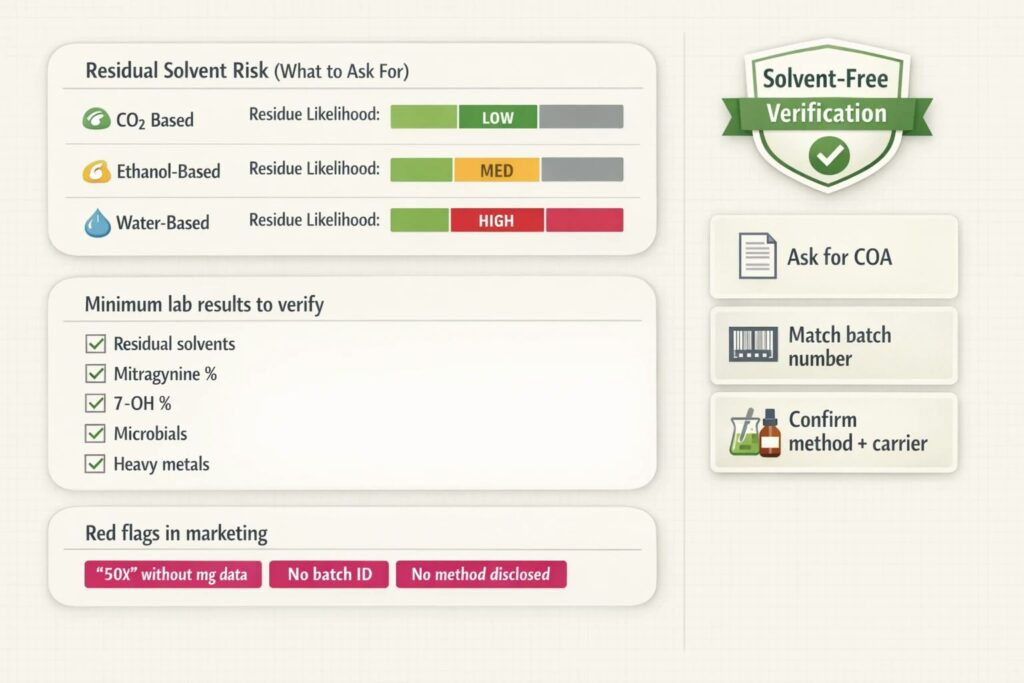
When evaluating extracts, the hidden intent for most users is risk mitigation. You want the therapeutic or energizing benefits without the adverse side effects, specifically the nausea and dizziness commonly known as the “wobbles.” This discomfort is usually triggered by two factors: residual extraction solvents or an uncalibrated over-concentration of 7-hydroxymitragynine (7-OH).
Evaluating Manufacturing Quality
Extraction technology represents only one component of premium botanical manufacturing. High-quality production also depends on raw material selection, standardized operating procedures, Good Manufacturing Practices (GMP), batch consistency, independent laboratory testing, and comprehensive quality assurance programs.
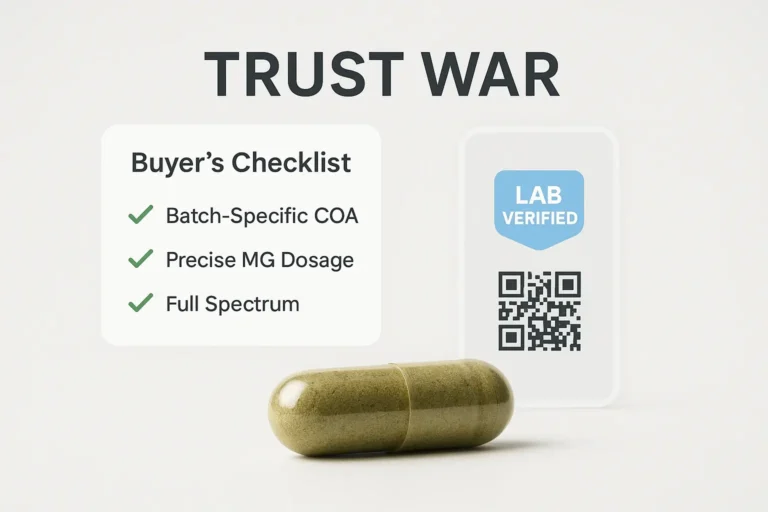
Manufacturers that publish Certificates of Analysis demonstrate greater transparency by documenting alkaloid concentrations, heavy metal analysis, microbial testing, and residual solvent screening. These analytical reports allow consumers to compare extracts using measurable laboratory data instead of generalized marketing language.
Consistent manufacturing standards help reduce variability between production batches while supporting long-term product reliability and consumer confidence.
The 7-OH Synergy Warning
During high-heat extractions, mitragynine can oxidize and convert into 7-hydroxymitragynine. While a minor presence of 7-OH naturally occurs in the plant and contributes to the entourage effect, a poorly controlled extraction process can spike 7-OH levels dangerously high. The safest brands actively test for and cap 7-OH percentages, ensuring the extract remains clean, functional, and well-tolerated.
Bioavailability Breakdown: Liquids vs. Crystals
Why does a liquid kratom shot hit your system in 15 minutes, while crystalized extract powder might take 45 minutes to an hour? The answer lies in bioavailability and cellular absorption.
- Liquid Extracts (Shots/Tinctures): Premium liquid extracts often utilize nano-emulsion technology or specific food-grade carrier oils (like vegetable glycerin or propylene glycol). Because the alkaloids are already suspended in a water-compatible liquid state, they bypass a significant portion of the stomach’s digestive breakdown. The mucosal lining begins absorbing the alkaloids almost instantly.
- Crystalized/Powder Extracts: Whether it’s an isolated crystal or an enhanced powder, your gastrointestinal tract has to break down the solid matter to synthesize the alkaloids. While the onset is slower, many users prefer this method for its longer, sustained duration.
Comparing Modern Extraction Technologies
As botanical manufacturing continues to evolve, newer extraction technologies increasingly complement traditional solvent-based methods. Some manufacturers incorporate ultrasonic extraction, multi-stage purification, or hybrid processing systems that combine multiple extraction techniques to improve alkaloid recovery and consistency.
Rather than searching for a universally superior extraction method, consumers should evaluate how effectively each manufacturing process balances alkaloid preservation, product purity, standardized concentrations, and independent laboratory verification.
The Kratom Extract Dosage Calculator (Converting to Gram Equivalents)
The most common mistake made by consumers transitioning to extracts is miscalculating their dosage. To safely navigate products with 45-65% mitragynine, you must anchor your dose in milligram-to-gram equivalents.
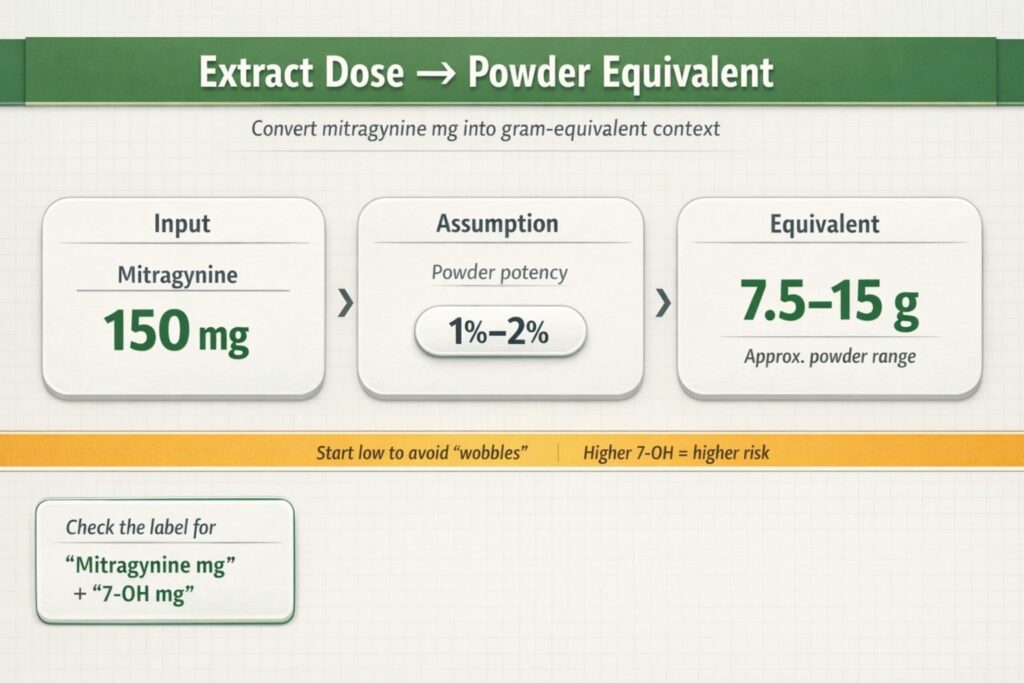
The Universal Conversion Math:
An average, high-quality kratom leaf contains about 1.5% mitragynine. That means 1 gram of plain leaf powder holds roughly 15mg of mitragynine.
If you purchase a high-potency liquid extract shot containing 150mg of Mitragynine, consuming the entire bottle is the alkaloid equivalent of consuming 10 grams of standard powder simultaneously.
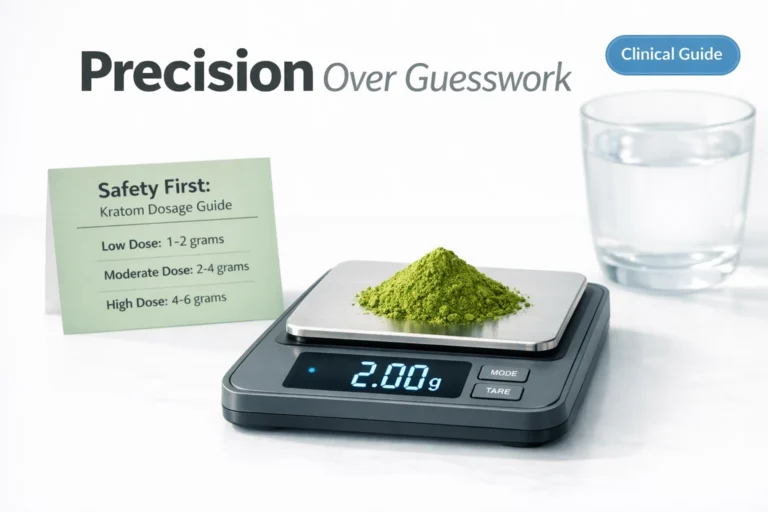
- Micro-Dosing: 15-30mg Mitragynine (Equivalent to 1-2g powder)
- Standard Dose: 45-60mg Mitragynine (Equivalent to 3-4g powder)
- Heavy Dose: 100mg+ Mitragynine (Equivalent to 7g+ powder)
Always check the total mitragynine content on your extract and divide it into serving sizes based on this mathematical framework to ensure a safe, optimal experience.
Choosing High-Quality Kratom Extracts
Selecting a premium extract involves evaluating far more than potency alone. High-quality kratom extraction methods prioritize standardized manufacturing, transparent sourcing, laboratory verification, contaminant screening, and reproducible alkaloid profiles that remain consistent from batch to batch.
Consumers comparing products should review Certificates of Analysis for standardized mitragynine concentrations, heavy metal analysis, microbial testing, residual solvent screening, and batch identification whenever available. These objective measurements provide significantly greater insight into manufacturing quality than promotional terminology or extract ratios.
Manufacturers that openly explain their extraction processes and consistently publish independent laboratory reports demonstrate greater transparency, allowing consumers to compare products using measurable scientific information rather than marketing claims.
Common Extraction Myths
As extraction technology becomes more sophisticated, several misconceptions continue to influence purchasing decisions. One of the most widespread myths is that supercritical CO₂ extraction is automatically superior to every other manufacturing method. While CO₂ technology offers several advantages, overall product quality still depends on extraction efficiency, purification, alkaloid preservation, and laboratory verification.
Another common misconception is that solvent extraction produces unsafe products. Properly manufactured ethanol extracts undergo purification and residual solvent testing, allowing reputable manufacturers to verify product safety through independent laboratory analysis.
Consumers also frequently assume that stronger extracts are always higher quality. In reality, manufacturing consistency, standardized alkaloid reporting, botanical preservation, and transparent quality assurance often provide a more meaningful measure of product quality than alkaloid concentration alone.
Finally, descriptive labels such as “Gold,” “Ultra,” or “Premium” should not be interpreted as scientific classifications. These marketing terms may identify product lines but do not independently verify extraction methods, manufacturing standards, or standardized alkaloid content.
Frequently Asked Questions
Does a “Gold” extract guarantee the highest potency?
Not inherently. “Gold” is a marketing term used to denote a brand’s premium tier. You must check the batch label to confirm if the mitragynine is standardized (ideally between 45-65%) to ensure you are actually paying for high alkaloid content rather than a fancy label.
Is Supercritical CO2 extraction the safest method?
It is one of the cleanest methods for reducing residual chemicals, but it requires an ethanol co-solvent to actually extract kratom alkaloids. As long as the manufacturer conducts rigorous third-party testing to confirm the ethanol has been successfully purged, it is a highly safe and effective method.
How do I avoid the “wobbles” when using extracts?
The wobbles are caused by overconsumption or excessively high 7-OH levels. Use the dosage calculator framework to ensure your exact milligram intake matches your normal powder routine, and always purchase from transparent vendors who cap their 7-OH content.
The Kratom-Online Promise: Farm to Science
Navigating the science of kratom extraction shouldn’t require a chemistry degree. At Kratom-Online, we believe in radical transparency. By eliminating the middlemen and sourcing directly from trusted Southeast Asian farms, we bridge the gap between traditional organic cultivation and modern extraction science.
Whether you are looking to step up to a potent kratom extract powder or simply want the assurance that your products are clean, verified, and strictly documented, we provide the purity you demand. Make your next choice based on data, not just marketing. Explore our thoroughly vetted extract selection today and experience the difference that true transparency makes.