
Kratom Drinks Guide: The Science of Better Teas, Juices and Smoothies
Many people believe that making kratom taste better means destroying its effects. This forces a choice between a palatable drink and a potent one. The science, however, tells a different story. You don’t have to sacrifice potency for taste; in fact, the right ingredients can enhance your experience.
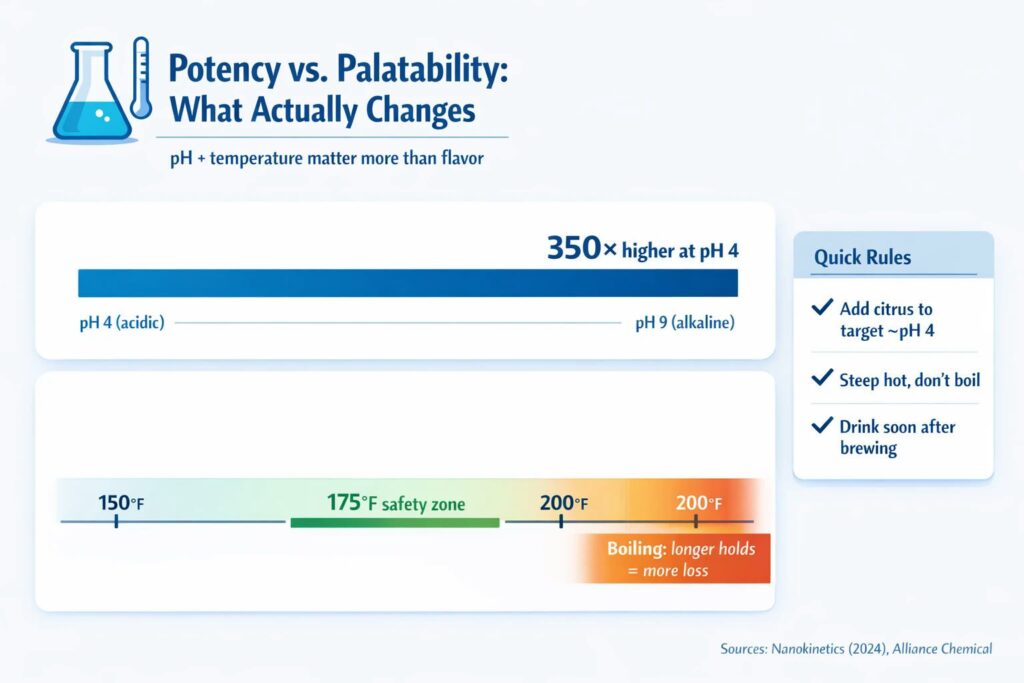
The key lies in understanding a little chemistry. Research from Nanokinetics shows that kratom’s primary alkaloid, mitragynine, has a solubility that is 350 times higher at a pH of 4 (acidic) than at a pH of 9 (alkaline). By using common acidic ingredients like lemon or orange juice, you can create a more effective extraction while simultaneously masking kratom’s earthy bitterness. This guide walks you through the science-backed methods for creating kratom teas, juices, and smoothies that are both effective and enjoyable.
What Are Kratom Drinks?
Kratom drinks are beverages prepared by combining kratom powder with liquids such as water, fruit juice, tea, milk or smoothie ingredients. They are designed to improve flavour, simplify consumption and, in some cases, support more efficient alkaloid extraction through carefully selected ingredients.
Different preparation methods produce different results. Factors such as acidity, brewing temperature and beverage ingredients can influence taste, extraction efficiency and overall drinking experience. Understanding these variables helps users prepare kratom drinks more consistently while avoiding common preparation mistakes.
How Kratom Drinks Work
The quality of a kratom drink depends on more than simply mixing powder with liquid. Understanding extraction chemistry allows users to improve flavour while preserving the naturally occurring alkaloids responsible for the product’s characteristics.
The fear that heat or acidic liquids “kill” kratom’s alkaloids is a common concern, but it’s largely a misconception when done correctly. The goal isn’t to avoid these elements, but to use them strategically to your advantage.
Why Preparation Method Matters
The way a kratom drink is prepared influences flavour, texture and extraction efficiency. Variables such as acidity, brewing time and water temperature all contribute to the final result, making preparation method just as important as ingredient selection.
A more consistent preparation process also creates a more repeatable drinking experience from one serving to the next.
Finding the pH Sweet Spot
As mentioned, an acidic environment is your best tool for alkaloid extraction. Aiming for a pH level around 4 helps pull more of the active compounds from the plant matter into your liquid. This is easily achieved by adding a splash of a citrus juice like lemon, lime, or grapefruit to your brew. This simple step not only improves bioavailability but also begins the process of neutralizing the bitter flavors. To understand more about how these compounds work, exploring the specifics of the mitragynine formulation can provide deeper insight.
The 175°F “Safety Zone” for Heat
While prolonged exposure to boiling water can cause some degradation, a short, controlled steep is perfectly safe. Research from Alliance Chemical indicates that while a 10% loss of alkaloids can occur over six hours in acidic boiling water, immediate consumption after brewing preserves nearly all of the original potency.
For best results, use water that is hot but not at a rolling boil. A temperature around 175°F (80°C) is ideal. This is hot enough to facilitate extraction without unnecessarily breaking down the plant’s delicate compounds.
Common Kratom Drink Preparation Mistakes
One of the most common mistakes is using boiling water for prolonged periods, which may reduce alkaloid stability unnecessarily. Other frequent issues include using too little liquid, failing to mix thoroughly or relying on highly sugary ingredients that overpower the natural flavour without improving extraction.
Making small adjustments to preparation technique often produces better results than simply adding more flavouring ingredients.
How to Improve the Taste of Kratom Drinks
Different ingredients reduce bitterness through different mechanisms. Selecting ingredients based on flavour chemistry creates better-tasting drinks without unnecessarily complicating the recipe.
Once you’ve optimized the chemistry, you can focus on the culinary side. Different ingredients mask kratom’s flavor in distinct ways. By understanding these mechanisms, you can build recipes that work for your palate and your goals.
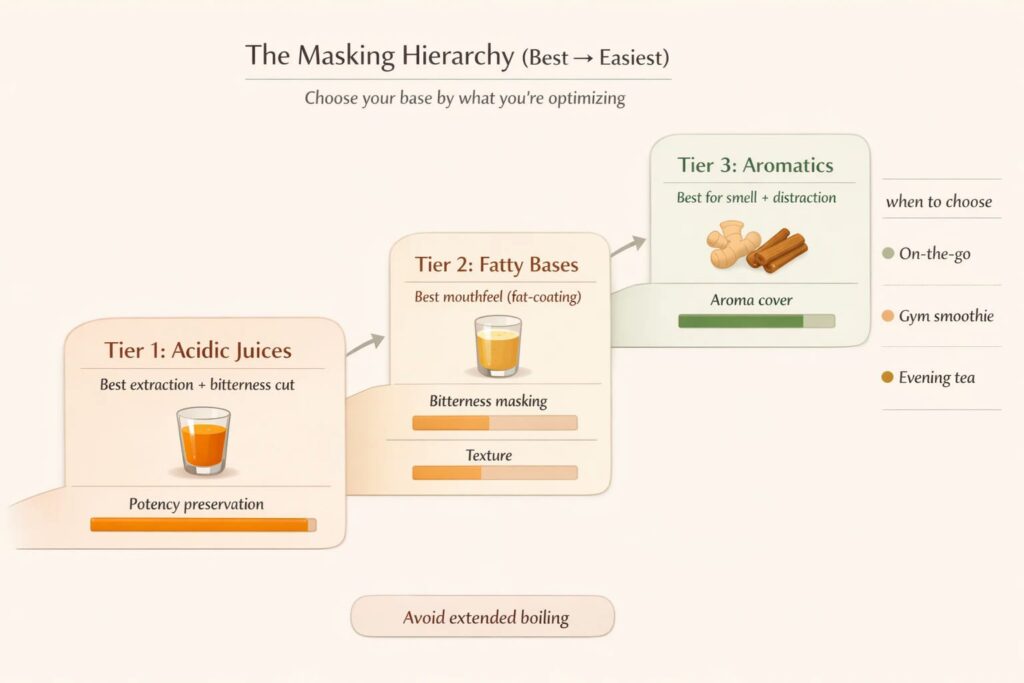
Tier 1: Acidic Juices (For Extraction and Flavor Cutting)
- How it works: Acidity both enhances alkaloid solubility and cuts through bitterness. The sharp, tangy flavor profile of citrus is excellent at overpowering the earthy notes of kratom.
- Best for: Juices and cold-brew teas.
- Examples: Orange juice, grapefruit juice, lemonade, pineapple juice.
Tier 2: Fatty Bases (For Coating the Palate)
- How it works: Fats and oils coat your taste buds, creating a physical barrier that prevents the bitter compounds from making direct contact. This changes the “mouthfeel” of the drink, making it smoother and less harsh.
- Best for: Smoothies and latte-style drinks.
- Examples: Almond milk, coconut milk, whole milk, yogurt, protein powder, cocoa powder.
Tier 3: Aromatic Spices (For Sensory Distraction)
- How it works: Strong, pleasant aromas can distract your brain from focusing on the taste. Potent spices engage your sense of smell, which heavily influences your perception of flavor.
- Best for: Hot teas and spiced beverages.
- Examples: Ginger, cinnamon, cardamom, nutmeg, honey.
Choosing Ingredients for Kratom Drinks
The most effective kratom drinks balance flavour, texture and preparation simplicity. Citrus fruits improve extraction, creamy ingredients soften bitterness and aromatic spices create a more balanced flavour profile without masking every characteristic of the plant.
Experimenting gradually with ingredient combinations allows users to discover recipes that suit their preferences while maintaining consistency.
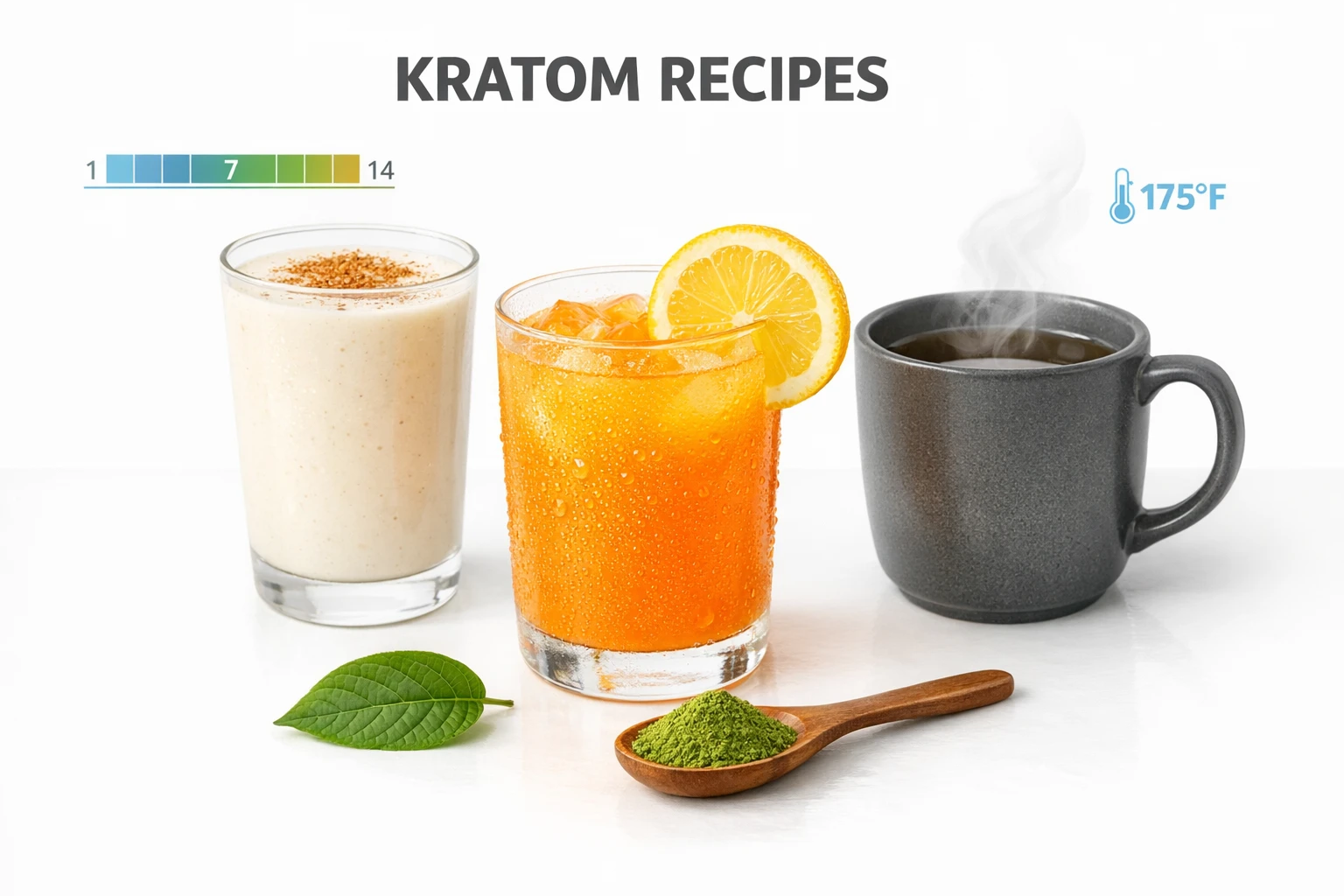
Kratom Drink Recipes
These recipes demonstrate how different preparation methods can achieve different flavour profiles while using the same scientific principles discussed earlier.
With the science covered, let’s put it into practice. Here are three simple, effective recipes designed for different moments, whether you need a morning boost, a pre-workout lift, or an evening wind-down. For anyone just starting out, understanding proper kratom dosage for beginners is a key step before preparing any recipe.
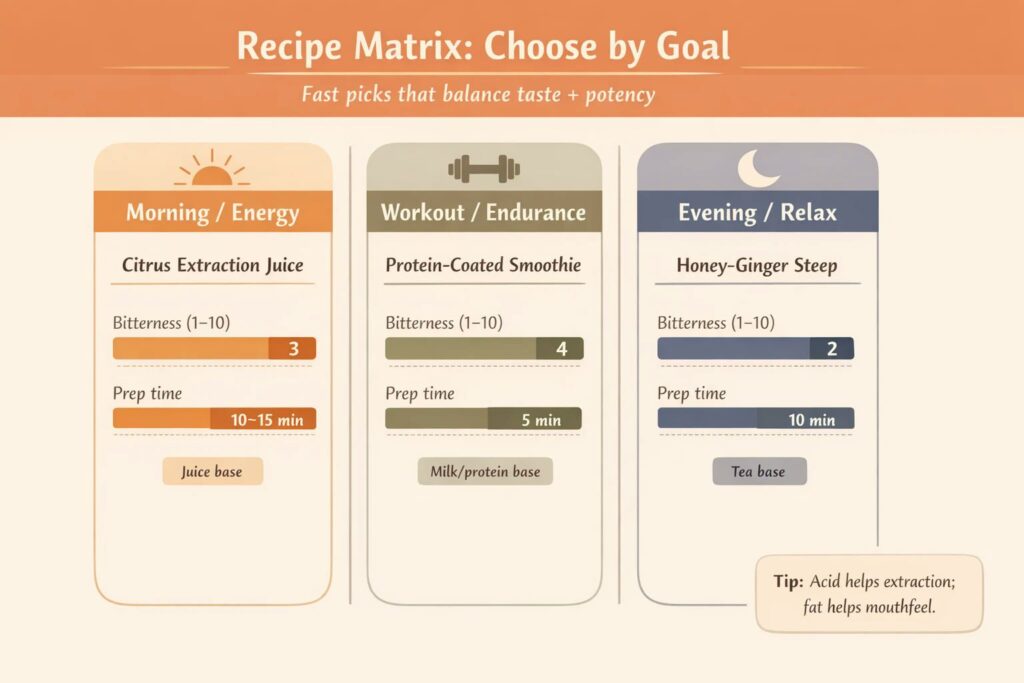
1. The Morning Energizer: Citrus Extraction Juice
This recipe uses the power of acidity to create a bright, uplifting drink perfect for starting your day. It’s quick, efficient, and masks bitterness exceptionally well. It’s a great way to explore using kratom for energy.
- Bitterness Score: 2/10
- Prep Time: 2 minutes
- Ingredients:
- Your typical serving of kratom powder (White or Green Vein works best)
- 4 oz orange juice
- 2 oz grapefruit juice
- A squeeze of fresh lemon juice
- Instructions:
- Combine the kratom powder and fruit juices in a shaker bottle or a glass.
- Stir or shake vigorously for 30 seconds until the powder is fully incorporated.
- Drink immediately.
2. The Workout Fuel: Protein-Coated Smoothie
This smoothie uses a fatty base (protein powder and almond milk) to coat the palate and deliver a smooth, non-bitter experience. It’s ideal for consumption before physical activity, providing sustained energy without the harsh taste. For those looking for an extra kick, a potent kratom extract powder can be used in place of standard powder.
- Bitterness Score: 3/10
- Prep Time: 5 minutes
- Ingredients:
- Your serving of kratom powder
- 1 scoop of vanilla or chocolate protein powder
- 8 oz almond milk (or milk of your choice)
- 1/2 banana
- 1 tablespoon of almond butter
- Instructions:
- Add all ingredients to a blender.
- Blend on high until the mixture is completely smooth.
- Pour into a glass and enjoy.
3. The Evening Relaxer: Honey-Ginger Steep
This warm, aromatic tea is designed for relaxation. It uses the sensory distraction of ginger and cinnamon, combined with the soothing sweetness of honey, to create a comforting evening beverage. Following guidelines for safe responsible kratom use is always important, especially when establishing a routine.
- Bitterness Score: 4/10
- Prep Time: 10 minutes
- Ingredients:
- Your serving of kratom powder (Red Vein is a great choice)
- 8 oz hot water (around 175°F)
- 1/2 inch of fresh ginger, thinly sliced
- 1 teaspoon of honey
- A dash of cinnamon
- A squeeze of lemon juice
- Instructions:
- Place the kratom powder and sliced ginger in a mug.
- Pour the hot water over them and stir well.
- Let the mixture steep for 5-7 minutes.
- Stir in the honey, lemon juice, and cinnamon until dissolved.
- Sip slowly. You can strain the ginger and sediment if you prefer a clearer tea.
Cold vs Hot Kratom Drinks
Both hot and cold kratom drinks offer distinct advantages. Hot beverages generally improve extraction efficiency and work well with spices, while cold drinks often provide a smoother flavour and greater convenience during warmer weather.
Choosing between them depends primarily on personal preference rather than effectiveness.
Pairing Kratom Drinks with Different Strains
Matching beverage ingredients with specific kratom varieties creates a more balanced drinking experience while complementing each strain’s natural flavour profile.
Just as you’d pair wine with food, you can pair kratom strains with specific flavor profiles to complement their natural characteristics. This not only improves the taste but also creates a more consistent and repeatable experience. Understanding the different types of kratom is the first step.
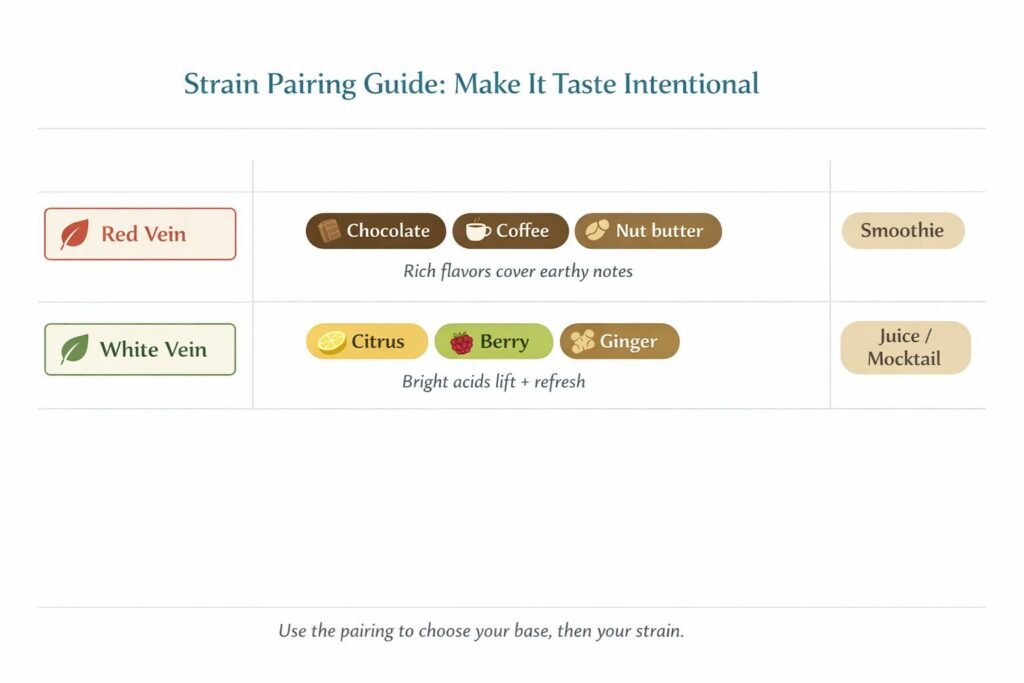
- Red Vein Strains: These strains often have deeper, more earthy and coffee-like undertones. They pair wonderfully with rich, robust flavors like chocolate, coffee, mocha, and spices like nutmeg and cardamom.
- Green Vein Strains: Greens are often described as having a more “classic” herbal tea taste. They are versatile and pair well with both earthy flavors (like matcha and chai) and moderately sweet flavors (like honey and green apple).
- White Vein Strains: Known for their brighter profile, white vein kratom pairs best with sharp, clean, and tangy flavors. Think citrus fruits like lemon, orange, and grapefruit, as well as tart berries and pineapple.
By aligning your recipe’s ingredients with your chosen strain, you move from simply masking a flavor to creating a truly complementary beverage.
Why Quality Ingredients Matter
High-quality kratom powder forms the foundation of every successful kratom drink. Fresh, laboratory-tested products provide greater consistency in flavour and alkaloid content while reducing uncertainty between batches.
Choosing fresh ingredients for both the kratom and beverage components creates a cleaner, more enjoyable final product.
Your Next Step: From Recipe to Reality
You no longer have to choose between a good taste and a good experience. Armed with a basic understanding of pH, temperature, and flavor pairing, you can easily craft kratom drinks that meet your needs. The rise of ready-to-drink kratom beverages, now in over 30,000 retail stores, shows a clear demand for more accessible consumption methods. By making your own, you gain full control over the quality, potency, and ingredients.
Ready to try these recipes for yourself? Explore our collection of premium, lab-tested kratom powders to find the perfect strain for your next beverage creation.