
Processing Methods & Their Impact on Kratom Phenotypes: A Molecular Guide
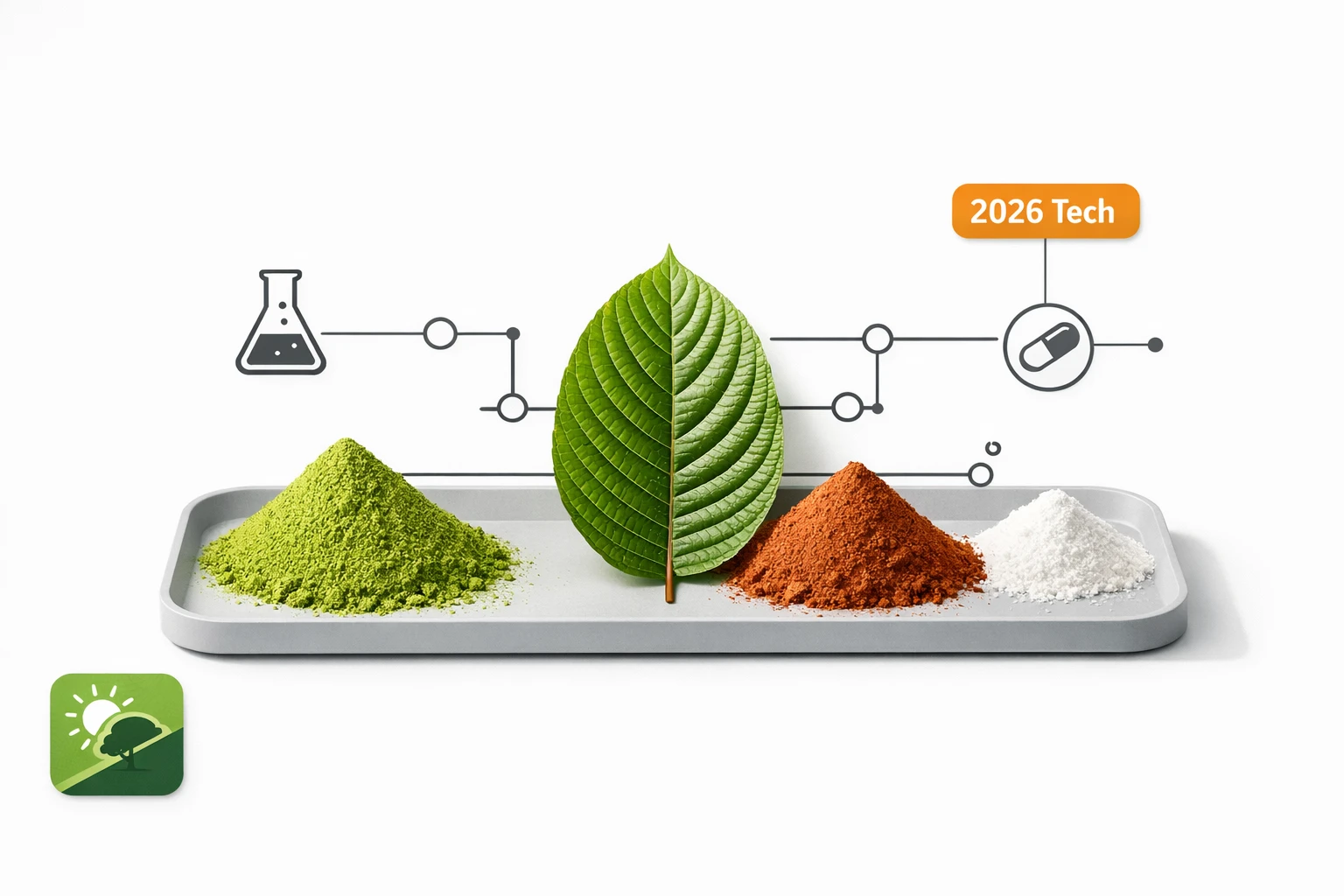
If you are researching kratom in 2026, you have likely noticed a massive shift in how premium products are discussed. The conversation has finally moved away from anecdotal “strain lore” and vague marketing claims, transitioning into the exact science of alkaloid chemistry.
Today’s sophisticated buyers understand that the Mitragyna speciosa leaf plucked from a tree in Southeast Asia is only half the story. The other half—the precise, post-harvest processing methods—dictates the final characteristics, appearance, and alkaloid profile of every batch you evaluate. When you are trying to figure out exactly what factors determine the quality of kratom, understanding these post-harvest techniques is the missing link between traditional farming practices and the premium, transparent products you expect.
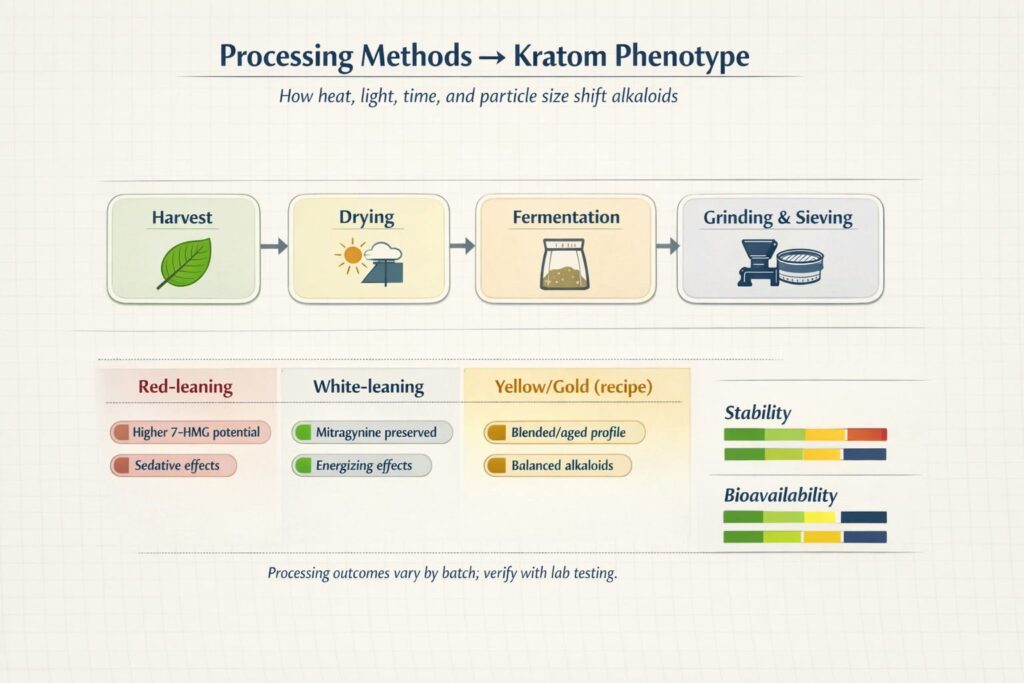
By understanding the molecular transformations triggered by heat, light, time, and particle size, you can make smarter, more confident purchasing decisions. Let’s dive into how direct-sourced kratom is transformed from raw leaf to targeted phenotype.
The Molecular Transformation Hub: Heat, Light, and Time
To understand kratom processing, you first need to understand the concept of bioavailability and processing-induced stability. Raw kratom leaves contain a natural baseline of alkaloids, predominantly Mitragynine. However, Mitragynine is highly reactive. When exposed to specific environmental stressors during processing—namely ultraviolet (UV) light and heat—it undergoes a process called oxidation.
This chemical transition is responsible for converting a portion of the baseline Mitragynine into 7-Hydroxymitragynine (7-HMG), an alkaloid known for its distinctive properties. By controlling these variables, skilled farmers can intentionally shift the alkaloid profile, effectively “steering” the final product toward a white, green, red, or yellow phenotype.
Flash Drying vs. Sun Drying: Impact on Alkaloid Stability
Drying is the first and arguably most critical step in preserving a harvest’s integrity. For years, the industry operated under the assumption that drying leaves as quickly as possible was always better for preventing mold. This led to the popularization of high-heat flash drying.
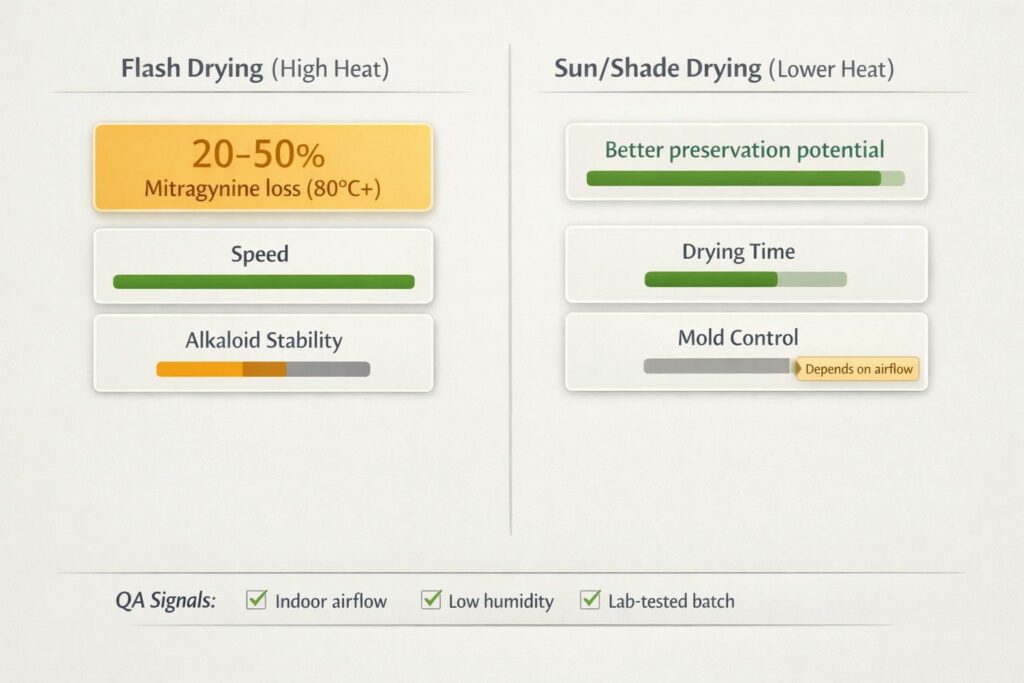
However, modern lab testing reveals a different reality. Flash drying at high heat (80°C and above) actually causes severe thermal degradation. Studies show this rapid, high-temperature approach can lead to a staggering 20-50% loss of Mitragynine. The leaf dries fast, but the delicate alkaloids are destroyed in the process.
Conversely, traditional sun drying introduces its own variables. While sun drying avoids extreme artificial heat, prolonged exposure to direct UV rays accelerates the oxidation of Mitragynine. This is why sun-dried batches often feature a deeper color and a slightly altered alkaloid ratio. The best direct-to-consumer kratom avoids both extremes, utilizing controlled indoor drying environments that protect the leaf’s natural chemistry while maintaining strict hygienic standards to prevent moisture buildup.
How Drying Methods Shape White Vein Kratom’s Profile
If UV light and heat degrade or alter Mitragynine, how do producers preserve the highest possible concentration of it? The answer lies in the creation of authentic White Vein kratom.
White Vein profiles are celebrated for their preservation of the raw leaf’s initial chemical state. To achieve this, the leaves must be “shade-grown” or, more accurately, indoor-dried in completely dark, climate-controlled environments. By entirely removing the UV variable and strictly managing ambient temperature, the rapid oxidation of Mitragynine is halted. This careful, controlled processing is what maximizes the natural mitragynine content in kratom powder percentage, resulting in the crisp, distinct profile that White Vein enthusiasts look for.
[https://kratom-online.com/kratom-extract-potency-mitragynine-percent/]
The Art of Red Vein Fermentation
While White Vein prioritizes preservation, Red Vein kratom is all about intentional, controlled transformation. The secret behind a true Red Vein isn’t just the color of the veins on the living leaf; it is an intensive post-harvest fermentation process.
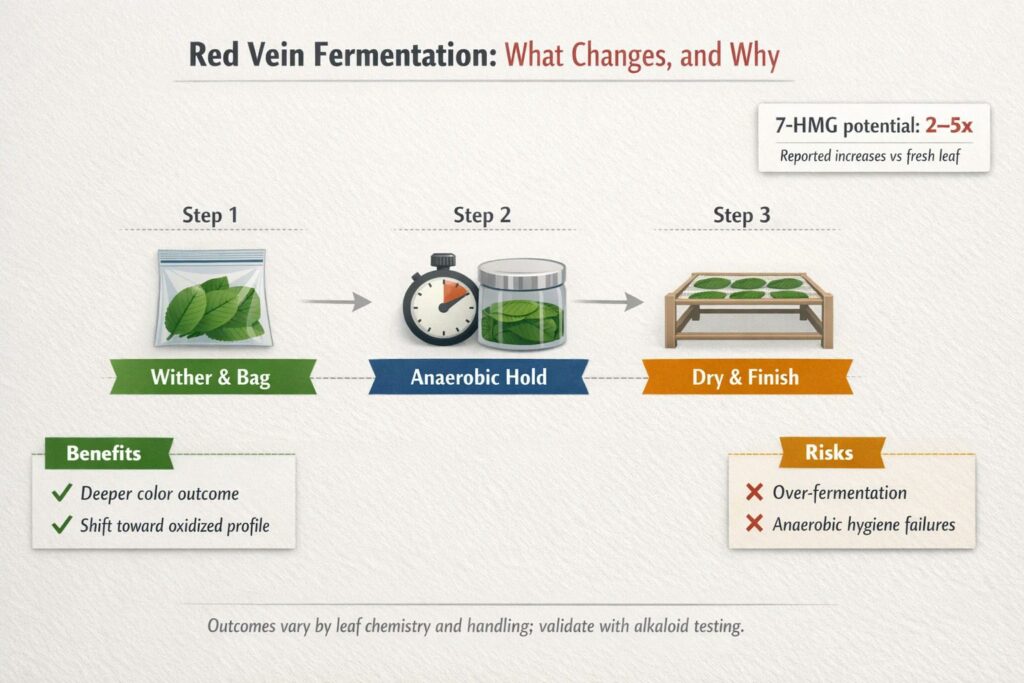
Freshly harvested leaves are packed into airtight bags or containers, initiating an anaerobic (oxygen-free) fermentation cycle. Trapping the leaf’s natural moisture creates a micro-environment where microbial oxidation occurs. During this phase, the chlorophyll breaks down—turning the leaf from green to a dark, rusty red or brown—while the alkaloid profile shifts dramatically.
Data shows that proper anaerobic fermentation can increase 7-HMG concentrations by 2-5x compared to fresh, unfermented leaves.
However, this process requires immense skill. Fermentation risks are high; if the environment isn’t strictly controlled, poor anaerobic hygiene can lead to over-fermentation or the introduction of unwanted mold and bacteria. This is exactly why sourcing from vendors who eliminate middlemen and work directly with transparent, highly skilled Southeast Asian farms is crucial for safety and consistency.
The Creation of Yellow & Gold Vein Kratom Through Processing
One of the most persistent myths in the kratom community is that “Yellow” or “Gold” kratom comes from a specific type of tree or a naturally yellow-veined leaf. In reality, Yellow and Gold are post-harvest recipes.
These phenotypes are created through specialized, multi-stage processing techniques. A typical Yellow kratom might involve a partial fermentation process followed by an extended sun-drying phase, or it might be a masterfully engineered post-harvest blend of indoor-dried and fully fermented leaves. Knowing that Yellow and Gold are processing techniques—not leaf types—empowers you to evaluate these products based on the vendor’s sourcing transparency rather than botanical myths.
The Physics of Nano-Kratom: Grinding & Sieving
Once the leaves are properly dried and cured, the final physical transformation takes place: milling. In recent years, “nano” kratom has become a major buzzword, but beyond the marketing hype, there is genuine physics at play here—specifically, the Noyes-Whitney Equation.
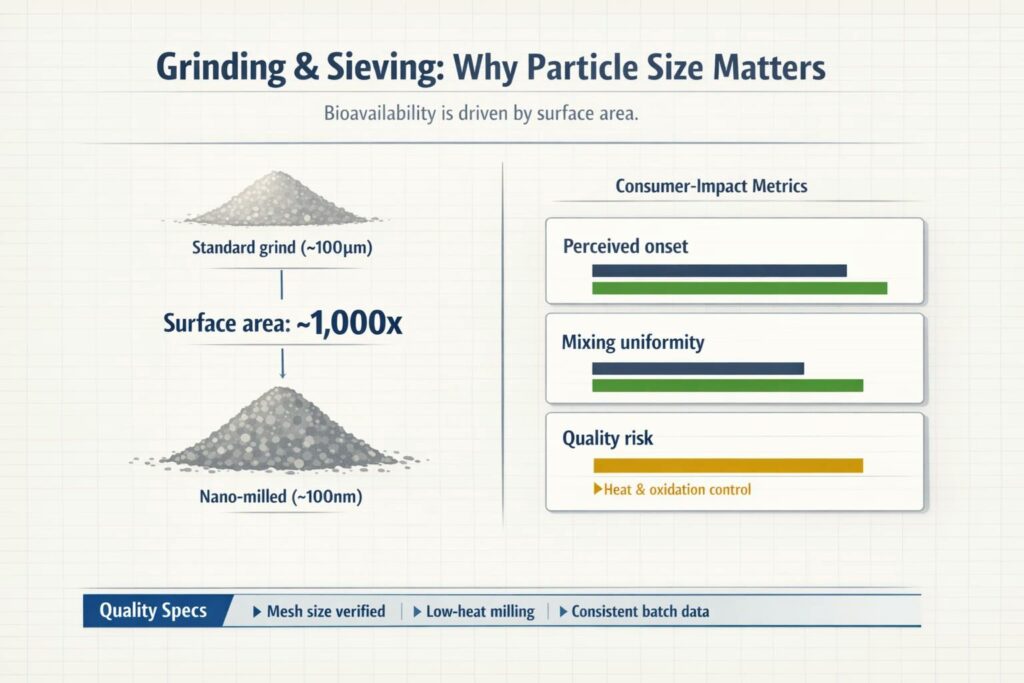
The Noyes-Whitney Equation dictates that the dissolution rate of a substance is directly proportional to its surface area. When you reduce the particle size of kratom powder from a standard 100 micrometers (µm) down to 100 nanometers (nm), you theoretically increase the total surface area by 1,000x.
Why does this matter? Because dramatically increasing the surface area vastly accelerates gastrointestinal absorption. For the user, this translates to significantly enhanced molecular bioavailability. Put simply, a highly refined, 400+ mesh sieved “nano” powder allows your body to absorb the alkaloids much more efficiently than a coarse grind. Less physical powder is required to achieve the same perceived onset and potency. The role of precision grinding and sieving cannot be overstated when evaluating a final product’s quality.
FAQ: Evaluating Post-Harvest Quality
Does fermentation destroy the potency of Red Vein Kratom?
No, it alters it. While fermentation may slightly reduce total Mitragynine content, it intentionally converts a portion of it into 7-HMG (up to a 2-5x increase). The overall “potency” shifts to a different alkaloid profile rather than disappearing.
Why does my White Vein kratom look slightly green?
Authentic White Vein kratom is indoor-dried without light to preserve Mitragynine. Because it is protected from UV oxidation and is not fermented, the natural green chlorophyll remains heavily present in the leaf. A bright, vibrant green color in a White Vein powder is actually a strong indicator of clean, controlled indoor processing.
If I want the strongest product, should I just look for “Flash Dried”?
Actually, the opposite is often true. High-heat flash drying can destroy 20-50% of the active alkaloids. You should look for products processed with controlled, low-heat indoor drying methods that preserve the leaf’s natural chemistry.
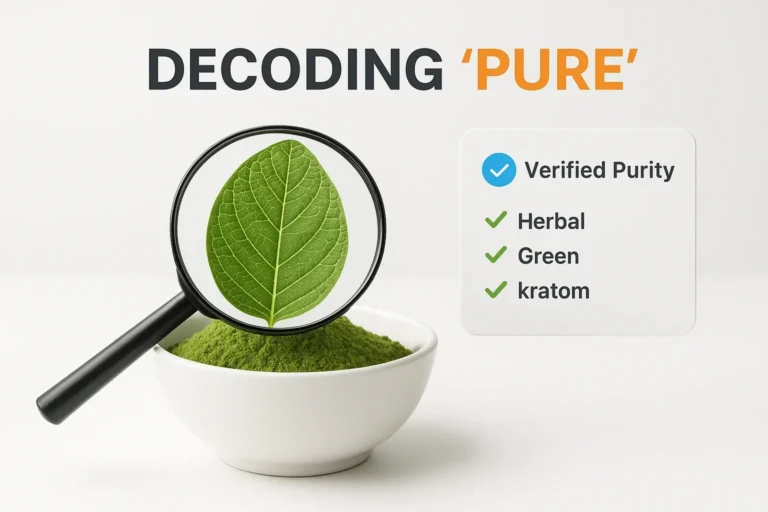
With all these variables, how can one identify high quality kratom on the market?
[https://kratom-online.com/kratom-quality-what-pure-means/]
High-quality kratom is identified through transparency. Look for vendors who bypass intermediaries, source directly from trusted organic farms, and clearly explain their post-harvest processes—whether that’s indoor drying, nano-milling, or controlled fermentation. Detailed product descriptions and rigorous cleanliness standards are the hallmarks of a premium supplier.
The Bottom Line on Processing
The journey from a fresh kratom leaf to the fine powder in your hands is a complex series of chemical and physical transformations. By understanding the profound impact of UV oxidation, thermal degradation, anaerobic fermentation, and nano-milling, you are no longer just guessing at strain names. You are evaluating the precise science that makes a premium product.
When you demand transparency in these processing methods, you naturally filter out sub-par intermediaries. Prioritize sources that document their drying techniques, respect the chemistry of the leaf, and deliver cleanly milled, direct-to-consumer purity without compromise.