
Kratom vs Kava: Effects, Benefits, Safety, and the Modern Biohacker’s Guide
If you are actively comparing kratom and kava in the 2026 wellness landscape, you have likely run into a frustrating wall of information. On one side, medical recovery centers paint both botanicals with a broad, fear-based brush, focusing entirely on worst-case scenarios while offering zero practical guidance. On the other side, niche vendors push heavily biased sales pitches that lack scientific depth.
What is missing is a practical, scientifically grounded evaluation—a guide that bridges technical pharmacology with the real-world ways people actually use these plants. You aren’t just looking for chemical breakdowns; you want to know which of these traditional botanicals will help you manage pain, anxiety, or post-workout recovery without derailing your productivity or long-term health.
What Is the Difference Between Kratom and Kava?
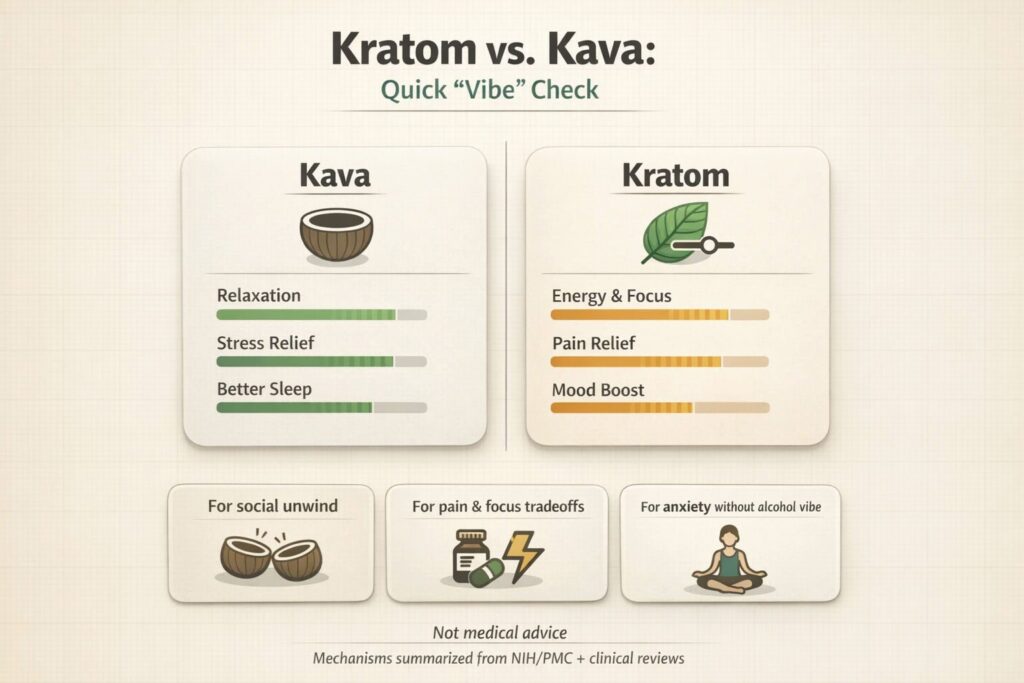
The central difference between kratom and kava is the type of effect each botanical is generally used to produce. Kava is primarily associated with relaxation, reduced tension, and social calm. Kratom is more commonly associated with dose-dependent effects that may range from stimulation and focus at lower amounts to sedation and pain relief at higher amounts.
Their pharmacology is also different. Kava’s principal compounds are kavalactones, while kratom’s principal compounds are indole alkaloids, particularly mitragynine and 7-hydroxymitragynine. These compounds interact with different receptor systems and therefore create different risk profiles, durations, and subjective experiences.
Kava is traditionally prepared as a water-based beverage made from the root and rhizome of the plant. Kratom is commonly sold as dried leaf powder, capsules, tea, extracts, or enhanced powder. The product format matters because concentrated extracts may produce stronger effects and make it more difficult to assess total alkaloid intake.
For readers comparing kratom or kava for a specific purpose, the most useful starting point is not which plant is “stronger.” The better question is whether the intended goal is relaxation and social ease, or stimulation, pain management, and broader dose-dependent versatility.
Kratom vs Kava at a Glance
Kava is traditionally associated with the South Pacific and is most often used for ceremonial, social, and relaxation purposes. Its effects are generally described as calming and physically relaxing without the same opioid-receptor activity associated with kratom.
Kratom is native to Southeast Asia, where the leaves have traditionally been chewed or brewed as tea. Depending on the amount consumed and the individual product, users may report stimulation, improved endurance, pain relief, or sedation.
Kava is generally the more relevant comparison for people seeking an alcohol-free social beverage or an evening relaxation ritual. Kratom is more commonly considered by people seeking functional energy, mood alteration, or relief from physical discomfort. These are broad user-reported patterns rather than guaranteed outcomes, and effects can vary significantly according to preparation, product quality, serving size, tolerance, and individual physiology.
Traditional Origins of Kratom and Kava
Understanding the traditional origins of kratom and kava helps explain why the two plants are used differently today. Although both are marketed within the modern botanical supplement category, they developed in distinct cultural, geographic, and social contexts.
Kratom is derived from Mitragyna speciosa, a tropical tree native to Southeast Asia. In traditional settings, laborers reportedly chewed fresh leaves or prepared kratom tea to support endurance during physically demanding work. It has also been used in community and folk-practice contexts for discomfort, fatigue, and opioid withdrawal, although these uses do not establish clinical safety or efficacy.
Kava comes from Piper methysticum, a plant cultivated throughout parts of the South Pacific. Traditional kava beverages are prepared from the root and rhizome and consumed during ceremonies, community gatherings, conflict-resolution rituals, and social occasions. Its traditional role is therefore closely associated with calm, communication, hospitality, and communal participation.
These cultural distinctions remain visible in modern use. Kratom is often positioned as a functional botanical that may support energy or relief, while kava is more often positioned as a relaxation beverage or alcohol alternative. Responsible comparison should respect these ethnobotanical histories rather than reducing both plants to interchangeable “legal highs.”
The Subjective Experience: Defining the “Vibe”
Before we look under the hood at the active compounds, we have to address the primary user intent: the subjective experience. Many people turn to these plants searching for a socially acceptable alternative to alcohol, but the resulting “vibes” are fundamentally different.
Kava is characterized by a “grounding calm.” Traditional to the South Pacific, kava root is inherently a social lubricant. It relaxes the central nervous system, melts physical tension, and quiets an overactive mind without causing cognitive fog. You are entirely present, just noticeably heavier and more relaxed.
Kratom (Mitragyna speciosa), native to Southeast Asia, offers “dose-dependent versatility.” Unlike kava, kratom’s effects change drastically based on how much you consume. Lower doses tend to act as a clean, stimulating productivity booster, while higher doses provide soothing relief and relaxation. It is a highly functional botanical tailored to specific times of day.
Kratom vs Kava for Anxiety, Pain, Energy, and Sleep
For anxiety or social tension, kava is generally the more directly aligned botanical because its traditional and modern use centers on relaxation. However, people with persistent anxiety should not rely on a botanical product as a replacement for evaluation or evidence-based treatment.
For pain or physical discomfort, kratom is more frequently discussed because mitragynine and related alkaloids interact with opioid receptors. That same mechanism also creates meaningful safety concerns, including tolerance, withdrawal, dependence, and potentially dangerous interactions.
For energy and sustained activity, kratom is more commonly selected, particularly in lower amounts. Kava is not generally considered an energy-enhancing botanical and may reduce motivation, alertness, or coordination.
For sleep, kava may be more relevant when tension or restlessness is the main barrier. Kratom can be sedating at higher amounts, but repeated use for sleep may increase tolerance and dependence risk. Neither botanical should automatically be combined with prescription sleep aids, alcohol, opioids, benzodiazepines, or other sedating substances.
Pharmacology 101: Alkaloids vs. Kavalactones
To truly evaluate which solution fits your lifestyle, you need to understand how they interact with your brain. The mechanisms here are entirely distinct.
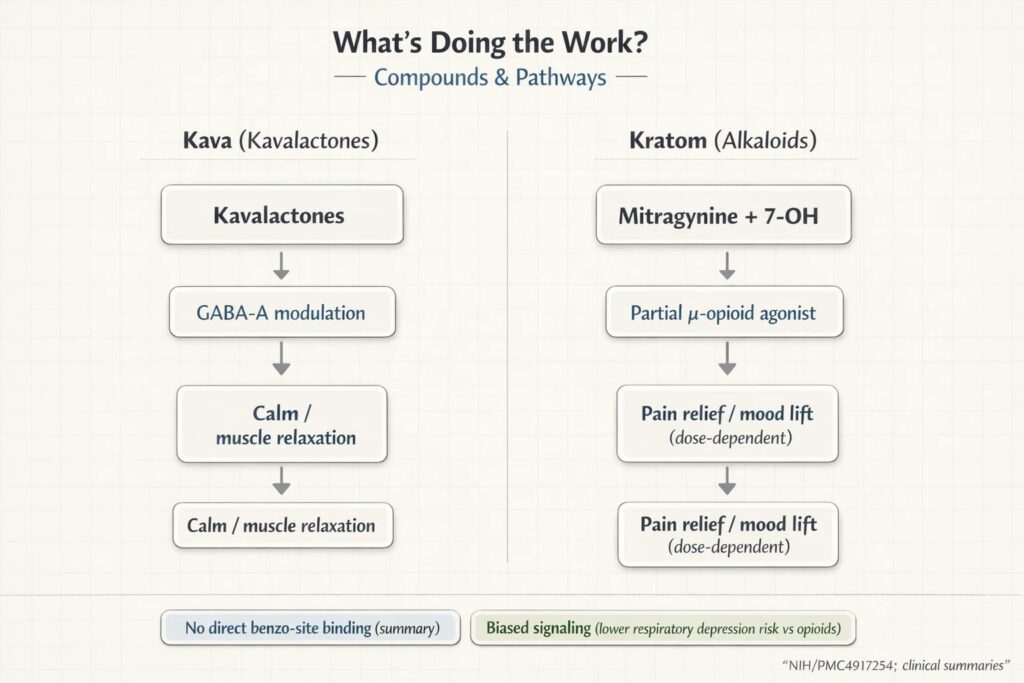
Kava’s Kavalactones: The active compounds in kava are called kavalactones. According to clinical data (NIH/PMC4917254), kavalactones act primarily by modulating GABA-A receptors in the brain. This is the same inhibitory neurotransmitter pathway influenced by alcohol and certain prescription medications. However, the critical distinction is that kavalactones do not bind directly to benzodiazepine sites. This unique pharmacological trait makes kava a powerful relaxant with a remarkably low risk of physiological addiction.
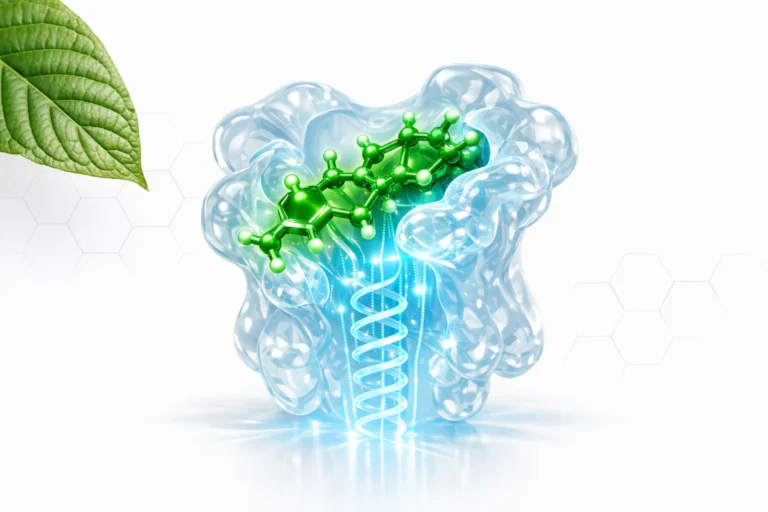
Kratom’s Alkaloids: Kratom’s primary active compound, mitragynine, operates on a completely different system. It acts as a partial μ-opioid agonist. Modern pharmacology recognizes this action as “biased signaling.” In plain English, this means it interacts with pain receptors to provide relief, but it does not recruit the beta-arrestin pathway in the same way traditional opioids do—drastically reducing the risk of respiratory depression.
Mitragynine vs 7-Hydroxymitragynine
Mitragynine is usually the most abundant alkaloid in kratom leaf material. Its pharmacological profile is complex and may involve opioid, adrenergic, serotonergic, and other receptor systems. This complexity helps explain why users may report different effects according to dose, product type, and individual sensitivity.
7-Hydroxymitragynine generally occurs at much lower concentrations in natural leaf material but has stronger activity at μ-opioid receptors. Some concentrated or modified products may contain substantially different alkaloid profiles from traditional kratom powder, increasing the importance of transparent potency testing.
A Certificate of Analysis should therefore identify more than whether a product “passed” contamination screening. For kratom products, meaningful quality documentation may include mitragynine content, testing for relevant minor alkaloids where available, microbial screening, heavy-metal results, and a traceable batch number.
How Long Do Kratom and Kava Effects Last?
The onset and duration of kratom and kava vary according to product form, preparation method, stomach contents, serving size, tolerance, and individual metabolism. These variables make exact timing difficult to guarantee.
Kava beverages may begin producing noticeable effects within a relatively short period, particularly when prepared traditionally or consumed on a lighter stomach. The relaxing experience may continue for several hours, although product concentration and kavalactone content can substantially influence duration.
Kratom powder and tea may also take effect within the first hour, while extracts may feel stronger or faster depending on their concentration and formulation. Kratom’s effects can last for several hours, and higher-potency products may produce longer-lasting sedation or unwanted after-effects.
Food can delay onset for both botanicals, while repeated use may change the perceived intensity. New users should not assume that a delayed effect means a product is inactive and immediately consume more. Rapid redosing is a common pathway to excessive intake, nausea, dizziness, sedation, or other adverse effects.
Factors That Influence the Experience
The same labeled serving can affect two people differently. Body weight, metabolism, liver function, hydration, previous exposure, sleep quality, other supplements, prescription medications, and the accuracy of product labeling may all influence the result.
Product format is another major variable. Traditional root beverages, micronized kava, instant kava, tinctures, sprays, kratom leaf powder, capsules, enhanced powder, and concentrated extracts cannot be compared solely by volume or teaspoon. Their active-compound concentrations may be substantially different.
For this reason, the most responsible kratom vs kava guide should prioritize standardized labeling, conservative use, third-party testing, and avoidance of high-risk combinations rather than presenting universal serving instructions.
The “User Hack” Lab: Preparation and Optimization
Knowing the science is only half the battle. If you’ve spent any time on Reddit or niche forums, you know that maximizing the effects of these plants requires a bit of bio-hacking. Neither plant is famous for tasting great, but how you prepare them dictates how well your body absorbs them.
The Pineapple Method (Taste & Absorption)
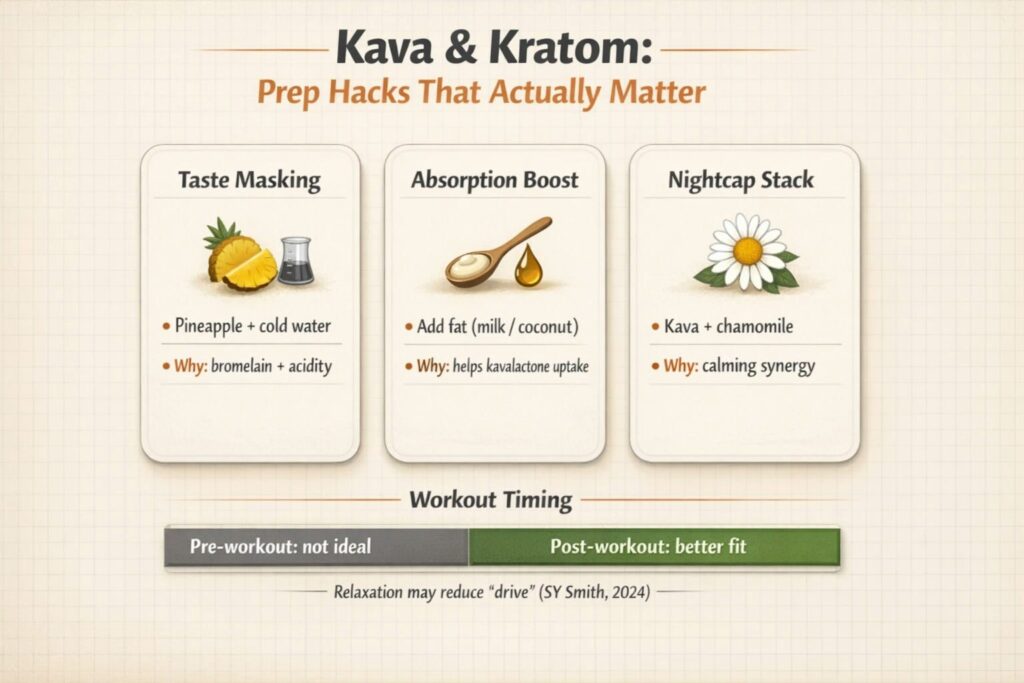
Both kratom and kava have deeply earthy, bitter flavor profiles. A common novice mistake is mixing them with water and hoping for the best. The veteran “hack” for kava is mixing it with pineapple juice and a splash of coconut milk. This isn’t just to mask the taste with sugar. Pineapple contains bromelain, an enzyme that helps break down the plant material, while the coconut milk provides essential dietary fats. Because kavalactones are fat-soluble, adding a lipid source exponentially increases their bioavailability.
Bioavailability Does Not Equal Safety
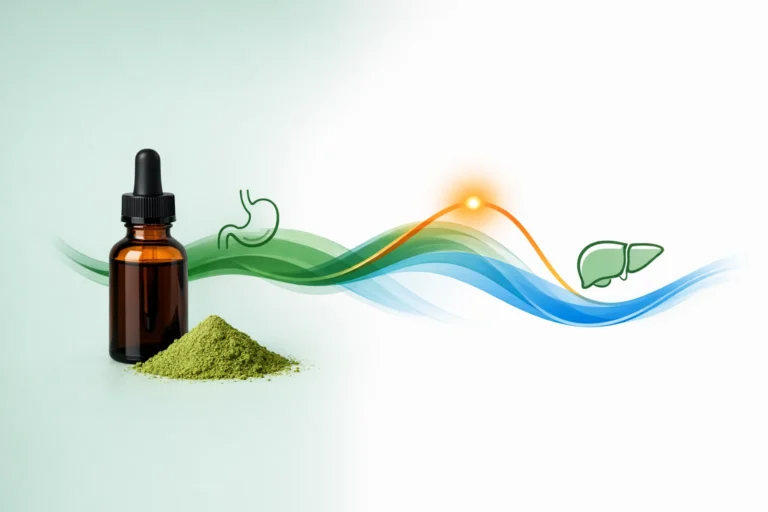
Bioavailability refers to the proportion of an active compound that reaches systemic circulation and becomes available to produce an effect. In consumer wellness discussions, higher bioavailability is often presented as automatically desirable. In practice, greater absorption may also increase adverse effects, sedation, nausea, dizziness, or interaction risk.
For kratom extracts and enhanced products, increased alkaloid concentration may narrow the margin between the intended effect and an unpleasant or hazardous experience. For kava, concentrated extracts may differ substantially from traditional root beverages in chemotype, solvent use, serving size, and total kavalactone exposure.
A more useful optimization goal is reproducibility. Consumers should be able to identify the batch, understand the labeled potency, measure a consistent amount, and avoid combining the product with alcohol, opioids, benzodiazepines, prescription sedatives, or other central nervous system depressants.
Traditional Straining vs. Modern Preps
Traditional kava preparation requires mechanically kneading and straining the root powder through a micron bag in water for 10-15 minutes. It is a ritual, but it is time-consuming. Modern alternatives like sublingual kava sprays bypass first-pass liver metabolism, offering faster onset, though often at a lower overall peak than a traditional brew.
For kratom, the preparation debate usually centers around the kratom powder vs extract decision. Traditional raw powder requires standard “toss and wash” or tea-brewing methods, offering a full-spectrum alkaloid profile. Extracts provide a hyper-concentrated punch of mitragynine without the plant matter. If you are looking for the sweet spot between traditional whole-leaf effects and potent modern convenience, an enhanced kratom powder—like a premium Green Thai Enhanced—combines the best of both worlds by fortifying standard powder with pure extract.
Kratom Powder vs Extract
Kratom powder is made from dried and milled leaf material. It is typically less concentrated than extracts, but potency can still vary among batches and vein-marketing categories. The familiar red, green, and white labels are commercial classifications rather than precise pharmacological guarantees.
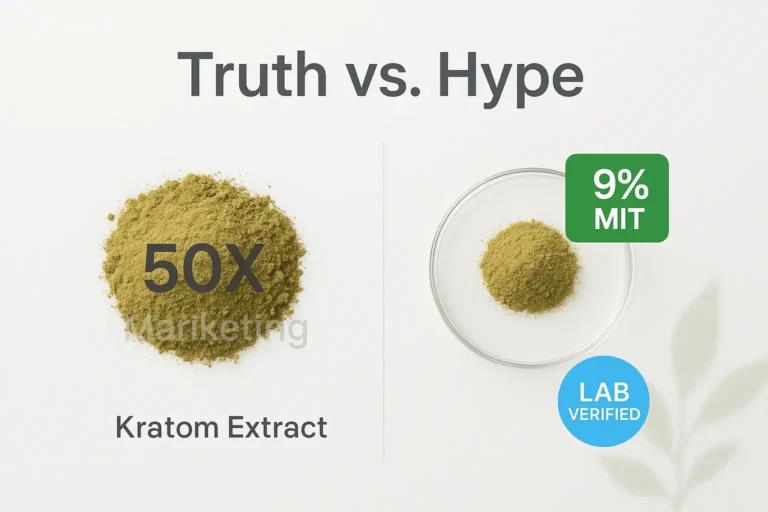
Kratom extracts are produced by concentrating selected constituents from leaf material into liquids, resins, powders, or tablets. They may reduce the amount of plant fiber consumed, but they also increase the risk of unexpectedly high alkaloid exposure, especially when labeling is unclear.
Enhanced kratom powder combines leaf powder with additional extract or concentrated alkaloids. This can create a stronger product in a familiar format, but consumers should know the mitragynine content per gram or serving and whether the product contains elevated 7-hydroxymitragynine.
Beginners should not assume that extracts are simply more convenient versions of powder. They are pharmacologically more concentrated and may accelerate tolerance when used frequently.
Traditional Kava, Instant Kava, and Micronized Kava
Traditional kava is generally prepared by kneading and straining ground root material in water. It offers the closest connection to established South Pacific preparation practices, although cultivar and chemotype still matter.
Instant kava is usually a dehydrated preparation designed to dissolve more easily in water. A well-made instant product can offer convenience without requiring extensive kneading, but consumers should confirm whether it is produced from a traditionally prepared beverage or from an extract.
Micronized kava contains very finely milled plant material and may not require conventional straining. Because more plant matter is consumed, some users report greater gastrointestinal discomfort or skin-related side effects with frequent use.
Kava extracts and tinctures vary widely. The solvent, plant parts, cultivar, kavalactone percentage, and extraction process should be clearly disclosed. A concentrated extract should not automatically be treated as equivalent to a traditional shell of kava.
Choosing the Right Product Format
The best format depends on the user’s goal, experience level, tolerance for plant material, and need for precise labeling. Convenience should be balanced against concentration and predictability.
Kava users seeking a traditional social or relaxation experience may prefer Noble root prepared as a strained beverage. Those prioritizing convenience may choose instant kava with transparent kavalactone labeling and clear information about how it was produced.
Kratom users comparing powder, capsules, and extracts should focus on measurable alkaloid content, batch consistency, and contamination testing. Capsules offer convenience and reduce taste, but they can delay onset and make it easier to consume multiple units without fully appreciating the total amount.
Liquid shots and concentrated extracts deserve particular caution because a small container may contain several powder-equivalent servings. Products with incomplete potency disclosures should be avoided.
The Nightcap Synergy
If your primary goal is sleep, you might have seen users stacking kava with chamomile. This is highly effective neurochemistry at work. Chamomile contains apigenin, a bioflavonoid that, like kavalactones, modulates GABA receptors. Stacking them creates a synergistic effect that promotes deep, restful sleep far better than either plant used in isolation.
Kratom vs Kava for Sleep
Kava is generally the more coherent choice when the intended goal is evening relaxation, reduced tension, or an alcohol-free wind-down ritual. Its use should still be occasional and should not involve driving or safety-sensitive activity afterward.
Kratom may feel sedating at higher amounts, but using it repeatedly as a sleep aid can contribute to tolerance, rebound sleep difficulty, dependence, and withdrawal-related insomnia. Its opioid-receptor activity makes it a less straightforward long-term sleep strategy.
Persistent insomnia may be linked to anxiety, pain, sleep apnea, medication effects, circadian disruption, or other medical concerns. Botanical products should not delay appropriate evaluation when sleep problems are frequent or worsening.
The Gym Bag Debate: Pre vs. Post-Workout
Can you use these botanicals to optimize your fitness routine? Yes, but timing is everything. Because lower doses of kratom are highly stimulating, many fitness enthusiasts successfully integrate it as a pre-workout alternative for sustained focus and energy.
Kava, conversely, has no business in your pre-workout stack. As a potent central nervous system relaxant, recent research (SY Smith, 2024) indicates that kavalactones can directly impact the “desire to expend energy.” Kava is a post-workout recovery tool. Save it for the sauna after a heavy session when your goal is to release muscular tension and down-regulate your nervous system.
Kratom vs Kava for Post-Workout Recovery
Kava may appeal to users seeking relaxation after exercise, but it has not been established as a treatment for muscle damage, inflammation, or athletic recovery. A calmer subjective state should not be confused with faster physiological recovery.
Kratom may reduce the perception of discomfort, but masking pain after training can make it harder to distinguish ordinary soreness from an injury requiring rest or medical attention. Repeated use for exercise-related pain can also create a pattern of tolerance and dependence.
Evidence-based recovery fundamentals remain more reliable: adequate sleep, hydration, protein intake, appropriate carbohydrate replacement, mobility work, gradual training progression, and treatment of injuries when necessary. Botanicals should not replace these basics.
Common Preparation Mistakes
One common mistake is assuming that poor taste indicates poor quality or that an intensely bitter product must be more potent. Flavor is influenced by plant material, processing, age, and formulation, but it is not a reliable measure of active-compound concentration.
Another mistake is redosing too quickly because effects have not appeared immediately. Capsules, food intake, extracts, and individual metabolism can all delay onset. Consuming more before the initial amount has fully taken effect increases the likelihood of nausea, dizziness, excessive sedation, or an unpleasant experience.
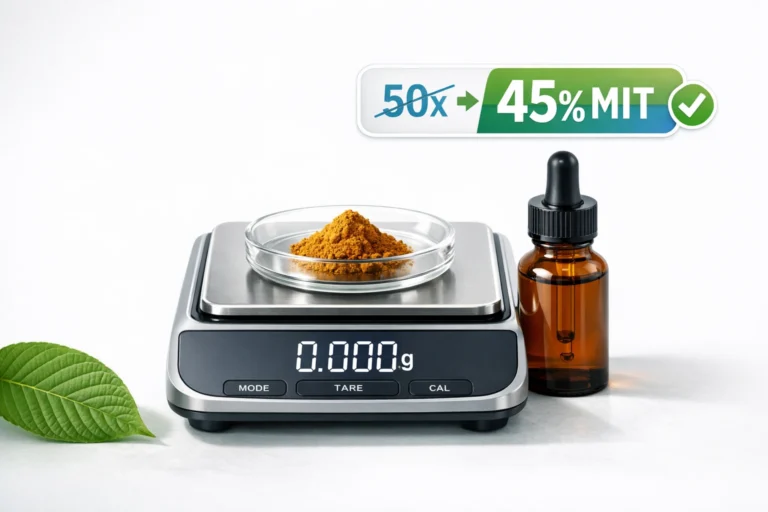
Consumers also make errors when using household spoons to measure concentrated powders. Volume measurements are inconsistent because powder density varies. Where a product is used, a calibrated digital scale and clearly labeled potency information provide more reliable measurement than teaspoons or scoops.
Mixing products is another major risk. Combining kratom and kava with each other, alcohol, prescription sedatives, opioids, benzodiazepines, or sleep medications can create unpredictable central nervous system effects and additional liver-processing demands.
How to Evaluate Product Quality Before Use
Product quality should be assessed before choosing a preparation method. A polished label, strong flavor, or dramatic potency claim does not establish purity. Reputable products should be tied to a specific batch and supported by third-party laboratory documentation.
For kratom, the laboratory report should ideally include mitragynine potency, relevant alkaloid information where available, heavy-metal screening, and microbial testing for contaminants such as Salmonella, E. coli, yeast, and mold.
For kava, useful documentation may include total kavalactone content, plant part, cultivar or chemotype where available, extraction method, microbial testing, and screening for contaminants. The label should clarify whether the product is made from Noble kava root or another source material.
Testing should be performed on the finished batch rather than presented as a generic certificate unrelated to the product being sold.
How to Read a Certificate of Analysis (COA)
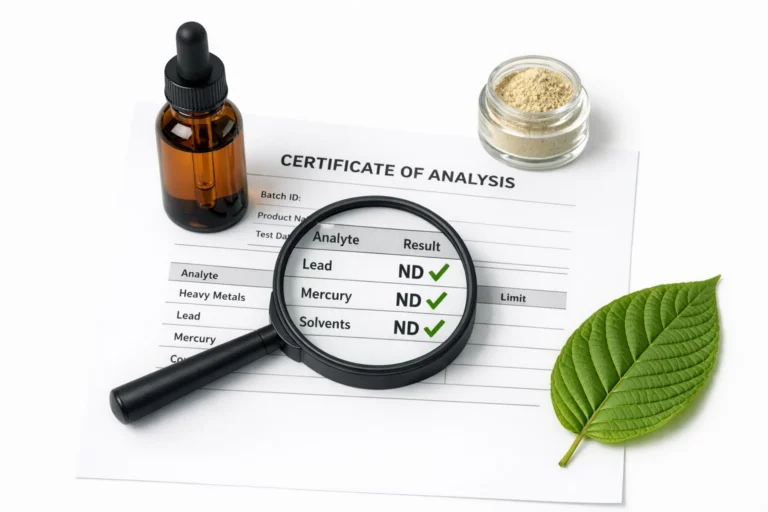
A Certificate of Analysis is a laboratory document that reports the results of testing performed on a product or ingredient. It should identify the product, batch or lot number, test date, laboratory, analytical method, and measured results.
The first step is matching the batch number on the product to the batch number on the COA. A report without a traceable lot number does not prove that the purchased product was tested.
Next, review potency results. For kratom, look for measurable mitragynine content rather than vague marketing terms. For concentrated products, determine whether the label states alkaloid content per serving and per container. For kava, look for total kavalactone concentration and information about the plant material used.
Contaminant results should include numerical values, detection limits, and clear pass criteria. Statements such as “lab tested” or “passed” are less informative when the underlying results are not available.
Heavy-metal screening commonly includes lead, arsenic, cadmium, and mercury. Microbial testing should address relevant pathogens and overall contamination. Depending on the product and jurisdiction, pesticide residues, residual solvents, or adulterant testing may also be important.
Finally, verify that the laboratory is independent and appropriately accredited for the methods performed. A COA is most valuable when it is current, batch-specific, complete, and easy for the customer to authenticate.
Responsible Storage and Batch Consistency
Kratom and kava products should be stored in sealed containers away from heat, moisture, direct sunlight, children, and pets. Exposure to humidity can increase clumping and microbial risk, while prolonged heat or light may affect product stability.
Consumers should retain the product packaging and batch number until the product has been fully used. This information is essential if a recall, adverse event, or quality concern is reported.
Batch consistency matters because botanical products naturally vary. Companies that test each finished lot and disclose potency ranges provide users with more useful information than companies relying solely on supplier documentation or historical test results.
Safety, Liver Health, and Legal Constraints
When evaluating these options, risk management is paramount.
First, let’s clear up the “CVS Kava Tea” myth. If you’ve tried Yogi Kava Stress Relief tea from a grocery store and felt nothing, it’s because the kavalactone dosage is incredibly low compared to a traditionally prepared root beverage.
Regarding liver health, kava has carried a lingering stigma from the early 2000s. Today, we know that hepatic issues are almost entirely linked to the use of non-root aerial plant parts, the consumption of “Tudei” (two-day) kava strains instead of “Noble” kava, or combining kava with alcohol.
For kratom, the primary safety focus is on sourcing. Sourcing directly from trusted Southeast Asian farms ensures you aren’t consuming heavy metals, adulterants, or biological contaminants. Both substances require you to treat your liver with respect—neither should ever be combined with alcohol or prescription CNS depressants.

Kratom Dependence, Tolerance, and Withdrawal
Kratom’s opioid-receptor activity makes tolerance and dependence central considerations in any balanced kratom vs kava comparison. Repeated use may lead users to consume larger or more concentrated amounts to achieve the same perceived effect.
People who become dependent may experience withdrawal symptoms after reducing or stopping use. Reported symptoms can include restlessness, irritability, anxiety, sleep disruption, gastrointestinal discomfort, muscle aches, sweating, cravings, and low mood. The intensity and duration may vary according to frequency, product potency, extracts used, and individual physiology.
Escalating from leaf powder to concentrated extracts can make alkaloid exposure less predictable and may accelerate tolerance. Frequent use, unsuccessful attempts to reduce consumption, withdrawal, or continued use despite harm are reasons to seek support from a qualified healthcare or substance-use professional. NIDA notes that kratom dependence and kratom-related substance use disorder remain active areas of research.
Kava Tolerance and Long-Term Use
Kava is generally viewed as having lower dependence potential than kratom, but regular use is not automatically harmless. Frequent or heavy consumption may cause drowsiness, gastrointestinal discomfort, impaired coordination, skin changes sometimes described as kava dermopathy, or other unwanted effects.
The commonly discussed idea of “reverse tolerance” is largely based on user reports and traditional explanations rather than a universally established pharmacological rule. Some new users may perceive stronger effects after repeated experiences because they learn the preparation method, become familiar with the subjective effects, or use products with different potency.
Consumers should not interpret reverse tolerance as a reason to use kava repeatedly until an effect appears. Lack of an immediate effect may reflect low potency, preparation differences, individual variation, or unrealistic expectations.
Who Should Avoid Kratom or Kava?
People who are pregnant or breastfeeding should avoid kratom and kava because adequate safety has not been established. These botanicals may also be inappropriate for children and adolescents.
Extra caution is necessary for people with liver disease, kidney disease, cardiovascular conditions, seizure disorders, substance-use histories, or mental health conditions that may be worsened by psychoactive substances.
Anyone taking prescription medication should discuss possible interactions with a qualified clinician or pharmacist. This is particularly important for medications that affect the central nervous system, liver enzymes, blood pressure, heart rhythm, mood, sleep, or pain perception.
Neither botanical should be used before driving, operating machinery, working at height, entering water, using a sauna, or performing other safety-sensitive activities when alertness or coordination could be affected.
Drug Testing and Workplace Policies
Standard workplace drug-testing panels usually target specified drug classes rather than every psychoactive botanical. Kratom and kava are not ordinarily included in the standard federal five-drug testing panel. However, specialized laboratory tests can identify mitragynine or other kratom-related compounds when an organization specifically requests them.
A negative standard panel does not mean that an employer permits the substance. Workplace policies may prohibit impairment, unauthorized psychoactive products, or substances considered incompatible with safety-sensitive duties regardless of whether they appear on a routine panel.
Testing practices also differ in probation, treatment, athletics, military service, pain-management programs, and high-security environments. Individuals should review the actual policy rather than relying on general assumptions about five-panel or 12-panel tests.
Third-Party Testing and Responsible Sourcing
Responsible sourcing means more than identifying the country of origin. A trustworthy supplier should be able to connect every product to a traceable lot, finished-batch Certificate of Analysis, manufacturing date, and clearly disclosed potency information.
For kratom, useful laboratory testing includes mitragynine concentration, relevant minor-alkaloid data where available, microbial screening, and heavy-metal results. Concentrated products should state active alkaloid content per serving and per package rather than relying only on extract ratios.
For kava, the supplier should disclose the plant part, product type, cultivar or chemotype when available, total kavalactone content, and extraction method. Testing should also address microbial contamination, heavy metals, and applicable residual solvents.
A COA should match the exact batch being sold. Generic laboratory logos, undated reports, cropped screenshots, and certificates without lot numbers do not establish that the finished product was tested.
FAQ: Making Your Decision
Can I mix kratom and kava together?
While some bio-hackers combine them, it is generally not recommended for regular use. Kratom’s stimulating properties can compete with kava’s sedating effects, leading to an unpredictable experience. Furthermore, both are processed by the liver; compounding them forces your hepatic system to work overtime.
Will either of these show up on a drug test?
Neither kava nor kratom will trigger a false positive on a standard 5-panel or 12-panel workplace drug test. However, specific alkaloid tests for mitragynine do exist and are occasionally utilized in strict probation or high-security clearance scenarios. Always verify your employer’s specific testing protocols.
Which one builds tolerance faster?
Kratom requires strict dosage discipline. Daily, heavy use will lead to alkaloid tolerance and eventual dependence. Kava actually features a phenomenon known as “reverse tolerance,” where new users might not feel the effects until they have consumed it several times, as kavalactones build up in the system.
The Final Verdict
Your choice between kratom and kava comes down to your primary daily objective.
If your goal is evening relaxation, easing social anxiety, or recovering physically after an intense workout, kava is the undisputed choice for unwinding without the hangover of alcohol.
If your goal requires versatility—needing clean energy and focus during a morning work block, or soothing relief to power through physical discomfort in the afternoon—kratom is the superior functional tool.
When you are ready to integrate kratom into your routine, transparency and purity are non-negotiable. At Kratom-Online, we eliminate the middlemen to bring you directly sourced, lab-verified powders and extracts. You deserve to know exactly what is going into your body, backed by the highest standards of product clarity in the industry.