
Is Kratom Legal? A 2026 Guide to Kratom, Kava & CBD Laws
The legality of botanicals in the United States isn’t a simple yes or no. It’s a complex map of state laws, federal guidelines, and evolving regulations that can change from one county to the next. For consumers evaluating options like kratom, kava, and CBD, the core question isn’t just “Is this legal?” but “How stable is its legal status, and what’s my personal risk?”
This guide moves beyond simple lists of laws to provide a comparative risk framework. We’ll break down the different regulatory models, assess the long-term stability of each botanical, and give you the tools to make a confident, informed decision based on where you live.
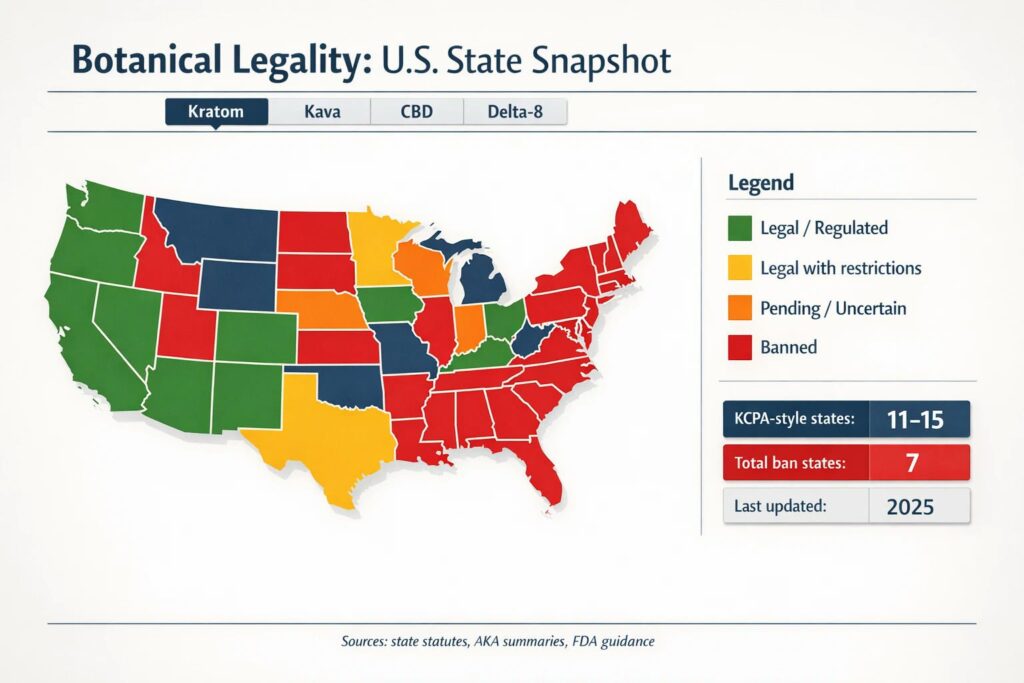
A fast snapshot of how fragmented U.S. botanical legality is. Use the legend to gauge local risk before ordering, traveling, or choosing a legal alternative.
Is Kratom Legal in the United States?
Kratom is not federally scheduled as a controlled substance in the United States. This means there is currently no nationwide federal ban on kratom. However, federal legality does not automatically make kratom legal everywhere. Individual states, counties, and municipalities have the authority to establish their own restrictions, resulting in a patchwork of laws across the country.
Some states regulate kratom through consumer protection legislation, while others prohibit its sale entirely. Local governments may also adopt additional ordinances that differ from statewide regulations. Because these laws continue to evolve, consumers should verify the legal status of kratom in both their home state and any destination where they intend to travel or receive shipments.
This state-by-state approach makes kratom unique compared with many other botanical products. Rather than operating under a single comprehensive federal framework, kratom legality depends largely on state legislative priorities, public health policy, and consumer protection initiatives.
A tale of two frameworks: KCPA vs. the Farm Bill
Understanding the legal landscape starts with knowing the two landmark pieces of legislation governing kratom and hemp-derived products like CBD: the Kratom Consumer Protection Act (KCPA) and the 2018 Farm Bill. While both aim to create legal markets, their approaches and outcomes are vastly different.
The Kratom Consumer Protection Act (KCPA)
Advocated for by groups like the American Kratom Association, the KCPA is a state-level regulatory framework. It’s not a federal law, but rather a model bill that states can adopt to regulate the kratom industry within their borders. As of 2026, between 11 and 15 states have passed some form of the KCPA.
Key provisions of the KCPA typically include:
- Age Restrictions: Prohibits sales to minors (usually under 18 or 21).
- Labeling Requirements: Mandates clear labeling of product ingredients and alkaloid content.
- Purity and Safety: Outlaws the sale of kratom adulterated with dangerous or illicit substances.
The KCPA creates a regulated, transparent market. It provides clear rules for vendors and safety assurances for consumers, which is a stark contrast to the seven states (Alabama, Arkansas, Indiana, Rhode Island, Vermont, Wisconsin, and Mississippi) that have enacted total bans.
Why Kratom Laws Differ Between States
One of the most common questions consumers ask is why kratom is legal in one state but prohibited in another. The answer lies in the decentralized nature of U.S. lawmaking. States have the authority to regulate many consumer products independently, allowing legislators to adopt different approaches based on public health priorities, available research, and local policy objectives.
Some lawmakers favor regulated consumer access through legislation such as the Kratom Consumer Protection Act, believing that product standards, age restrictions, and testing requirements better protect consumers than outright prohibition. Other jurisdictions continue to express concerns regarding safety, resulting in bans or additional restrictions while scientific research and regulatory discussions continue to evolve.
Public education, advocacy efforts, consumer demand, and emerging scientific evidence all influence how states evaluate kratom legislation. As additional states review existing policies, the legal landscape may continue shifting toward either broader regulation or expanded consumer protection requirements rather than nationwide uniformity.
The Hemp Farm Bill
The 2018 Farm Bill federally legalized hemp by removing it from the Controlled Substances Act. This opened the door for the explosion of CBD, Delta-8, and other hemp-derived cannabinoids. However, the bill created a major regulatory gap. It legalized the plant but gave the FDA very little power to regulate finished products.
This has resulted in a “Wild West” market where product quality, potency, and safety vary dramatically. Without federal oversight, consumers are left to trust vendors, many of whom operate with little to no transparency. This uncertainty is a key factor when comparing the regulatory burden of the kava vs kratom markets.
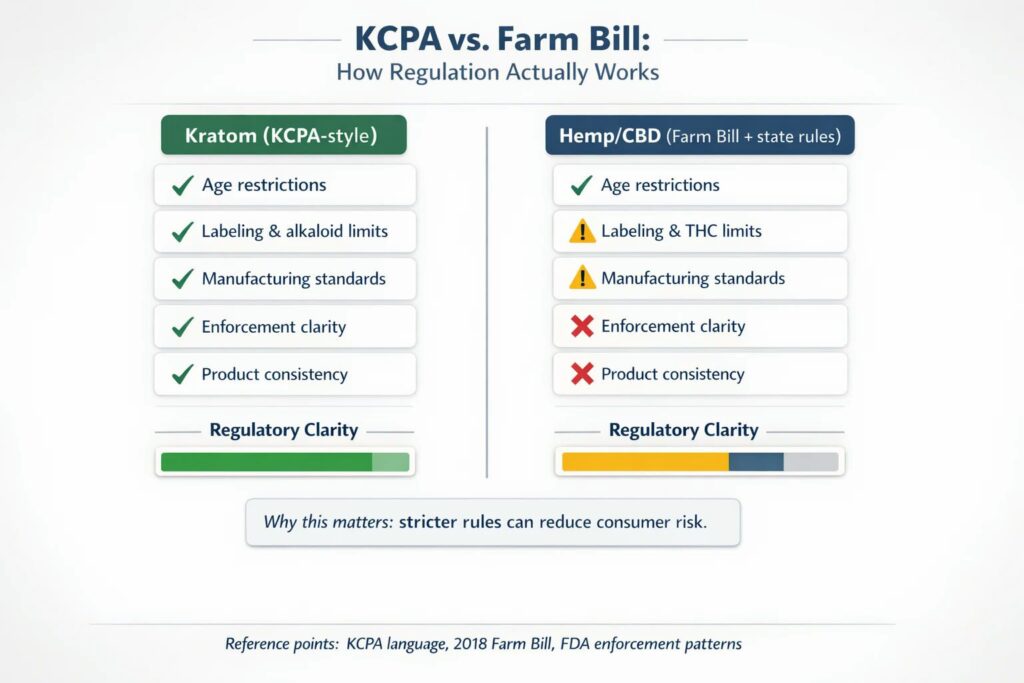
Not all “legal” categories are equally predictable. This framework view helps you compare enforcement clarity, labeling rules, and product consistency before choosing a botanical.
The Botanical Legal Stability Index
To help you evaluate your options, we’ve developed a Legal Stability Index. This score assesses how likely a substance is to remain legal and accessible in the next 24 months based on current legislative momentum, regulatory actions, and international precedent.
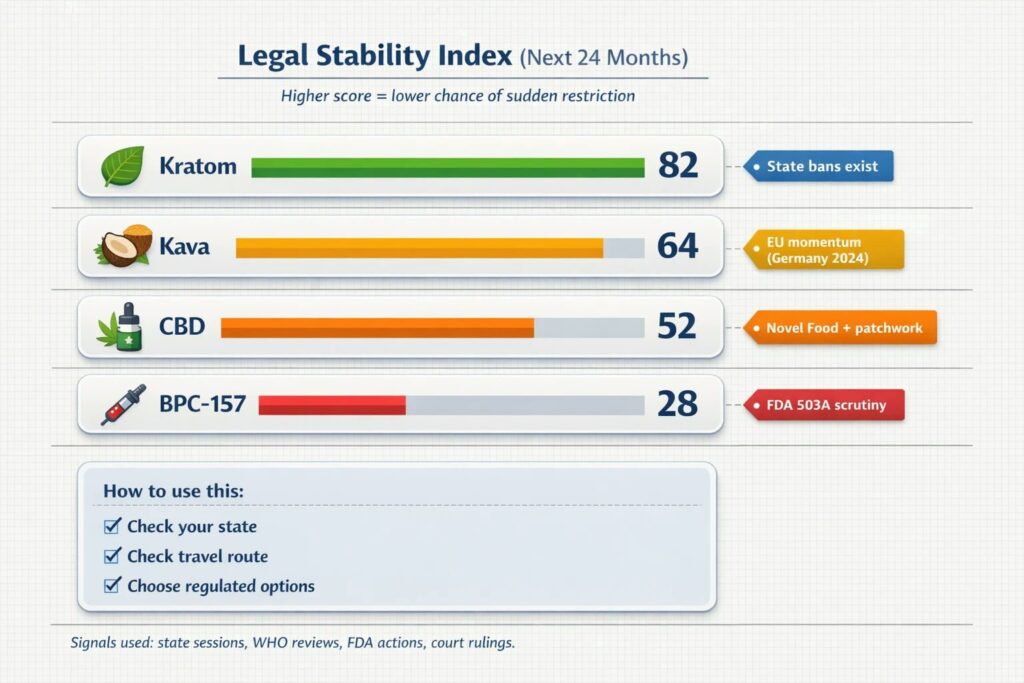
A single comparative view of which botanicals are most likely to stay legal. Use the driver tags to understand what could change and how fast.
Stability Breakdown:
- Kava: High Stability. Kava has a long history of traditional use and is regulated as a dietary supplement. Its position was further strengthened in 2024 when a German administrative court lifted major prohibitions, signaling growing international acceptance.
- Kratom (in KCPA States): Moderate-High Stability. The state-by-state adoption of the KCPA is creating stable, regulated markets. The primary risk remains federal indecision, but the growing number of regulated states provides a strong defense against outright bans. This responsible approach is a key focus of the global kratom coalition.
- CBD & Delta-8: Low-Moderate Stability. The lack of federal oversight and conflicting state laws make the hemp market volatile. States are increasingly cracking down on intoxicating cannabinoids like Delta-8, and the FDA could issue stricter regulations at any time.
- BPC-157 & Research Peptides: Very Low Stability. These substances exist in a precarious grey area. The FDA has been actively targeting 503A compounding pharmacies that produce BPC-157, moving to classify it as an unapproved drug. Its legal availability is shrinking rapidly.
Traveling, shipping, and buying with confidence
Navigating the legal patchwork becomes even more critical when you travel or order products online. A substance that is legal at your home may be prohibited at your destination, leading to potential seizures or legal issues. The primary concern for most is avoiding delays or complications with their order, so understanding your vendor’s fulfillment process is crucial. Many people search for vendors offering to buy kratom online overnight shipping to ensure timely and predictable delivery.
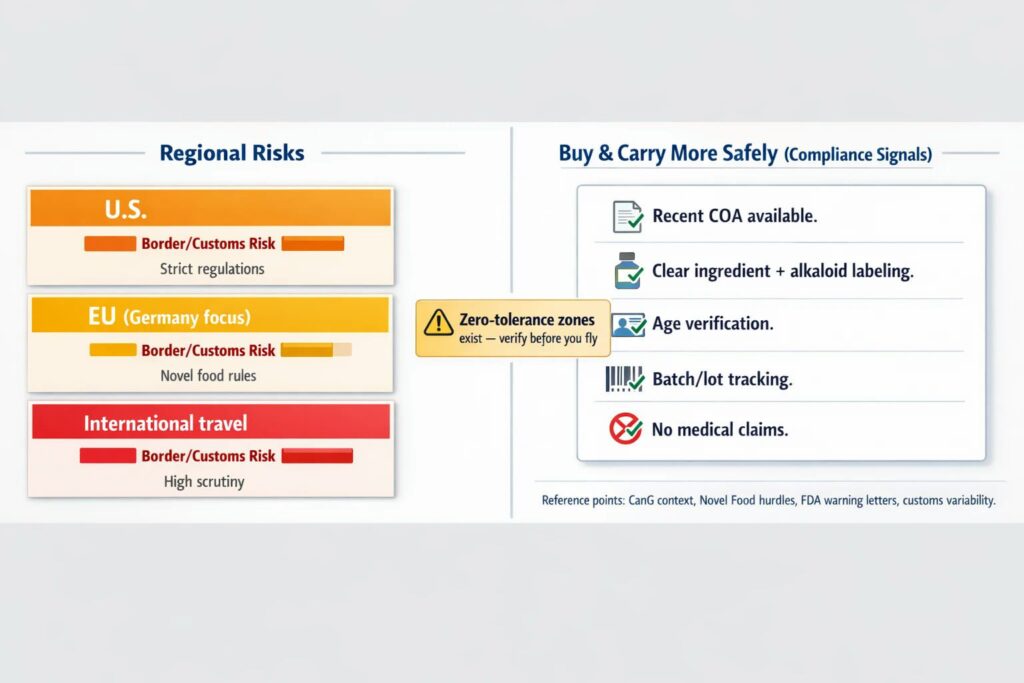
When laws vary by border and state line, reduce risk with a repeatable process: confirm your route’s rules and buy only from vendors showing clear compliance signals.
How to Check Kratom Laws Before Traveling
Travel introduces additional legal considerations because botanical products may cross multiple jurisdictions during a single trip. Even if kratom is legal where you live, the laws governing your destination—or states you pass through—may differ significantly.
Before traveling, review the most current state and local regulations for every destination on your itinerary. If you’re flying, remember that airport security procedures and airline policies operate separately from state legislation, making it worthwhile to understand both transportation requirements and local possession laws.
Consumers ordering products while traveling should also verify that vendors are permitted to ship to their temporary location. Many responsible companies maintain updated shipping restriction lists and automatically block orders destined for prohibited jurisdictions.
Taking a few minutes to verify applicable regulations before traveling can help prevent unnecessary delays, shipment issues, or legal misunderstandings while ensuring you remain compliant throughout your trip.
Your 5-Point Vendor Evaluation Checklist
Your best defense against legal risk and poor-quality products is choosing a compliant and transparent vendor. Before making a purchase, verify that the company meets these five criteria:
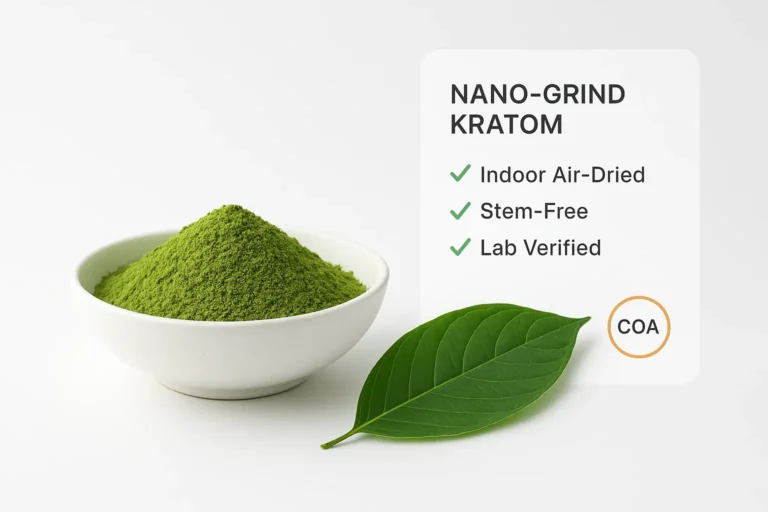
- Third-Party Lab Testing: The vendor makes current Certificates of Analysis (COAs) for their products easily accessible, verifying purity and alkaloid content.
- KCPA-Compliant Labeling: Products are clearly labeled with ingredients, serving size recommendations, and necessary warnings.
- Age Verification: The company uses robust age verification technology to prevent sales to minors.
- Direct Sourcing: They have a clear connection to their farmers and can speak to the quality and consistency of their supply chain.
- Clear Shipping Policies: They are transparent about which states and jurisdictions they will not ship to, respecting local laws.
The Future of Kratom Regulation
The legal landscape surrounding kratom continues to evolve as lawmakers, researchers, consumer advocates, and regulatory agencies evaluate new scientific evidence and public policy priorities. While predicting future legislation with certainty is impossible, several trends are becoming increasingly apparent.
One notable trend is the continued expansion of consumer protection legislation through the Kratom Consumer Protection Act. Rather than pursuing outright prohibition, many jurisdictions are exploring regulatory models that establish manufacturing standards, age restrictions, product testing requirements, and labeling rules designed to improve consumer safety while maintaining legal access.
Scientific research is also playing a larger role in legislative discussions. As additional pharmacological, toxicological, and clinical data become available, policymakers may gain more information to guide future regulatory decisions. Increased research often supports more evidence-based discussions regarding product quality, safety standards, and responsible commercialization.
Federal policy remains an important variable. Although kratom is not currently scheduled under the federal Controlled Substances Act, future federal guidance, FDA actions, or congressional legislation could influence how states approach regulation. For this reason, consumers should continue monitoring reputable legislative updates rather than assuming current laws will remain unchanged indefinitely.
Overall, the long-term direction appears to be moving toward stronger consumer protections, greater manufacturing transparency, and standardized quality requirements instead of an entirely unregulated marketplace.
By applying this framework, you can confidently navigate the world of botanicals. The legal landscape is always shifting, but a clear understanding of the regulations and a commitment to choosing transparent partners empowers you to make the safest and most effective choice for your needs.