
Kratom Strains Explained: What Really Determines Kratom Effects?
If you’ve ever wondered why one batch of your favorite kratom feels different from the last, you’re asking the right question. The answer, however, isn’t found in the marketing name printed on the bag. It’s written in the chemical language of the plant itself.
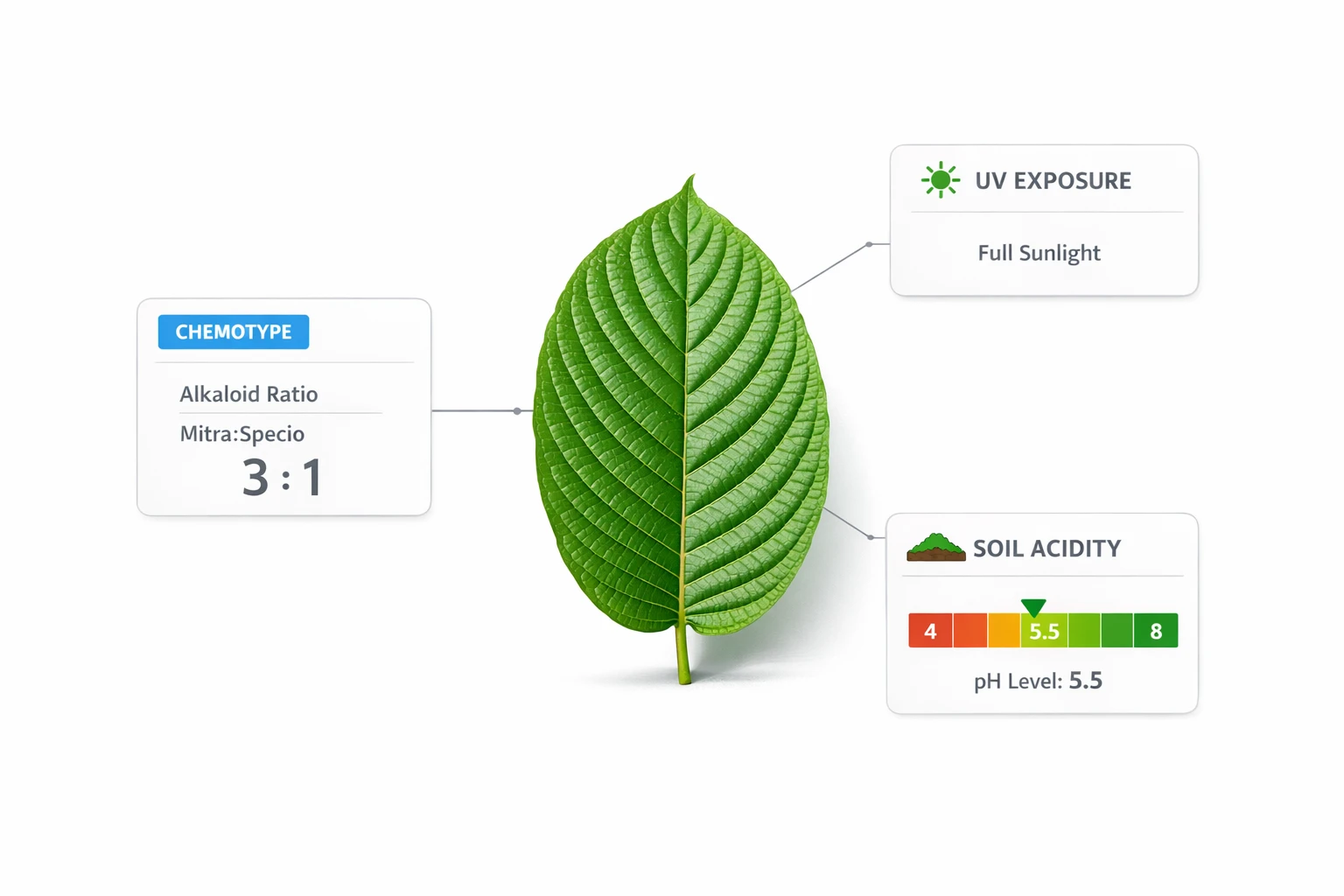
While the industry uses names like “Maeng Da” or “Bali,” these are often marketing terms, not strict botanical classifications. The real source of a product’s unique profile lies in its chemotype: the specific ratio of active alkaloids shaped by everything from soil composition to the way the leaves were dried.
Understanding these factors is the key to moving past inconsistent experiences and choosing products with confidence.
What Are Kratom Strains?
Kratom strains are the names commonly used to describe different kratom products, such as Maeng Da, Bali, Malay, or Borneo. While these labels are widely recognized by consumers, they are not standardized botanical classifications. Instead, strain names often reflect regional traditions, vendor branding, harvesting practices, or processing methods rather than genetically distinct varieties.
For buyers, this distinction is important. Two products sold under the same strain name may have noticeably different alkaloid profiles because environmental conditions, harvesting techniques, and post-harvest processing influence the plant’s chemistry far more than the label itself. Understanding this relationship helps explain why kratom effects can vary between batches.
Strains vs. chemotypes: A quick reality check
Think of a “strain” name as the title of a book. It gives you a general idea of the story. The chemotype, on the other hand, is the actual text: the specific combination of mitragynine, 7-hydroxymitragynine, and dozens of other minor alkaloids that create the full effect. This chemical profile is measurable and can be verified on a Certificate of Analysis (COA).
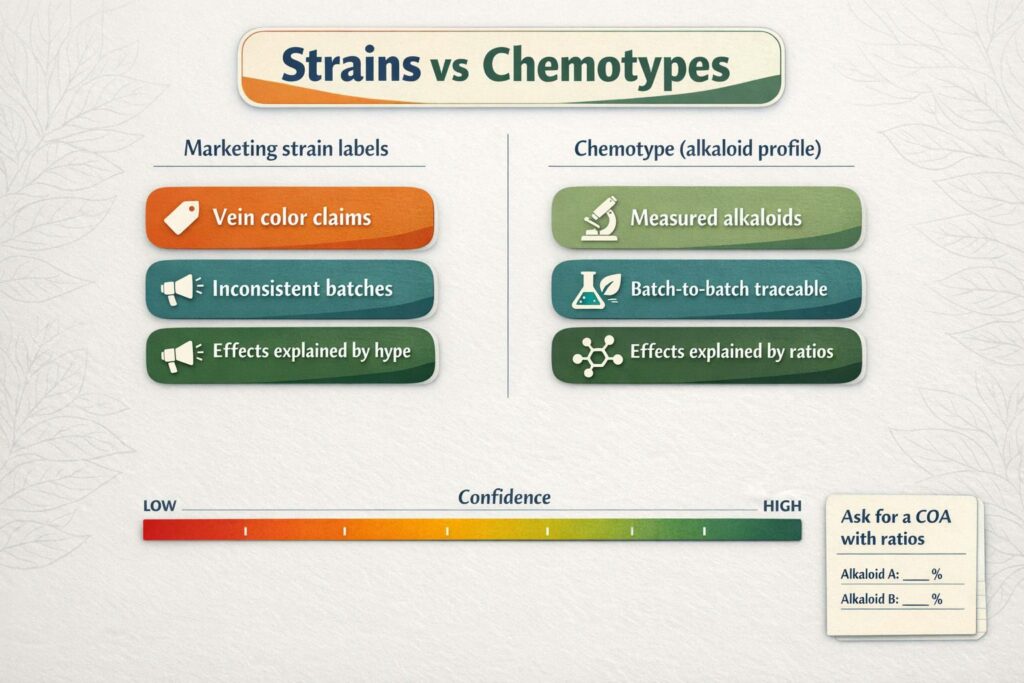
A quick reality check for buyers: “strain” names describe marketing stories, while chemotypes describe measurable alkaloid ratios you can verify on a COA.
By focusing on the chemotype, you shift from guessing based on a name to making an informed decision based on transparent data.
The alkaloid hierarchy that matters most
Over 40 different alkaloids have been identified in the Mitragyna speciosa leaf, but you only need to focus on a few key players to understand a product’s core profile. The relationship between mitragynine and 7 hydroxymitragynine forms the foundation of a kratom product’s character.
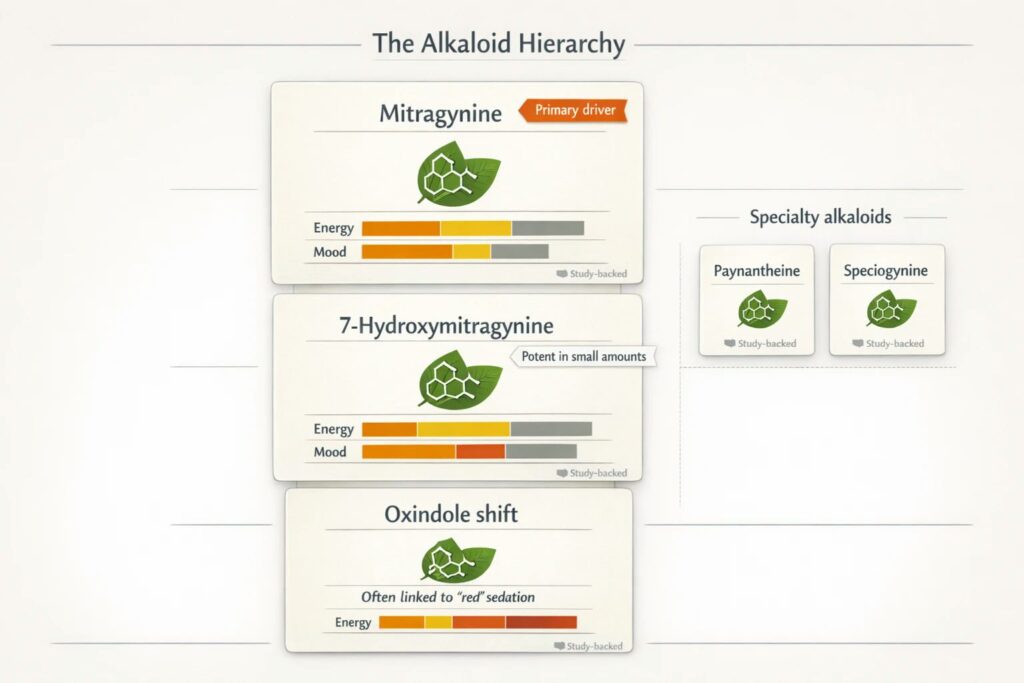
Instead of relying on strain names, evaluate products by the few alkaloid “tiers” that most strongly shape effects—then confirm with lab-reported ratios.
- Tier 1: The Primary Drivers. Mitragynine is the most abundant alkaloid and the plant’s signature compound. 7-Hydroxymitragynine (7-OH) is present in much smaller quantities but is highly potent. The ratio between these two is the single most important indicator of a kratom product’s effects.
- Tier 2: The Supporting Cast. Alkaloids like paynantheine and speciogynine are present in significant amounts and act as modulators, subtly shaping the overall experience.
- Tier 3: The Trace Influencers. Dozens of other minor alkaloids contribute to the nuanced “entourage effect” that makes each batch unique.
A “Green” or “White” chemotype is typically characterized by high levels of mitragynine, while a “Red” chemotype often results from post-harvest processes that convert some of that mitragynine into other compounds, including oxindole alkaloids.
Why Kratom Effects Vary Between Batches
Many users assume that differences in kratom effects come solely from strain names. In reality, multiple biological and environmental variables influence each harvest. Alkaloid concentration naturally changes as the tree matures, weather conditions shift, soil nutrients fluctuate, and processing methods evolve.
Because these variables differ between growing regions and harvests, even products labeled as the same strain can produce different laboratory profiles. This is why reputable vendors increasingly emphasize Certificates of Analysis (COAs) instead of relying solely on traditional strain names.
Four factors that define a kratom chemotype
A leaf’s final alkaloid profile is a direct result of its life journey, from the soil it grew in to the way it was cured. These four variables explain nearly all the differences you feel between batches and vendors.
1. Environmental stress (Terroir)
Just like wine grapes, kratom is profoundly influenced by its terroir, or the unique conditions of its environment.
- Soil Acidity: Scientific analysis shows that Mitragyna speciosa thrives in acidic soil. Research from 2023 indicates the ideal range is a pH of 4.00–6.00, which promotes vigorous growth and healthy alkaloid production.
- Light Exposure: The amount of sunlight a tree receives directly impacts its chemical output. A 2022 study in PLOS ONE found that greenhouse-shaded plants produced 2.7 times more total mitragynine per plant than those grown in full sun. This suggests that some environmental stress encourages the plant to create more of its defensive alkaloids.
- Seasonal Changes: The shift between monsoon and dry seasons in Southeast Asia alters the soil’s nutrient profile and the tree’s hydration, leading to natural variations in alkaloid expression even from the same tree.
2. Genetic lineage
While not as defined as in other agricultural crops, different kratom populations have distinct genetic traits. Some trees are naturally predisposed to produce higher concentrations of certain alkaloids. This is why a “Maeng Da” (which translates to “pimp grade”) originally referred to a potent variant of a tree, not a color.
3. Plant age and maturity
Mature kratom trees with deep root systems have access to a wider range of soil nutrients and have had more time to develop complex alkaloid profiles. Leaves harvested from older, well-established trees are often considered more potent and balanced than those from young saplings.
4. Post-harvest processing
This is where farmers and processors have the most direct influence, essentially “finishing” the leaf’s chemical profile. The drying and curing methods are responsible for the classic “Red,” “Green,” and “White” distinctions.
- Indoor/Shade Drying (Greens and Whites): Drying leaves indoors at cooler temperatures, around 25°C, is highly effective at preserving the original mitragynine content. This method locks in the fresh, potent profile characteristic of Green and White vein products.
- UV/Sun Drying (Reds): Exposing leaves to direct sunlight or another UV source accelerates oxidation. Drying at higher temperatures (e.g., 60°C) can convert mitragynine into other compounds, including oxindole alkaloids, which are associated with the more relaxing profiles of Red vein kratom. This is a deliberate process used to create a specific chemotype.
- Withering and Fermentation: The time between harvesting and drying, known as withering, is also critical. A 2025 study in Frontiers in Plant Science showed that a 12-hour withering period could increase mitragynine concentration by a staggering 123% in certain cultivars. Some “Red” and “Gold” products also undergo a fermentation period in bags, which further transforms the alkaloid profile.
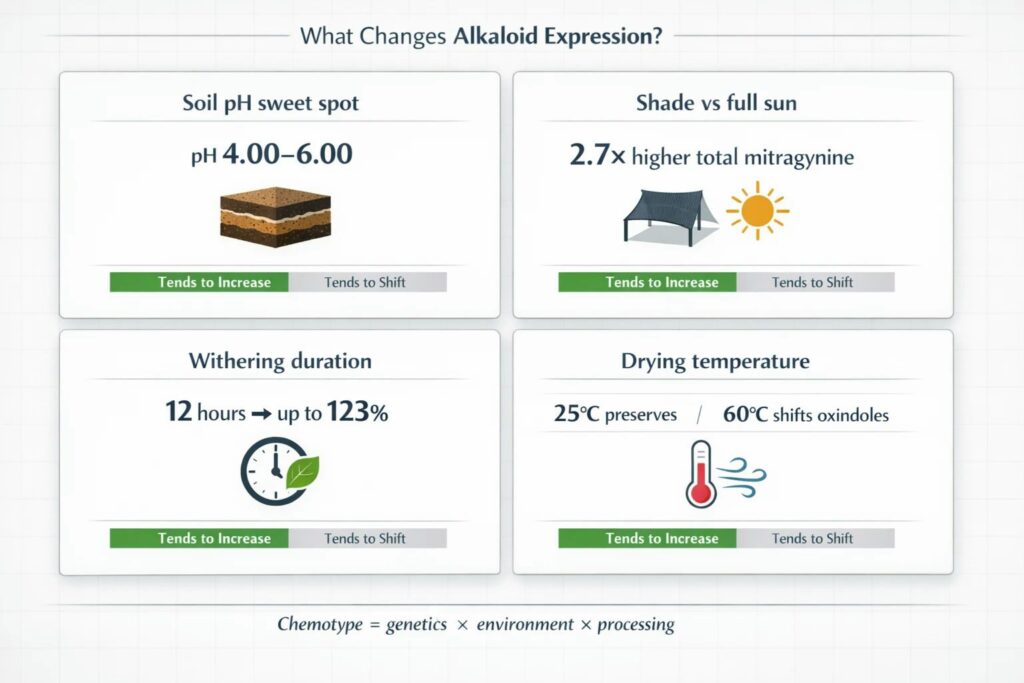
These four variables explain most “batch differences.” When vendors share growing and drying details—and COAs—you can predict chemotype more reliably than by strain name.
Why Certificates of Analysis (COAs) Matter
A third-party Certificate of Analysis provides independent laboratory verification of a kratom product’s identity, alkaloid content, and safety. Rather than relying on marketing claims, buyers can review measurable information such as mitragynine concentration, 7-hydroxymitragynine levels, microbial testing, heavy metal screening, and contaminant analysis.
Reviewing a COA allows consumers to compare products objectively while supporting vendors that prioritize transparency and consistent quality standards.
How to shop for chemotypes, not just strains
Armed with this knowledge, you can approach buying kratom with a new level of precision. Instead of getting frustrated by the differences between, for example, Bali kratom vs Maeng Da, you can look for the underlying data that predicts the experience you want.
Here’s a simple checklist to guide your evaluation.
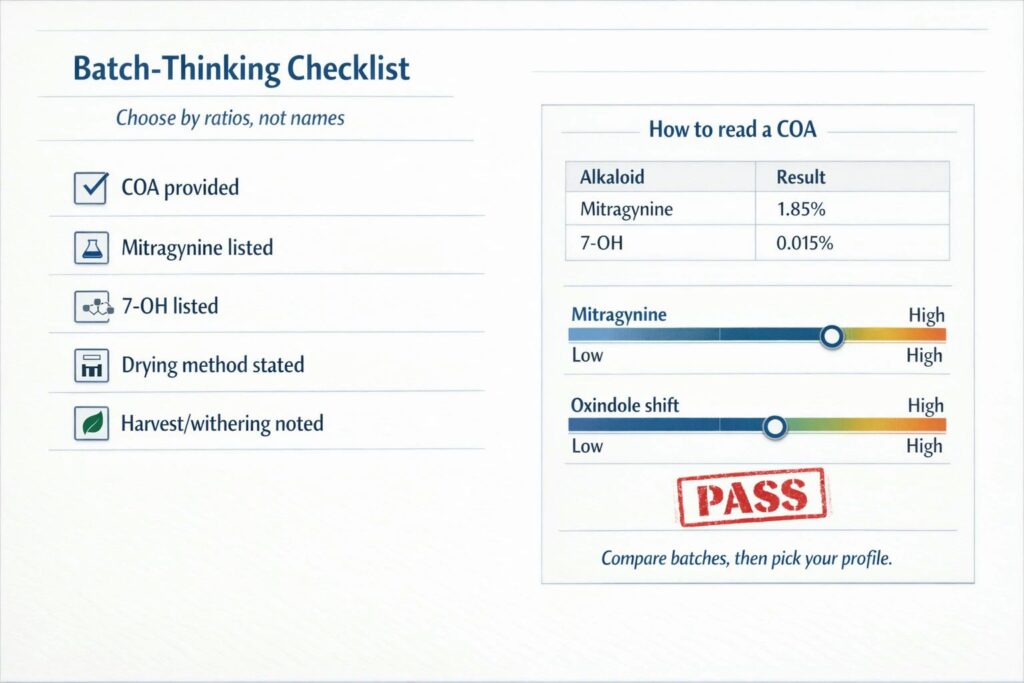
Use this checklist to compare products the way labs do: verify the COA, confirm key alkaloids, and match processing notes to the profile you want.
- Prioritize the COA. The Certificate of Analysis is your ground truth. Look for vendors who provide up-to-date, third-party lab reports for every batch. This is the first step in learning how to identify quality kratom.
- Check the Mitragynine Percentage. This number gives you a baseline for potency. A high-quality powder will typically range from 1.3% to 1.8% mitragynine or higher.
- Note the 7-OH Level. Is 7-hydroxymitragynine present and at what level? This can give you clues about the product’s profile.
- Connect to Processing. Does the vendor provide details on how the product was dried? If you’re looking for a “Green,” look for notes about indoor or shade drying. If you prefer a “Red,” look for mentions of sun-drying or fermentation.
Common Misconceptions About Kratom Strains
One of the most common misconceptions is that every strain name represents a unique plant variety. Scientific evidence suggests this is not the case. Instead, many products marketed under different strain names share similar genetic origins while differing primarily because of cultivation conditions and processing techniques.
Another misconception is that color alone determines potency. While drying methods influence alkaloid conversion, overall chemical composition depends on numerous variables working together rather than a single characteristic.
At Kratom-Online, we believe transparency is the foundation of trust. By sourcing directly from dedicated farmers who understand the art and science of cultivation and processing, we provide products with consistent, verifiable chemotypes. Explore our selection and see the difference that a commitment to quality makes.