
Quality Kratom: How Sourcing, Purity, and Lab Testing Compare to Kava and CBD
A recent analysis of botanical products found a startling statistic: at a 25g daily intake, over 70% of kratom products tested exceeded acceptable limits for lead. This isn’t just an industry issue; it’s a transparency problem that extends across the botanical landscape, affecting everything from CBD oils to kava root powders. As a consumer, you are likely evaluating which botanical has the most professional, transparent, and safe supply chain.
The truth is, not all botanicals are cultivated, harvested, or tested with the same level of rigor. One brand’s “pure” is another’s “unverified.” This guide provides a clear, data-backed framework for comparing the supply chains of kratom, kava, and CBD. We will move beyond marketing claims and give you the tools to assess sourcing, decode lab reports, and verify purity for yourself.
Understanding what defines quality kratom begins with looking beyond product labels and marketing claims. Premium kratom is the result of responsible cultivation, careful harvesting, hygienic processing, rigorous laboratory testing, and transparent sourcing practices. While this guide compares kratom with kava and CBD, its primary goal is to help you identify the characteristics that separate high-quality kratom from products that provide little evidence of purity or consistency.
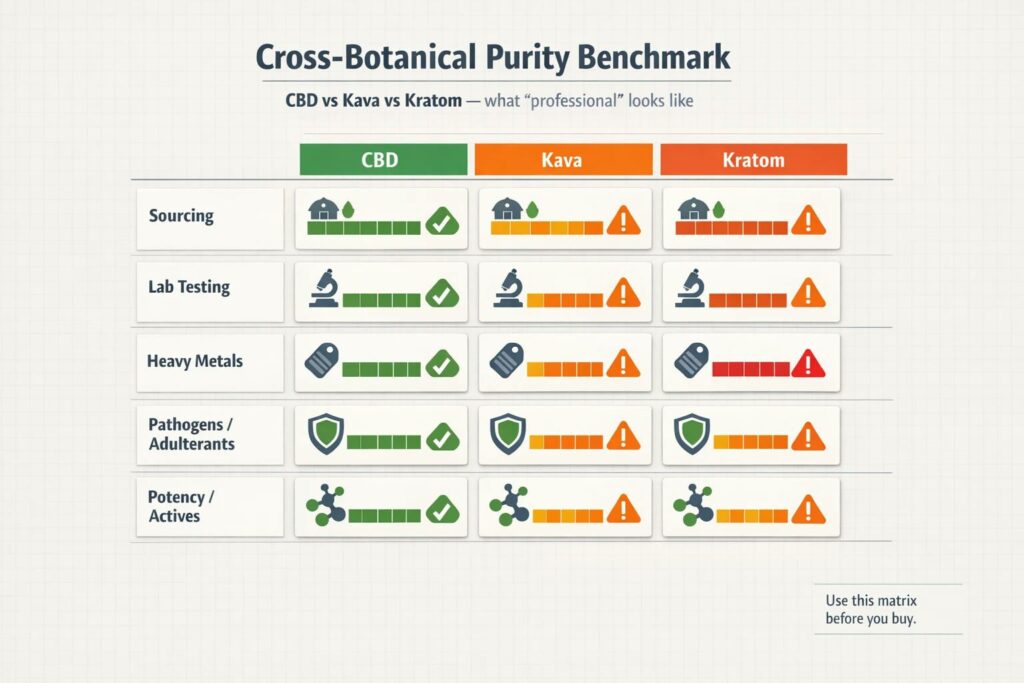
A structured benchmark view helps you compare how each botanical industry handles sourcing and lab verification—so you can judge transparency before trusting a vendor.
What Makes Quality Kratom?
Quality kratom is determined by far more than its strain name or advertised potency. Every stage of the supply chain—from cultivation and harvesting to drying, milling, laboratory testing, and packaging—contributes to the final product. Weak quality controls at any point can affect purity, consistency, and consumer confidence.
Reputable vendors distinguish themselves by providing measurable evidence of quality rather than relying solely on marketing language. Batch-specific Certificates of Analysis (COAs), third-party laboratory testing, transparent sourcing information, and adherence to Good Manufacturing Practices (GMP) allow consumers to evaluate products using objective criteria.
Although this article also examines kava and CBD, these comparisons serve an important purpose: they highlight the quality standards consumers should expect when purchasing kratom and demonstrate why transparency has become one of the industry’s most valuable differentiators.
The state of botanical regulation in 2026
To understand quality, we first have to look at the rules. The regulatory environments for these three botanicals are vastly different, which directly impacts the consistency of products you find online.
- Kratom: The industry is largely self-regulated, guided by the American Kratom Association’s (AKA) Good Manufacturing Practices (GMP) program. States are increasingly adopting the Kratom Consumer Protection Act (KCPA), which mandates testing, labeling, and age restrictions, creating a safer market where it’s enacted.
- CBD: Governed by the 2018 Farm Bill, hemp-derived CBD is federally legal, but FDA oversight on product quality remains a work in progress. This leaves a wide gap between medical-grade products and those made from low-quality industrial hemp byproduct.
- Kava: As a long-established cultural beverage, kava has fewer formal regulations. Quality is primarily driven by sourcing ethics, specifically the difference between “Noble” and “Two-Day” (tudei) varieties, with the former being the gold standard for safety and effect.
The key takeaway is that no single agency guarantees the purity of every product. The responsibility falls on the vendor to prove their product’s safety, and on you to verify that proof.
A tale of three supply chains: from farm to you
Where a botanical comes from and how it gets to you is the most critical factor in its final purity.
Kratom’s journey from Southeast Asia
Most of the world’s kratom comes from the dense, humid jungles of Indonesia. Here, the supply chain splits into two distinct paths. The common path involves local brokers who buy leaves from numerous small, unvetted farms. The leaves are often dried on the ground, increasing the risk of contamination from pathogens and heavy metals present in the soil.
The superior path is one of transparency and direct relationships. Companies that build partnerships with specific farms can ensure that leaves are harvested properly, dried on raised beds, and handled hygienically. By establishing a direct-from-Indonesia supply chain, vendors gain control over the entire process, from cultivation to final milling.
The CBD spectrum: USDA organic vs. industrial hemp
The quality of a CBD product starts with the plant. Top-tier brands use hemp grown under USDA Organic standards, which restricts the use of synthetic pesticides and fertilizers. This is crucial because the hemp plant is a bioaccumulator, meaning it readily absorbs heavy metals and toxins from the soil it grows in.
In contrast, a significant portion of the market uses CBD extracted from industrial hemp originally grown for fiber. This biomass is far cheaper but carries a higher risk of containing contaminants that become concentrated during the extraction process.
Kava’s noble path: root purity and varietal integrity
In the world of kava, not all plants are equal. The key distinction when comparing kava vs kratom is the focus on “Noble” kava varieties, which have been cultivated for centuries for their desirable effects and safety profile. Inferior “tudei” kava can cause negative side effects and is avoided by reputable suppliers. Furthermore, only the root of the kava plant should be used. Using the stems and leaves, a cost-cutting measure, can introduce harmful plant alkaloids. A trustworthy kava vendor will always specify the varietal and confirm they use 100% root.
Why Supply Chain Transparency Matters
Supply chain transparency has become one of the strongest indicators of quality across the botanical industry. Consumers increasingly expect vendors to disclose where products originate, how they are cultivated, how they are processed, and what testing procedures are completed before sale.
Companies that provide this information allow consumers to evaluate quality using objective evidence instead of assumptions. Transparency also supports consistency because each production batch can be traced through cultivation, harvesting, processing, testing, and distribution.
For anyone seeking quality kratom, understanding the supply chain is just as important as reviewing the final laboratory report. Both work together to provide confidence that the product has been responsibly produced from farm to finished package.
Laboratory protocols decoded: how to verify real purity
A Certificate of Analysis (COA) is your most powerful tool for verifying a product’s safety, but only if you know how to read it. Reputable vendors make these reports available for every batch, often via a QR code on the package.
Here are the two most important tests to look for:
- Potency (HPLC): High-Performance Liquid Chromatography is used to identify and quantify the active compounds, like mitragynine in kratom or kavalactones in kava. This confirms the product is what it claims to be and meets potency standards.
- Purity (ICP-MS): Inductively Coupled Plasma Mass Spectrometry is the gold standard for detecting trace elements, including the “Big 4” heavy metals: lead, arsenic, cadmium, and mercury.
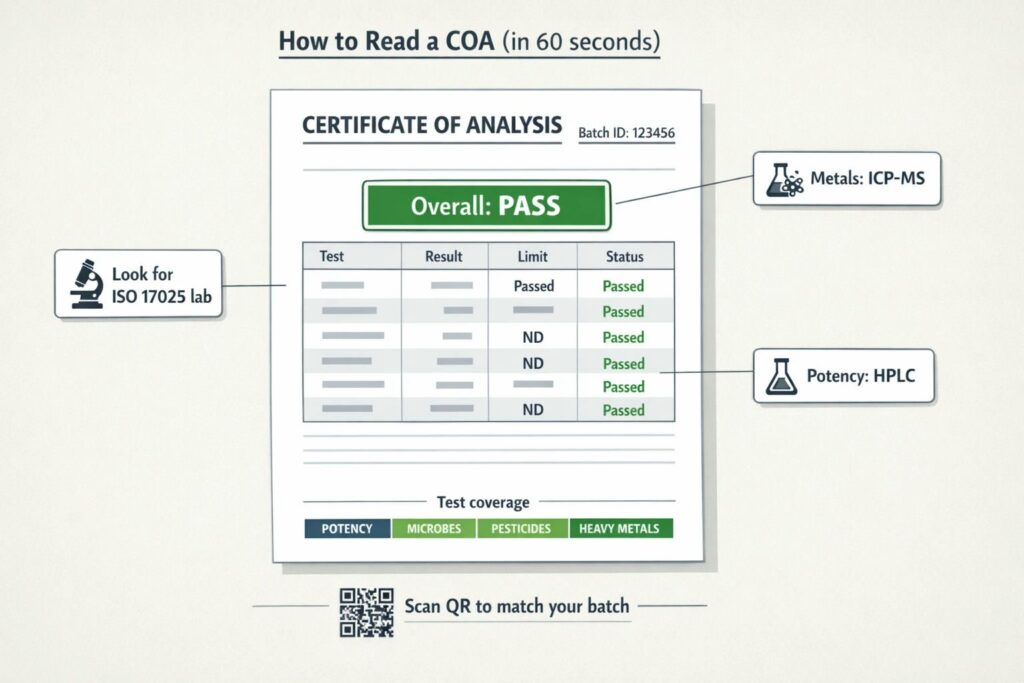
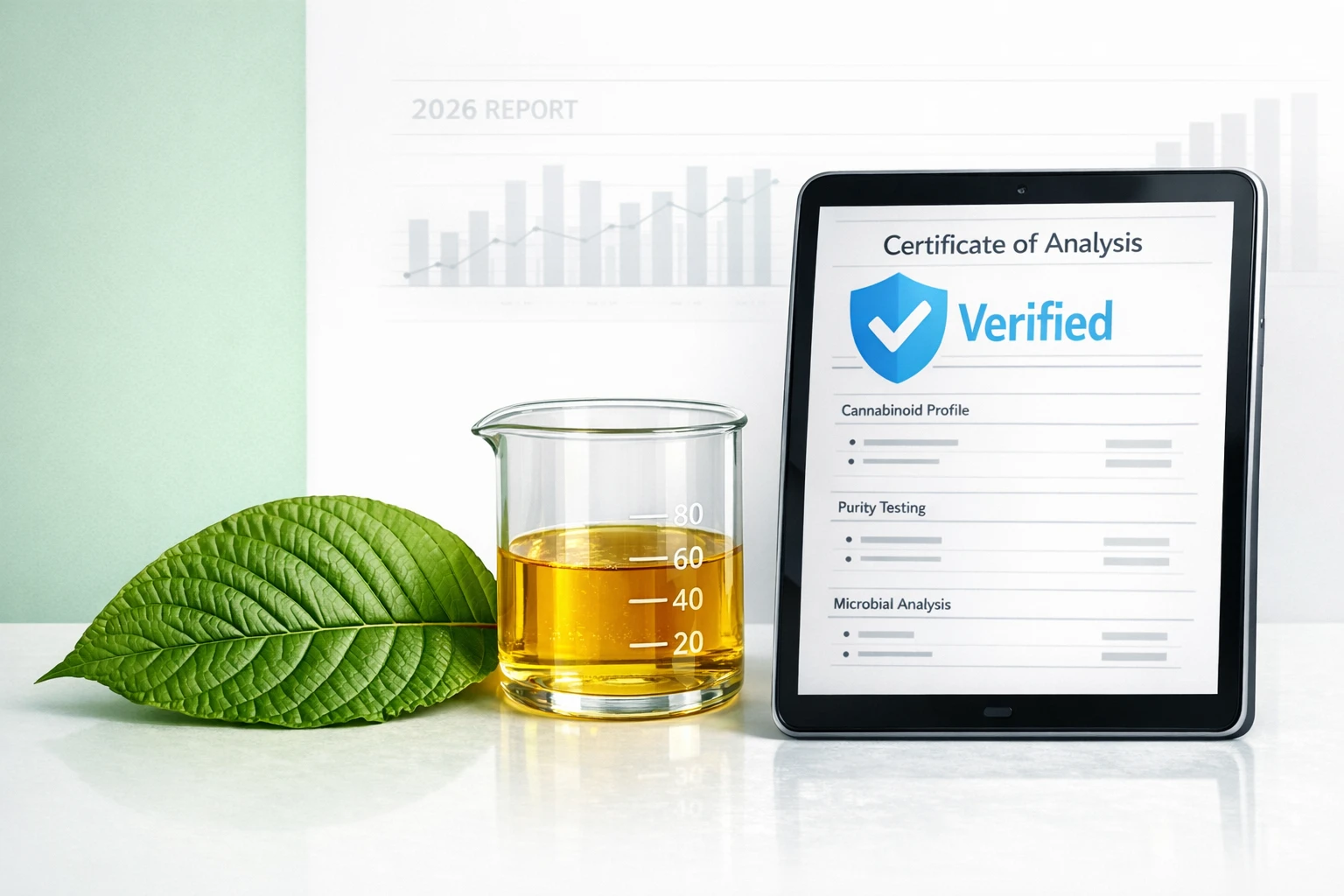
This COA decoder shows exactly where to verify the lab’s accreditation, the test methods used, and whether the batch result is truly a pass.
When you review a COA, check that the lab is ISO 17025 accredited, which ensures it meets international standards for testing and calibration.
How to Read a Kratom Certificate of Analysis
Many consumers download a Certificate of Analysis without knowing what information they should actually review. Learning how to interpret a COA allows you to evaluate quality kratom using objective laboratory evidence instead of relying solely on product descriptions.
Begin by confirming the laboratory’s accreditation. ISO 17025 accreditation demonstrates that the laboratory follows internationally recognized quality standards for analytical testing.
Next, verify that the product name, lot number, batch number, and testing date match the product being sold. Batch-specific reports provide much greater confidence than generic laboratory summaries that cannot be linked to a specific production run.
Review the potency section to confirm alkaloid content, paying particular attention to mitragynine concentrations when evaluating kratom products. Then examine contaminant testing for heavy metals, microbial organisms, residual solvents (when applicable), and any additional analyses performed by the laboratory.
A trustworthy COA presents measurable laboratory data rather than broad statements claiming that a product has simply “passed” testing. Transparency comes from providing complete analytical results that consumers can review independently.
Why Third-Party Laboratory Testing Matters
Independent laboratory testing separates trustworthy vendors from companies that rely primarily on marketing claims. Instead of asking consumers to trust internal quality assurances, reputable manufacturers submit every production batch to accredited laboratories that have no financial interest in the results.
Third-party testing helps verify product identity, confirms alkaloid content, screens for contaminants, and demonstrates manufacturing consistency over time. While no laboratory report can guarantee absolute safety, independent testing significantly increases transparency and provides consumers with measurable evidence of product quality.
For anyone purchasing quality kratom, third-party testing should be considered a minimum expectation rather than an optional feature. Vendors unwilling to provide current laboratory reports leave consumers with little objective information on which to base purchasing decisions.
The silent risk: heavy metals in botanical powders
While pathogens are a concern, heavy metals pose a more persistent risk because they can accumulate in the body over time. The primary vector for this contamination is raw plant powder.
According to a 2025 toxicological review from ACS Laboratory, the risk is directly tied to intake levels. Their analysis of 68 different botanical products revealed:
- At a 25g/day dose, 70.6% of kratom products exceed the allowable daily intake for lead.
- At the same dose, 20.6% exceed the limit for nickel.
- Perhaps more concerning, 12.5% of products exceed the tolerable upper intake for manganese at a low dose of just 3g per day.
These numbers underscore why verifying a product’s COA is not optional. You need to see the specific results for your batch to ensure it falls below the acceptable parts-per-million (PPM) threshold.
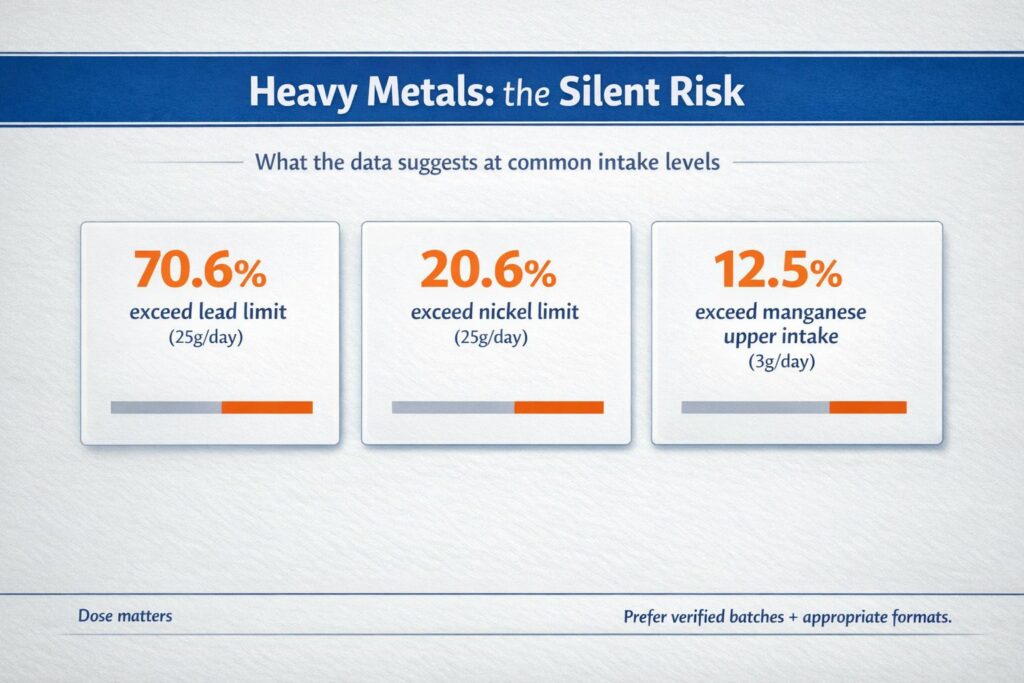
Concrete numbers help you evaluate real-world risk: intake level and test coverage matter more than marketing claims—verify metals results on your batch COA.
Why extracts offer a cleaner profile
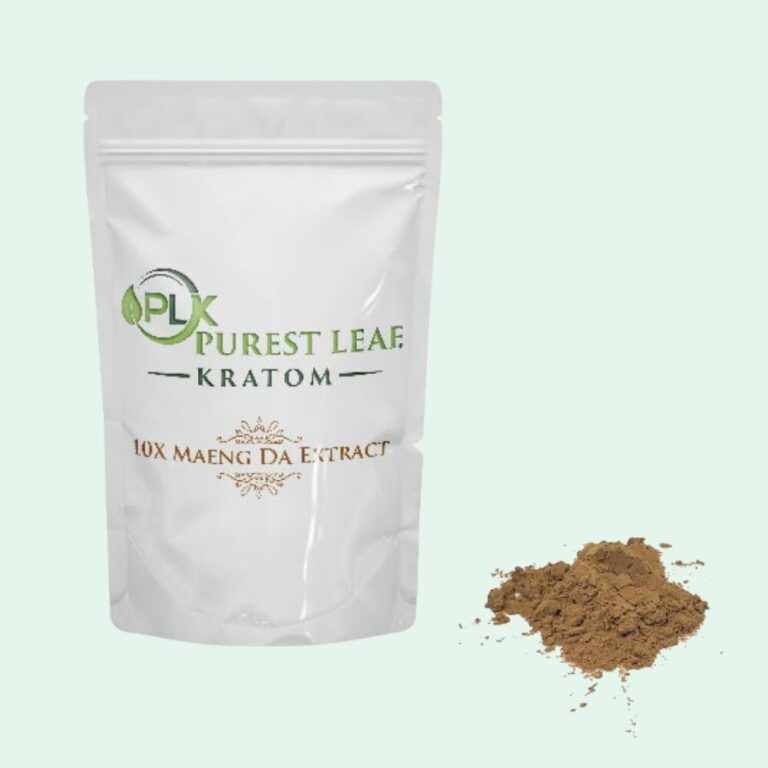
The same ACS Laboratory study highlighted a critical finding: extract-based products are significantly safer from heavy metals. The extraction process isolates the target alkaloids, leaving behind the bulk plant material where heavy metals reside. Tests on extract products like drinks and gummies showed near-zero levels of contamination. For consumers concerned about long-term exposure, understanding the difference between kratom extract vs powder is a key part of risk mitigation.
Beyond the lab: proactive purity on the farm
The best vendors don’t just test for contamination; they prevent it at the source. This involves working with farmers who use responsible agricultural practices. For example, instead of harsh chemical pesticides, some cultivators use “Garden Safe” aids like Diatomaceous Earth, a natural substance that deters pests without introducing toxins into the final product.
Learning how to identify quality kratom means looking for brands that discuss their cultivation methods, not just their lab results. This demonstrates a comprehensive commitment to a clean final product.
Signs of a High-Quality Kratom Vendor
Finding quality kratom starts with choosing a transparent supplier rather than simply comparing prices or strain names. Reputable vendors openly explain how their products are sourced, processed, tested, and verified before they reach customers. This transparency allows consumers to evaluate quality using objective evidence instead of marketing claims.
One of the strongest indicators of a trustworthy supplier is a willingness to publish batch-specific Certificates of Analysis for every product. These reports should be current, independently verified, and easy to access before purchase. Vendors should also provide information about where their kratom is sourced, how it is processed, and what quality standards guide production.
Companies participating in recognized quality programs, maintaining Good Manufacturing Practices (GMP), and working directly with experienced farmers often demonstrate a stronger commitment to consistency than vendors offering little information beyond product descriptions.
Ultimately, the goal is not simply to purchase kratom—it is to purchase kratom backed by measurable quality standards and transparent manufacturing practices.
Your safety shield: the non-negotiable vendor checklist
When you’re ready to make a purchase, use this checklist to pressure-test any vendor of kratom, kava, or CBD. A trustworthy company will be able to answer “yes” to all of these questions.
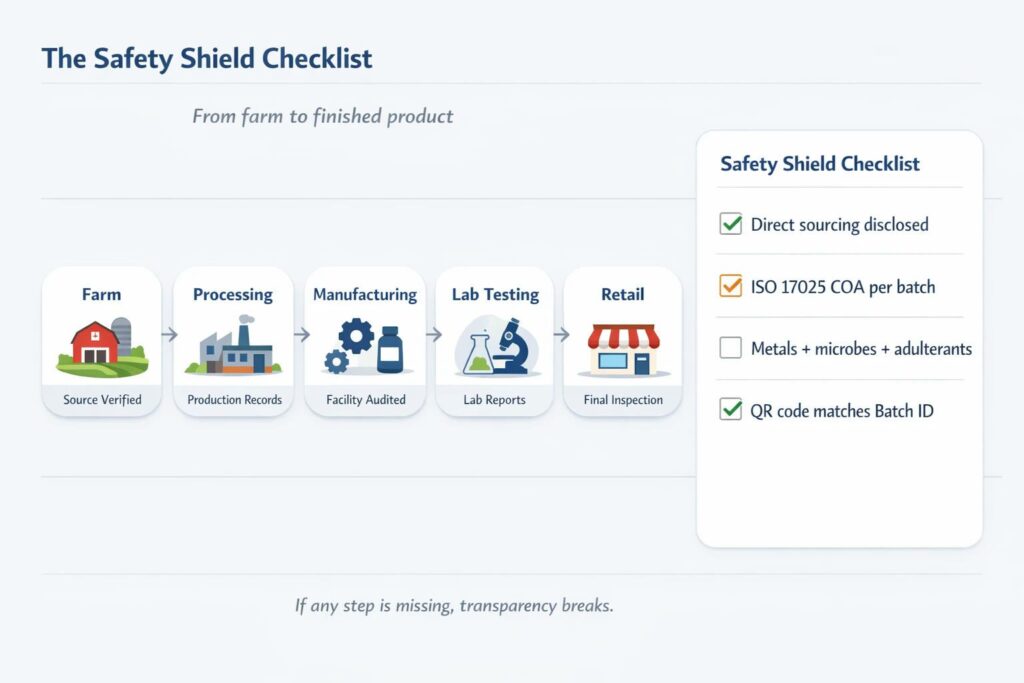
Use this checklist to pressure-test any CBD, kava, or kratom vendor: traceability plus batch-specific lab proof is the fastest path to confident buying.
Making an informed choice in the botanical market requires you to act more like a researcher than a shopper. By focusing on direct sourcing, demanding batch-specific COAs from accredited labs, and understanding the unique risks of each supply chain, you can confidently find products that are both effective and pure.
Why Transparency Is Becoming the Industry Standard
Across the botanical supplement industry, transparency has evolved from a competitive advantage into an expectation. Consumers increasingly want to understand not only what a product contains but also how it was cultivated, processed, tested, and transported before purchase.
This shift encourages higher manufacturing standards across kratom, kava, and CBD while rewarding companies that invest in traceable sourcing, accredited laboratory testing, and open communication. As industry regulations continue to develop, transparency is likely to remain one of the strongest indicators of product quality.
At Kratom-Online, we built our company around these principles of transparency and direct sourcing. We believe that providing safe, verified, and premium kratom is the only way to operate, and we invite you to review our products and see how they stand up to this rigorous evaluation.