
Advanced Kratom Extracts: Understanding Product Forms, Potency, and Comparisons
If you’ve been a kratom consumer for a while, you eventually reach a crossroads. The volume of standard plain leaf powder required to achieve your desired effects becomes inconvenient, and you start looking into high-potency alternatives.
However, making the leap from raw powder to advanced extracts introduces a frustrating “potency gap.” You are suddenly bombarded with confusing labeling—bottles marked “50x,” tinctures claiming proprietary ratios, and isolates that look completely different from the green powder you’re used to. In 2026, as liquid extracts and concentrates command an unprecedented 36.1% of the total kratom market share, knowing how to evaluate these advanced kratom product forms is no longer optional; it’s essential for both your wallet and your wellness.
Advanced kratom forms are precision-engineered botanical concentrates where mitragynine (MIT) and other key alkaloids have been isolated, extracted, and amplified. Understanding how to compare them ensures you’re paying for active alkaloids, not just flashy packaging.
What Are Advanced Kratom Extracts?
Advanced kratom extracts are concentrated botanical products created by separating and concentrating naturally occurring kratom alkaloids through specialized extraction techniques. These formulations may contain standardized amounts of mitragynine and other naturally occurring alkaloids while reducing the overall amount of plant material needed per serving.
Unlike raw leaf powder, advanced extracts are manufactured using carefully controlled production methods that emphasize consistency, potency, and standardized alkaloid profiles. Product categories include liquid extracts, tinctures, enhanced powders, resins, and purified isolates, each offering distinct characteristics depending on the extraction process and intended formulation.
Understanding these product categories helps consumers compare advanced kratom extracts using objective information such as laboratory testing, alkaloid concentrations, and manufacturing quality rather than relying exclusively on extract ratios or descriptive marketing language.
Why Advanced Extracts Are Different
Advanced extracts differ from traditional kratom powder because the manufacturing process concentrates active alkaloids into significantly smaller serving sizes. Rather than measuring products by grams of botanical material alone, many standardized extracts report their potency according to laboratory-verified alkaloid content.
This higher level of concentration allows consumers to compare products more consistently while also emphasizing the importance of accurate measurement and transparent product labeling. As extraction technology continues to improve, manufacturers are increasingly focusing on reproducible formulations supported by independent laboratory verification.
Understanding Standardized Kratom Products
Standardized kratom products are manufactured to deliver more consistent alkaloid concentrations from batch to batch. Rather than depending solely on naturally occurring variation within raw botanical material, standardized extracts are formulated to provide measurable levels of key alkaloids that can be verified through Certificates of Analysis (COAs).
This level of consistency allows consumers to compare products using objective analytical data instead of relying exclusively on generalized extract ratios such as 10x, 25x, or 50x. Standardization has become increasingly important as advanced kratom extracts continue to diversify across multiple product categories.
The Science of Concentrates: How Processing Shifts the Alkaloid Profile
Not all extracts are created equal. The physical characteristics and the effects of a kratom concentrate are heavily dictated by the extraction science used to create it.
Traditional solvent-based extractions (using food-grade ethanol) are excellent for pulling a wide array of alkaloids from the leaf, creating a well-rounded end product. However, modern manufacturers are increasingly utilizing advanced ultrasonic and cold-press solventless extraction methods. These modern techniques are far superior at preserving delicate secondary alkaloids that are often destroyed by heat or harsh chemicals.
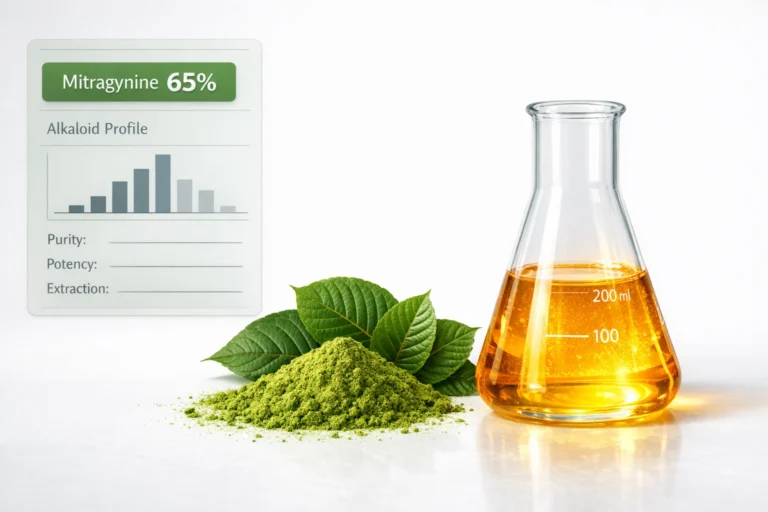
When you understand the baseline mitragynine content in kratom powder percentage—which typically hovers around 1% to 1.5% in high-quality raw leaf—you can start to see the engineering marvel of extracts that boast 45% or even 90% MIT concentrations. These products are anywhere from 5x to 50x more potent than standard plain leaf.
Comparing Extraction Methods
Modern manufacturers employ a variety of extraction techniques depending on the desired product profile. Traditional ethanol extraction remains widely used because it efficiently isolates a broad spectrum of naturally occurring alkaloids. Water-based extraction methods continue to appeal to manufacturers seeking simpler processing approaches, while food-grade CO₂ extraction has gained attention for producing clean, highly refined concentrates.
Newer technologies such as ultrasonic extraction and cold-process solventless techniques focus on improving extraction efficiency while minimizing heat exposure that could affect sensitive botanical compounds. Although individual manufacturing methods differ, reputable producers generally support their extraction claims with independent laboratory testing and standardized alkaloid analysis.
Understanding extraction methods provides additional context when comparing advanced kratom extracts, particularly when evaluating product consistency, transparency, and manufacturing quality.
Understanding Alkaloid Concentration
Alkaloid concentration represents one of the most important factors when comparing advanced kratom extracts. Rather than focusing exclusively on extract ratios, consumers should evaluate the actual milligram content of mitragynine and other reported alkaloids whenever laboratory data is available.
Because extract ratios can vary substantially between manufacturers, standardized alkaloid reporting provides a more objective basis for comparing products across different formulations. This approach allows consumers to evaluate potency using measurable analytical information rather than generalized concentration claims.
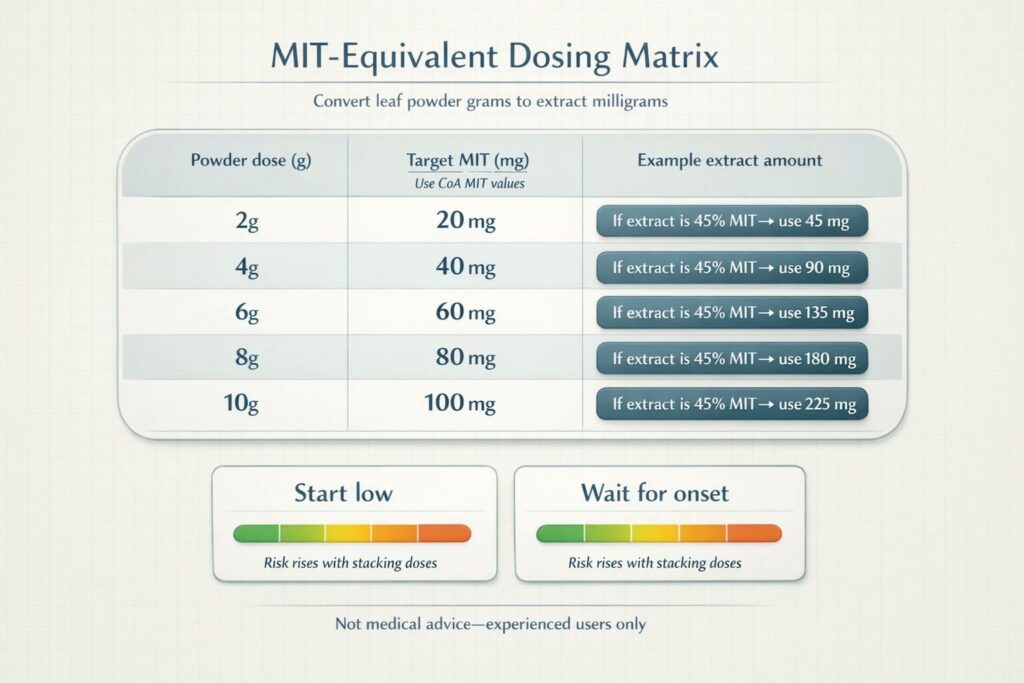
The MIT-Equivalent Matrix: Translating Powder to Extracts
The single biggest mistake experienced users make when switching to concentrates is guessing their dose based on physical volume. This inevitably leads to “kratom sickness”—that uncomfortable, dizzying nausea caused by taking too many alkaloids at once.
To bridge this gap, you need to stop thinking in terms of grams of powder and start thinking in milligrams (mg) of Mitragynine.
Here is the dosing logic you need to safely evaluate kratom powder vs extract:
- Find your powder baseline: Let’s say your standard dose is 5 grams of high-quality powder.
- Calculate your MIT intake: If that powder contains an average of 1.2% MIT, each gram holds roughly 12mg of MIT. A 5-gram dose equals about 60mg of MIT.
- Target your extract dose: If you purchase a liquid shot that contains 150mg of MIT total, your “60mg equivalent” means you should only consume a little less than half of that bottle.
Even if you are an experienced user, treating high-potency concentrates with the same caution you used when figuring out your kratom dosage for beginners will save you from an uncomfortable experience. Remember the golden rule of extracts: They have a much faster onset but typically a shorter duration than raw powder.
Visualizing the Advanced Extract Landscape
When you decide to buy kratom extract online, you are no longer limited to a few generic options. The modern landscape is divided into highly specialized categories.
Comparing Advanced Product Forms
Advanced kratom extracts are available in several formulations, each offering unique characteristics. Rather than assuming one product type is universally superior, consumers should evaluate each category according to standardized alkaloid content, manufacturing quality, convenience, and product consistency.
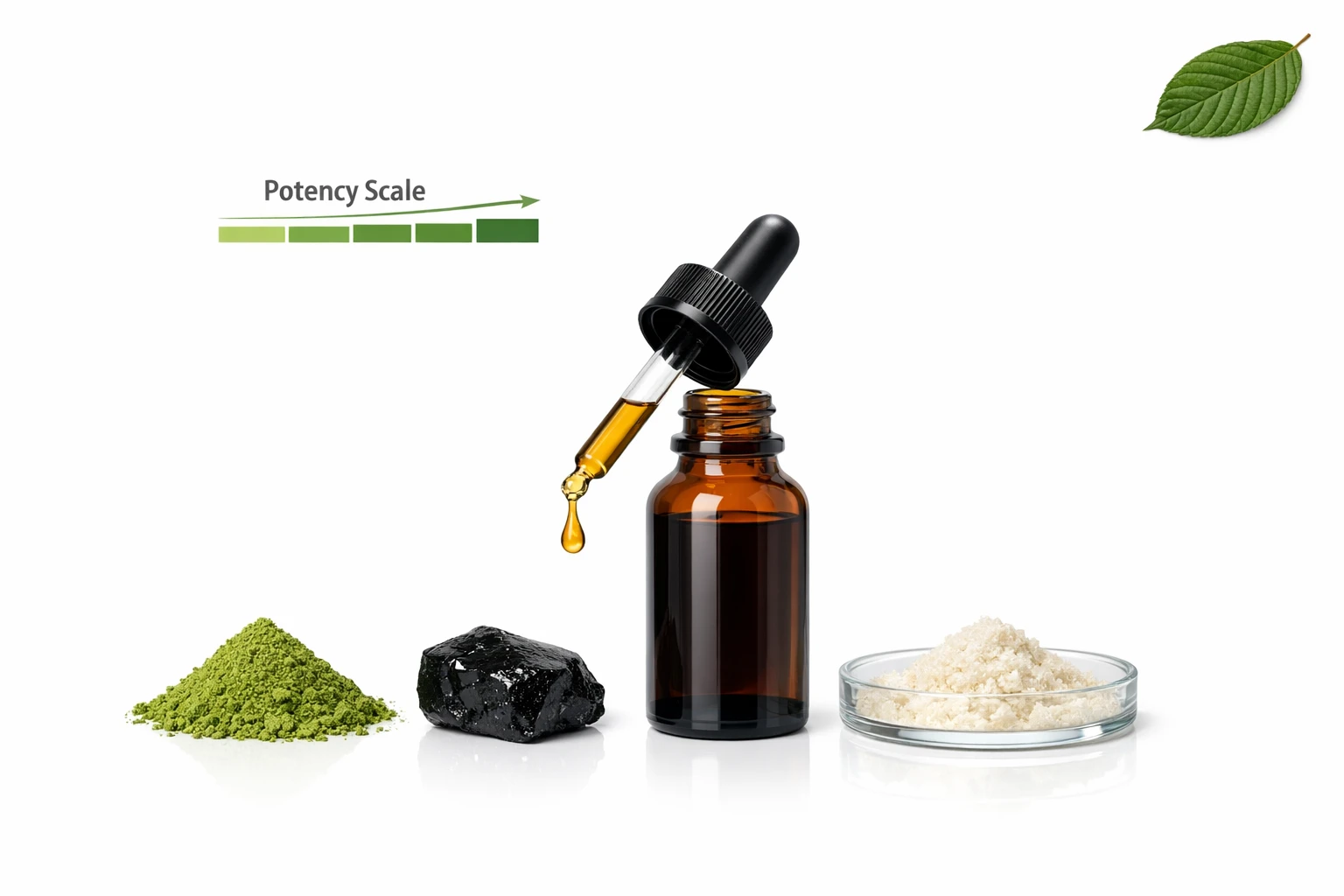
Traditional powders remain the benchmark for comparison because they contain the complete botanical material in its natural form. Enhanced powders increase alkaloid concentration while maintaining the familiar appearance of standard powder. Liquid extracts emphasize convenience and rapid absorption, while resins provide highly concentrated whole-leaf preparations. Purified isolates represent the most refined category, containing concentrated alkaloids with minimal remaining plant material.
Understanding these distinctions helps consumers compare advanced kratom extracts using objective product characteristics instead of relying solely on marketing terminology or extract ratios.
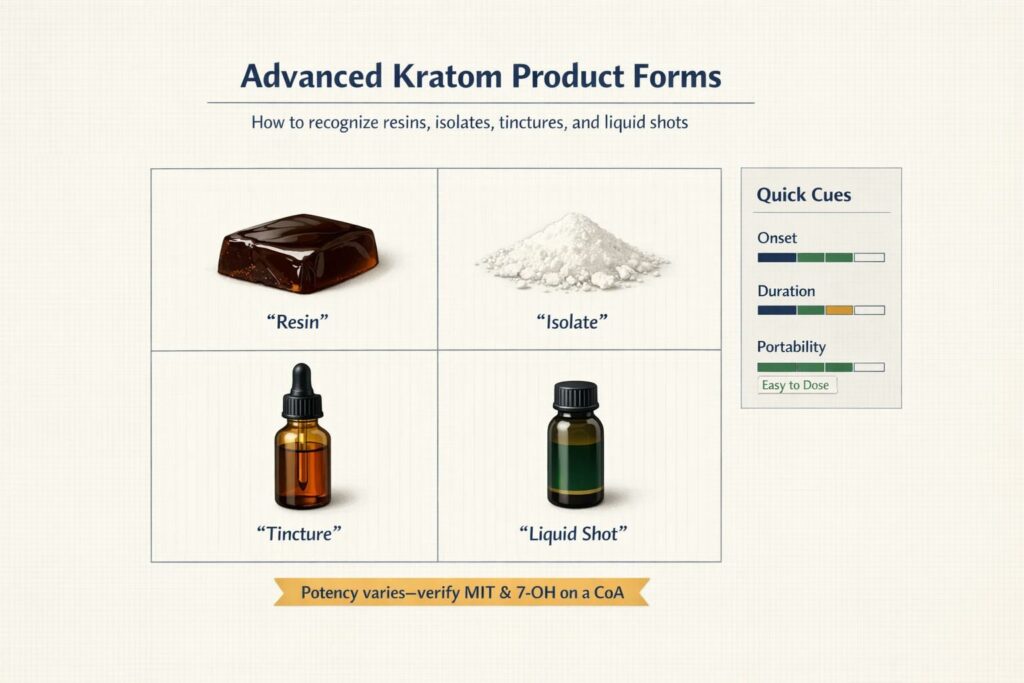
Kratom Resins
Resins are dark, glass-like, or tacky substances created by boiling raw kratom leaves in water or alcohol, then evaporating the liquid until a dense, hardened mass remains. Because they are often whole-leaf extractions, resins provide a deep, full-bodied experience, though they can be difficult to measure precisely without a digital scale.
Liquid Tinctures and Shots
Liquid forms dominate the market because of their high bioavailability and rapid onset. They are created by suspending kratom alkaloids in a liquid carrier (often an alcohol or glycerin base). Because of the suspension, they hit the system rapidly, making them highly efficient.
Enhanced Powders
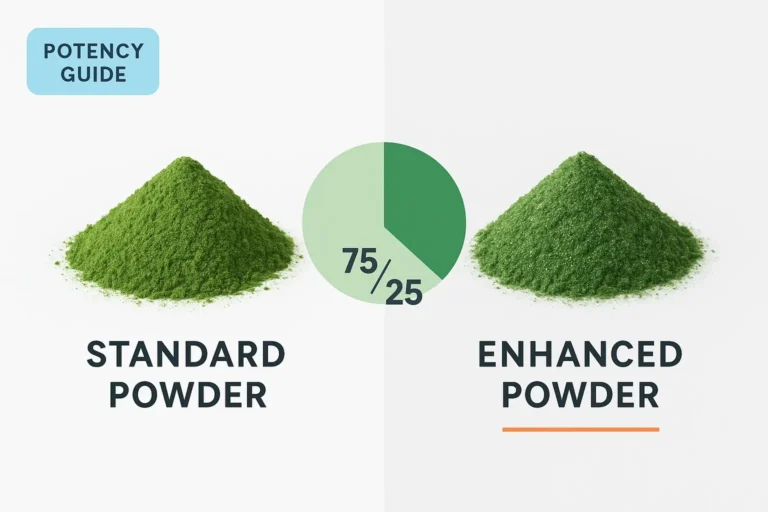
If you love the ritual of powder but need more power, enhanced kratom powder is the perfect middle ground. This product is created by taking standard premium powder and infusing it with a high-potency extract isolate. It looks and behaves like regular powder but packs significantly more punch per scoop.
Pure Isolates
Isolates are the apex of extraction science. They look like fine, crystalline powders—often light brown or even off-white. In an isolate, the non-active plant material (lipids, waxes, tannins) is stripped away entirely, leaving behind an incredibly potent kratom extract powder that is almost entirely composed of pure alkaloids.
Bioavailability Differences Between Product Forms
Bioavailability refers to how efficiently active botanical compounds become available following consumption. Different formulations may exhibit different absorption characteristics depending on their composition, manufacturing process, and delivery format. Liquid extracts are often selected for convenience and relatively rapid absorption, while powdered products generally require additional digestion before absorption occurs.
Although absorption characteristics vary between formulations, product quality, standardized alkaloid content, and individual physiology also contribute to overall product performance. Understanding bioavailability helps consumers compare advanced kratom extracts within a broader context instead of evaluating potency alone.
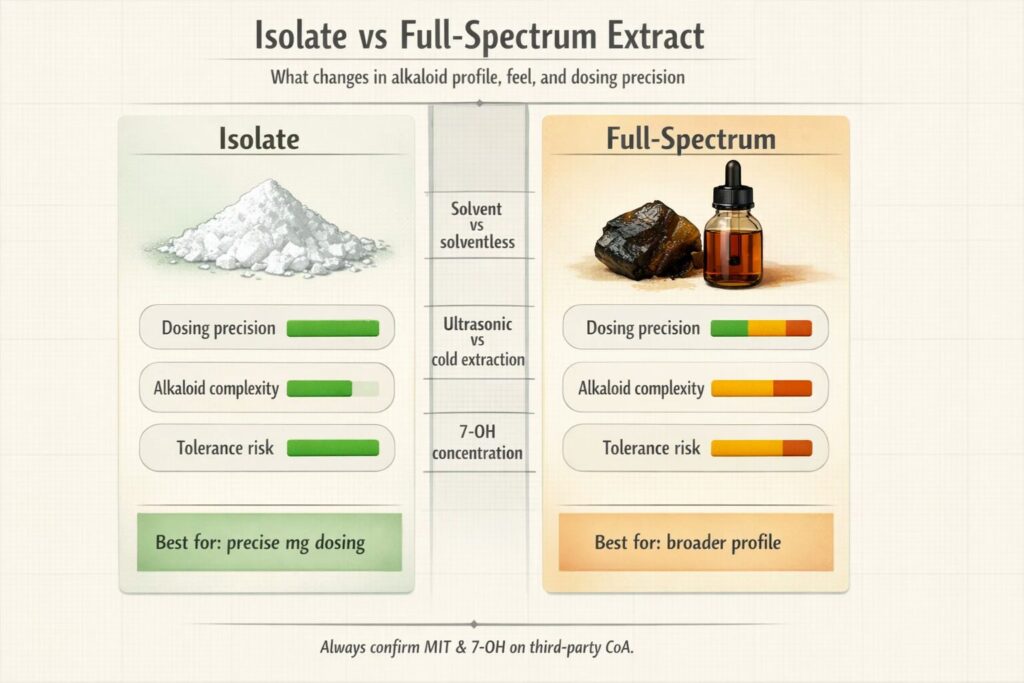
Isolate vs. Full-Spectrum: Decoding the Entourage Effect
When evaluating advanced forms, your primary decision will be between full-spectrum products and precise isolates.
A full-spectrum extract aims to preserve the natural alkaloid ratio found in the raw kratom leaf. It doesn’t just extract Mitragynine; it pulls out Paynantheine, Speciociliatine, and over 35 other companion alkaloids. Many users report that these secondary alkaloids work synergistically—a phenomenon known as the “entourage effect”—to provide a more rounded, longer-lasting experience.
An isolate, on the other hand, prioritizes raw precision over breadth. In recent years, we’ve seen a massive rise in the popularity of specialized isolates, particularly those focusing on 7-Hydroxymitragynine (7-OH). While 7-OH occurs in minute trace amounts in raw leaf, specialized processing can isolate and amplify it. Isolates are highly consistent, but because they lack companion alkaloids, the experience can feel distinctly “sharper” and sometimes shorter in duration.
Choosing the Right Advanced Extract
Selecting an advanced kratom extract begins with identifying the characteristics that matter most for an individual’s routine. Some consumers prioritize standardized alkaloid consistency, while others focus on formulation type, convenience, manufacturing transparency, or laboratory verification.
Regardless of formulation, reputable products typically provide clear ingredient disclosure, standardized alkaloid reporting, independent Certificates of Analysis, and batch traceability. These quality indicators help consumers compare products using measurable information rather than promotional claims alone.
By approaching product selection analytically instead of focusing solely on potency, consumers can make more informed purchasing decisions while developing a better understanding of the expanding advanced kratom extract marketplace.
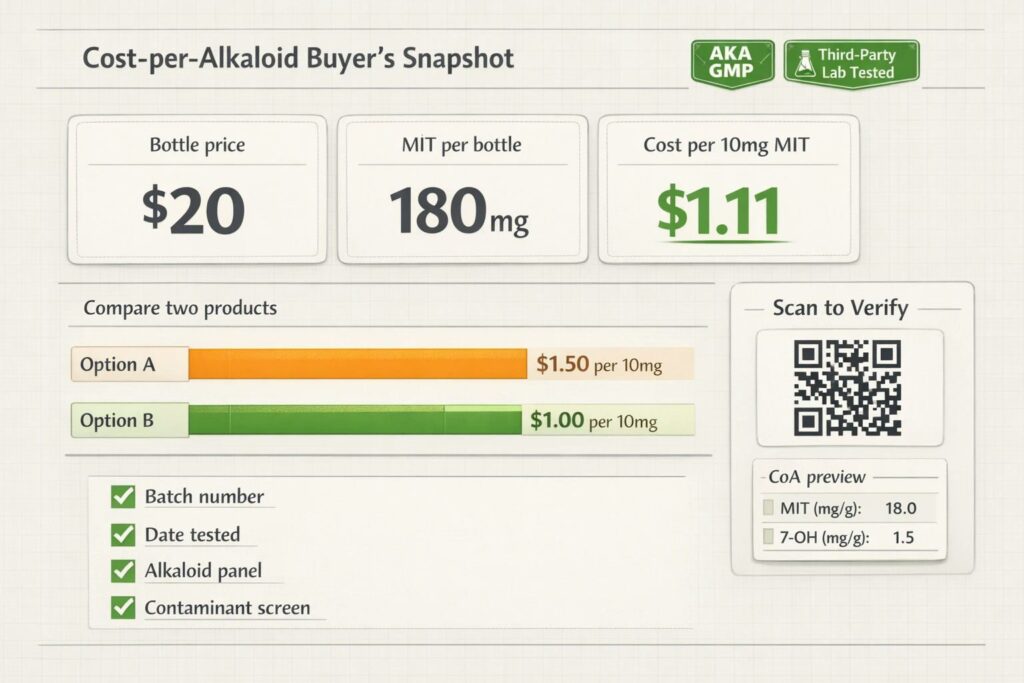
The Bulk Extract Buyer’s Guide: Calculating True Value
The commercial landscape for advanced kratom forms is filled with flashy marketing, especially when you buy kratom shots online. To avoid overpaying, you must learn to calculate the “Cost-per-Alkaloid.”
Is a $20 extract shot actually cheaper than a $10 shot? It depends entirely on the MIT yield.
- Shot A ($10): Contains 40mg of Mitragynine. (Cost = $0.25 per mg of MIT)
- Shot B ($20): Contains 150mg of Mitragynine. (Cost = $0.13 per mg of MIT)
In this scenario, the $20 bottle is actually nearly twice as cost-effective. By dividing the price of the product by the total milligrams of MIT listed on the Certificate of Analysis (CoA), you bypass the marketing noise and find the true commercial efficiency of the product.
With 57% of all online kratom purchases now happening on mobile devices, trusted vendors provide “Scan-to-Verify” QR codes directly on their extract packaging. If a brand isn’t providing a lab-tested CoA detailing exact MIT and 7-OH levels, along with heavy metal and biological contaminant screens, they aren’t worth your investment.
Evaluating Product Quality
High-quality advanced kratom extracts are typically supported by transparent manufacturing practices and comprehensive laboratory documentation. Independent Certificates of Analysis provide measurable information about alkaloid concentrations while also verifying testing for heavy metals, microbial contaminants, and residual solvents where appropriate.
Consumers comparing multiple products should evaluate batch-specific laboratory reports rather than relying exclusively on product descriptions. Manufacturers that prioritize transparency often publish laboratory documentation, identify standardized alkaloid concentrations, and maintain consistent production standards across batches.
Understanding Product Labels
One of the most common sources of confusion involves extract ratios such as 10x, 25x, or 50x. While these labels may describe aspects of the manufacturing process, they do not always indicate the final concentration of active alkaloids within the finished product.
For more meaningful comparisons, consumers should prioritize standardized mitragynine content, complete alkaloid profiles, and laboratory verification whenever this information is available. These measurable values provide a more reliable foundation for comparing advanced kratom extracts than generalized concentration ratios alone.
Understanding Certificates of Analysis
Certificates of Analysis (COAs) have become one of the most valuable resources for evaluating advanced kratom extracts. These independent laboratory reports verify important product information, including alkaloid concentrations, contaminant screening, batch identification, and product consistency.
A comprehensive COA commonly includes mitragynine content, 7-hydroxymitragynine levels when reported, heavy metal analysis, microbial testing, and residual solvent screening where applicable. Reviewing these reports allows consumers to make purchasing decisions using objective analytical information rather than promotional marketing language.
Frequently Asked Questions (FAQ)
Do kratom extracts ruin your tolerance to regular powder?
Yes, they can, which is a phenomenon known as “tolerance creep.” Because concentrates deliver a massive payload of alkaloids very quickly, your receptors can downregulate. To manage this, experienced users treat advanced forms as occasional enhancements rather than daily replacements, strictly monitoring their mg-per-day intake.
What is the shelf life of advanced kratom forms?
Shelf life varies dramatically by extraction method. Dry isolates and resins, when kept in a cool, dark, and airtight environment, can remain highly potent for 2 to 3 years. Liquid tinctures, however, are susceptible to spoilage depending on their carrier fluid. Alcohol-based tinctures last for years, whereas water or glycerin-based shots without heavy preservatives should ideally be consumed within 12 months.
Why do some extracts lack the AKA GMP Certified badge?
The American Kratom Association (AKA) Good Manufacturing Practice (GMP) standards require rigorous auditing of sanitation, testing, and production processes. Smaller or less reputable manufacturers often skip this to save money. Always look for GMP certification, as the concentrated nature of extracts means that any impurities or solvents left over from the manufacturing process are also concentrated.
Making Your Move with Confidence
Transitioning to advanced kratom forms doesn’t have to be a guessing game of random multipliers and mysterious proprietary blends. By understanding extraction science, demanding transparent CoAs to calculate your exact mg-to-MIT ratios, and recognizing the distinct physical profiles of isolates versus full-spectrum resins, you take total control over your experience.
When you prioritize vendors who source directly from trusted Southeast Asian farms, eliminate the middlemen, and proudly display their third-party lab testing, you ensure every dollar spent translates directly to pure, verifiable potency. Decide whether your routine benefits more from the robust profile of an enhanced powder or the surgical precision of an isolate, check the alkaloid math, and step into the world of advanced kratom forms with total confidence.