
Kratom Pharmacokinetics: Understanding Absorption, Metabolism, and Bioavailability
Why do kratom extracts reach peak plasma levels in as little as 10 to 30 minutes, while traditional powders can take up to an hour? The answer isn’t just potency; it’s a biological process called pharmacokinetics, which governs how your body absorbs, distributes, metabolizes, and excretes active compounds. For experienced users, understanding this journey is the key to optimizing effects and managing tolerance.
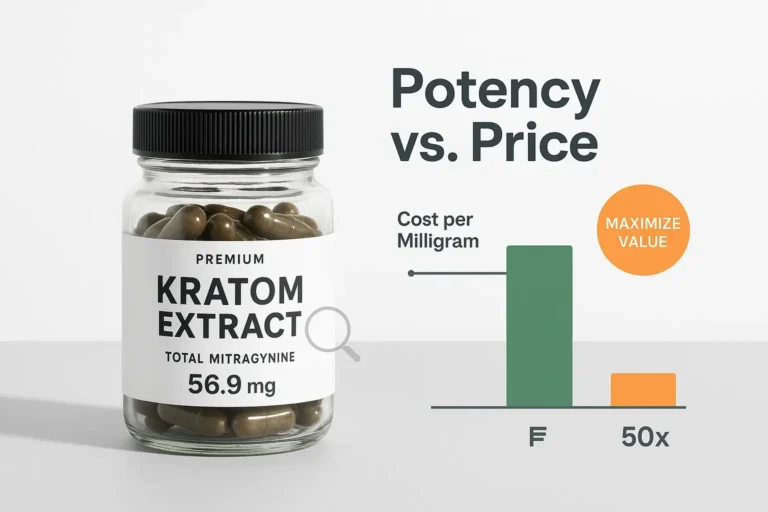
Moving beyond simple marketing claims of “50x stronger,” this guide provides a biological instruction manual for advanced kratom products. We will explore how different delivery methods interact with your body’s metabolic machinery to produce distinct outcomes, giving you the framework to make more informed decisions.
What Is Kratom Pharmacokinetics?
Kratom pharmacokinetics describes the movement of kratom alkaloids throughout the body after administration. Rather than focusing on the effects themselves, pharmacokinetics examines the biological processes that determine how active compounds are absorbed, transported, metabolized, and eventually eliminated.
These processes are commonly grouped into four interconnected stages: absorption, distribution, metabolism, and excretion (ADME). Every kratom product—whether traditional powder, enhanced powder, capsules, liquid extracts, or standardized extracts—undergoes these same fundamental biological processes, although the rate and efficiency may differ depending on formulation and individual physiology.
Understanding kratom pharmacokinetics helps consumers move beyond generalized potency claims by providing a scientific framework for comparing different product formats based on measurable biological principles rather than marketing terminology.
Pharmacokinetics vs. Pharmacodynamics
Although the terms are sometimes used interchangeably, pharmacokinetics and pharmacodynamics describe different aspects of pharmacology.
Pharmacokinetics explains what the body does to kratom after it is consumed. This includes how alkaloids are absorbed into the bloodstream, distributed throughout tissues, metabolized by the liver, and eventually eliminated from the body.
Pharmacodynamics, by contrast, examines what kratom alkaloids do after reaching their biological targets. It focuses on receptor interactions, pharmacological activity, and the resulting physiological responses.
Together, these two disciplines provide a comprehensive scientific framework for understanding advanced kratom products. Pharmacokinetics explains how alkaloids arrive at their destination, while pharmacodynamics helps explain what occurs after they reach it.
The Absorption Race: Why Formulation Dictates Onset and Intensity
The primary difference in the kratom extract vs powder debate starts with absorption. Your body can’t use alkaloids until they enter the bloodstream, and the path they take to get there matters significantly.
How Kratom Is Absorbed
Absorption represents the first stage of kratom pharmacokinetics. After consumption, alkaloids must pass through the digestive system before entering systemic circulation. The efficiency of this process depends on several variables, including product formulation, stomach contents, gastrointestinal function, and the physical characteristics of the finished product.
Because different formulations present alkaloids differently, powders, capsules, enhanced powders, tinctures, and liquid extracts may exhibit different absorption characteristics. However, absorption is influenced by multiple biological variables rather than formulation alone, making individual experiences highly variable.
Understanding absorption helps explain why onset times, measurable plasma concentrations, and overall pharmacokinetic profiles may differ between product categories even when they originate from the same plant species.
Gastric Breakdown vs. Bioavailability
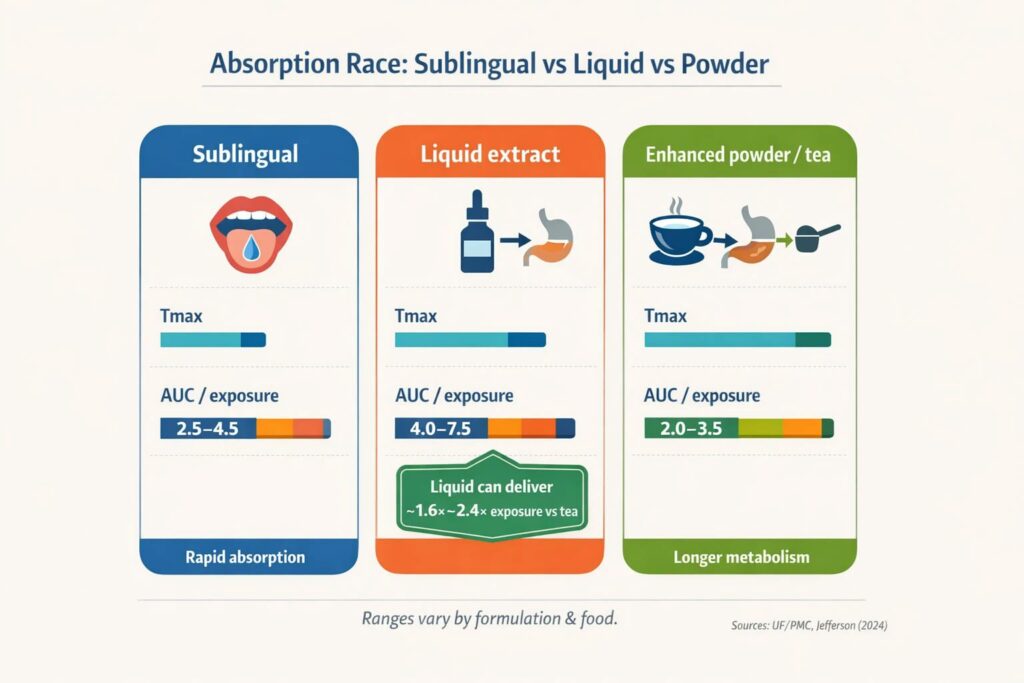
Kratom powder consists of dried, pulverized plant material. For your body to access the alkaloids, it must first mechanically break down the plant’s cellulose wall in the stomach. This digestive process takes time, which is why the Tmax (time to peak plasma concentration) for powder is typically 30 to 60 minutes.
Liquid extracts, on the other hand, often contain alkaloids in a pre-solubilized state. They are already in a bioavailable form that doesn’t require extensive mechanical breakdown. This is a key reason for their faster onset. Research confirms this efficiency: while oral mitragynine from powders has a modest bioavailability of around 21%, liquid formulations can produce 1.6 to 2.4 times higher systemic exposure per unit.
Bioavailability Explained
Bioavailability is frequently misunderstood as a measure of potency, but these concepts describe different characteristics. Potency refers to the concentration or pharmacological activity of active compounds, whereas bioavailability describes how efficiently those compounds become available within systemic circulation.
Several variables may influence bioavailability, including digestion, gastric emptying, food intake, product formulation, particle size, extraction methods, and individual metabolic differences. Because these variables interact simultaneously, pharmacokinetic outcomes often vary considerably between consumers.
For this reason, experienced consumers evaluating premium kratom products often consider bioavailability alongside laboratory testing, standardized alkaloid reporting, and manufacturing quality rather than relying solely on potency claims.
Bypassing First-Pass Metabolism
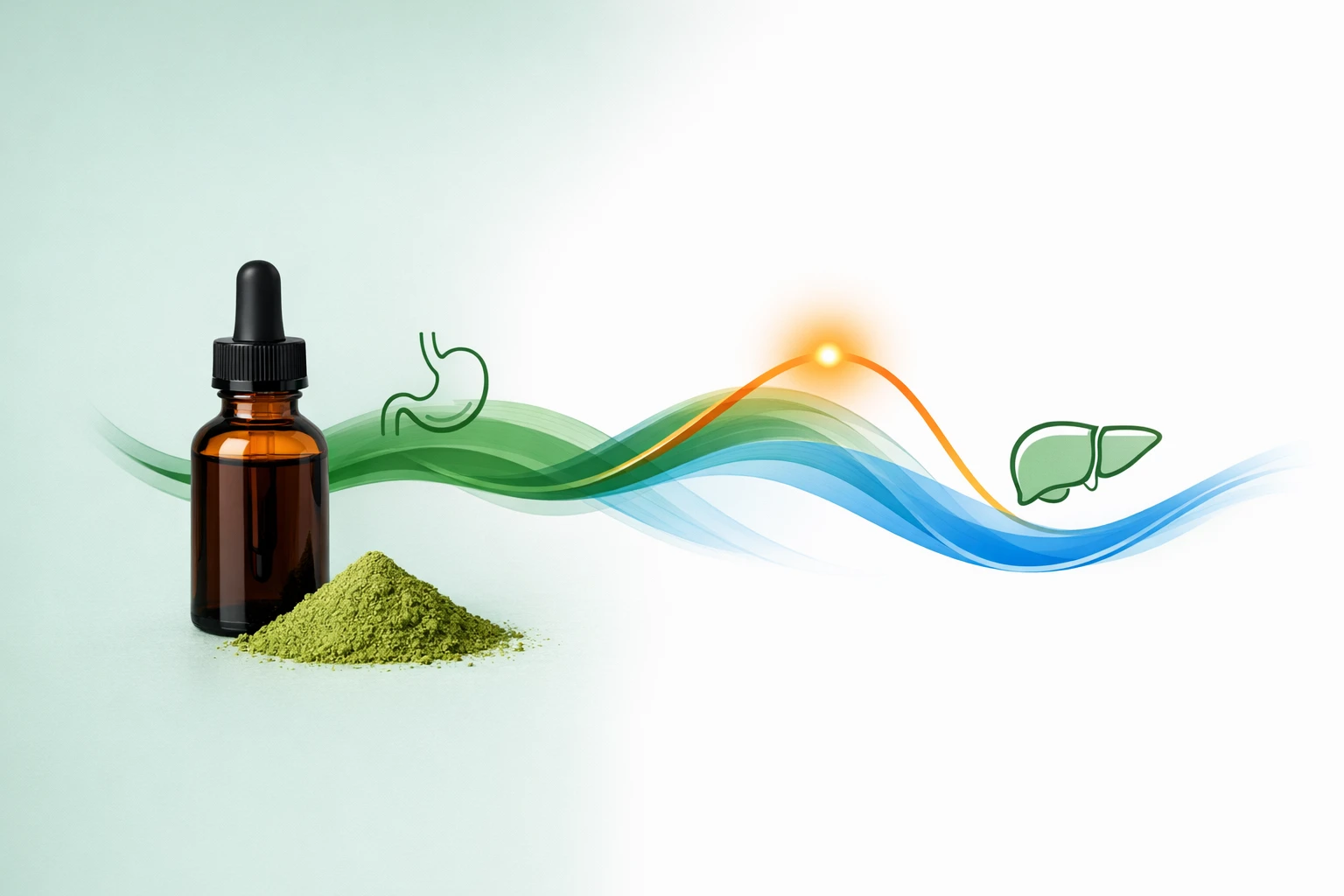
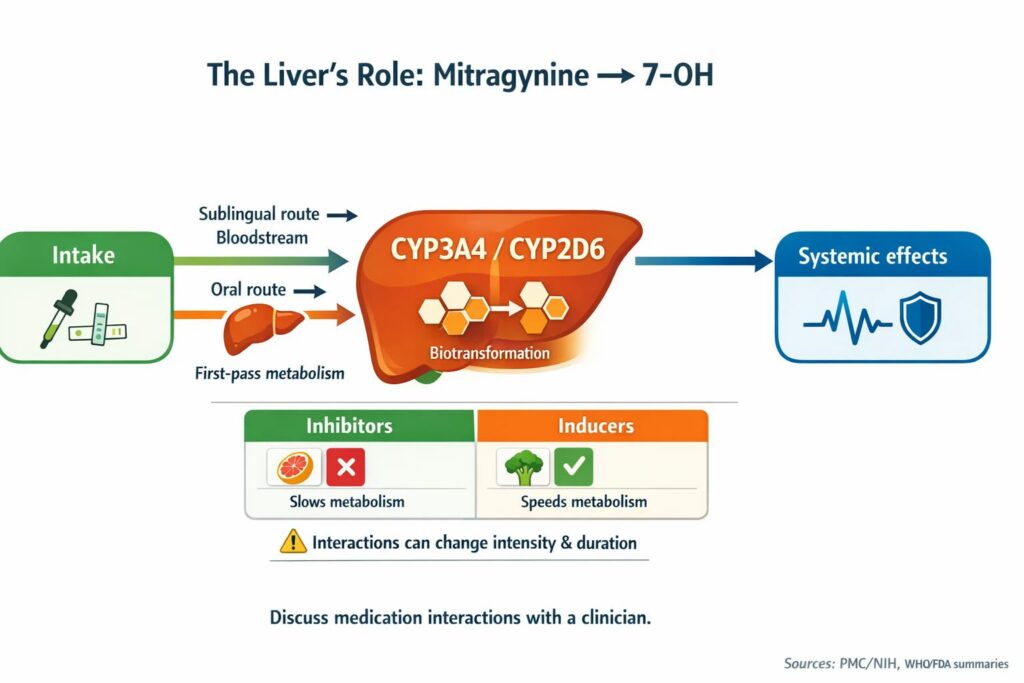
When you ingest kratom orally, it passes through the digestive tract and is sent to the liver before entering general circulation. This “first-pass metabolism” significantly reduces the concentration of active compounds. Sublingual methods, like tinctures held under the tongue, can partially bypass this process. The alkaloids are absorbed directly into the bloodstream through the mucous membranes in the mouth, leading to a potentially faster and more distinct effect profile.
Distribution Throughout the Body
Once alkaloids enter systemic circulation, they begin the distribution phase of pharmacokinetics. Distribution describes how compounds travel through the bloodstream and reach different tissues and organs throughout the body.
Several physiological factors influence distribution, including blood flow, plasma protein binding, tissue permeability, and individual body composition. These variables contribute to differences in measurable plasma concentrations and may influence how quickly alkaloids reach their biological targets.
Although absorption often receives the greatest attention, distribution represents an equally important stage because it determines where active compounds travel after entering circulation and how they become available for subsequent metabolism and elimination.
The Liver’s Central Role in Kratom Metabolism
Once absorbed, kratom’s alkaloids are transported to the liver, where the most important metabolic transformations occur. Your experience with any kratom product, especially extracts, is heavily influenced by a specific family of enzymes known as cytochrome P450.
How the Liver Metabolizes Kratom
Cytochrome P450 enzymes represent one of the most extensively studied enzyme families involved in drug and botanical metabolism. These enzymes participate in numerous biochemical reactions that transform compounds into metabolites that can be further processed and eliminated by the body.
Although kratom metabolism remains an active area of scientific research, available pharmacokinetic studies continue to improve understanding of how hepatic enzymes contribute to alkaloid transformation, systemic exposure, and elimination. As research expands, pharmacokinetic models will likely provide even greater insight into how formulation, metabolism, and individual physiology interact throughout the biological lifecycle of kratom alkaloids.
The CYP450 Enzyme Pathways
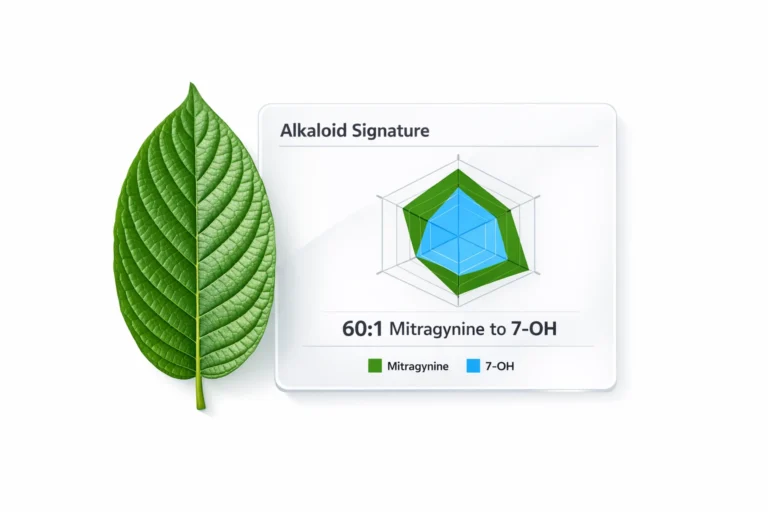
Two enzymes are critical players: CYP3A4 and CYP2D6. These are the primary pathways your liver uses to process mitragynine. In a crucial step for advanced users to understand, the liver also converts a portion of mitragynine into 7-hydroxymitragynine (7-OH), a minor alkaloid that is significantly more potent. The efficiency of this conversion can influence the character and intensity of the effects.
Mitragynine and 7-Hydroxymitragynine
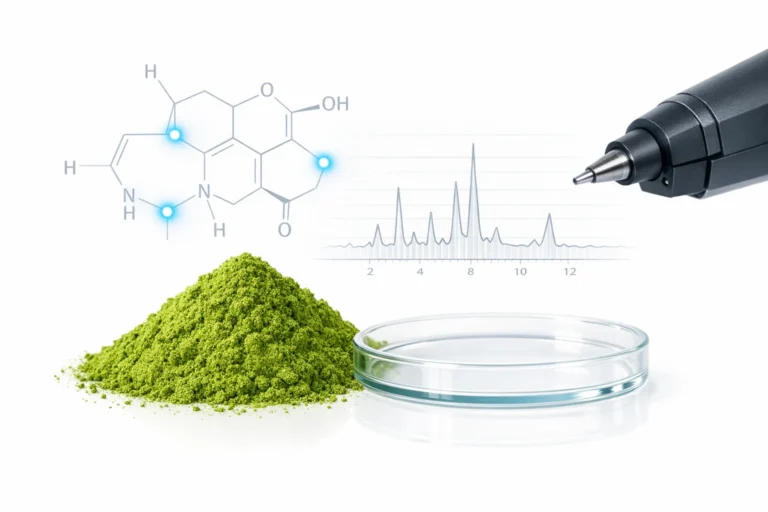
Mitragynine is the principal alkaloid naturally found within kratom leaves and serves as one of the primary compounds measured during laboratory analysis. After absorption, a portion of mitragynine undergoes metabolic transformation within the liver to form 7-hydroxymitragynine (7-OH), another biologically active alkaloid that has become an important focus of pharmacological research.
Although these alkaloids are closely related, they should not be viewed as interchangeable. Each possesses distinct pharmacological characteristics, and ongoing scientific investigation continues to improve understanding of their respective roles within kratom pharmacokinetics and pharmacodynamics.
For consumers comparing advanced kratom products, understanding the relationship between mitragynine and 7-hydroxymitragynine provides valuable context when reviewing Certificates of Analysis, standardized extracts, and published laboratory research.
Metabolic Inhibitors and Enhancers
Because these enzymes process many different substances, their activity can be altered by common foods and medications. This is a critical safety consideration.
- Inhibitors: Substances like grapefruit juice are known to inhibit the CYP3A4 enzyme. This can slow down the metabolism of mitragynine, potentially leading to a longer duration and stronger effects from a standard dose because the alkaloids remain in your system longer.
- Inducers: Other substances can induce, or speed up, these enzymes, causing your body to process kratom alkaloids more quickly and potentially diminishing the effects.
Understanding these interactions is fundamental to learning how to take kratom extract responsibly.
Drug and Supplement Interactions
One of the most important considerations within kratom pharmacokinetics is the possibility of interactions involving substances that influence hepatic enzyme activity. While grapefruit juice is frequently referenced because of its effects on CYP3A4, numerous prescription medications, over-the-counter products, and herbal supplements may also affect metabolic pathways.
Consumers evaluating pharmacokinetic information should recognize that interactions are highly individualized. Age, genetics, liver health, medication use, and nutritional factors may all contribute to differences in enzyme activity and systemic exposure. This variability highlights why pharmacokinetic research generally reports population averages rather than identical outcomes for every individual.
Understanding potential interactions helps place pharmacokinetic studies into context and reinforces the importance of reviewing product information carefully when comparing different formulations.
Factors That Affect Kratom Pharmacokinetics
Although formulation plays an important role, it represents only one factor influencing the movement of kratom alkaloids throughout the body. Pharmacokinetic characteristics may also be affected by age, body composition, genetics, gastrointestinal function, liver enzyme activity, hydration, food intake, and overall health.
Manufacturing variables—including extraction methods, particle size, formulation ingredients, and standardized alkaloid concentrations—may further contribute to measurable differences between products. Together, these biological and manufacturing factors explain why pharmacokinetic outcomes often vary between consumers even when similar products are used.
The Half-Life Paradox: Felt Effects vs. Biological Presence
One of the most common questions from experienced users is related to tolerance and redosing frequency. The confusion arises from the “half-life paradox.” While you may only feel the primary effects of kratom for two to four hours, the alkaloids are still present and being processed in your body for much longer.
The terminal half-life of mitragynine in humans can be up to 24 hours. This means it takes a full day for your body to eliminate half of the alkaloids from a single dose. When you take another dose before the first one is fully cleared, the concentrations “stack,” leading to a rapid increase in tolerance.

This biological fact is why managing tolerance with concentrated products requires discipline. Waiting for the subjective effects to fade isn’t a reliable indicator that your system is clear. Understanding this long metabolic tail is crucial for sustainable use and preventing the feeling that extracts have “stopped working.”
Understanding Half-Life, Clearance, and Elimination
Half-life is closely connected to two additional pharmacokinetic concepts: clearance and elimination. Clearance refers to the body’s efficiency in removing compounds from systemic circulation, while elimination encompasses the biological processes responsible for removing metabolites from the body after metabolism has occurred.
Together, these concepts help researchers evaluate how long compounds remain detectable, how rapidly concentrations decline, and how different formulations compare throughout the complete pharmacokinetic lifecycle.
Understanding half-life within this broader biological framework provides a more accurate interpretation of pharmacokinetic studies than relying solely on the perceived duration of effects.
Powder vs. Extract Pharmacokinetics
Traditional powder and concentrated extracts differ primarily in formulation rather than botanical origin. Because formulation influences absorption characteristics, products may demonstrate different onset times, systemic exposure, and measurable plasma concentrations even when originating from the same plant.
Powder generally requires additional digestive processing before alkaloids become available for absorption, whereas certain extract formulations may reduce some of these preliminary steps through manufacturing techniques. Capsules introduce additional variables because capsule dissolution precedes gastrointestinal absorption.
Evaluating these pharmacokinetic differences allows consumers to compare products using measurable biological characteristics instead of relying exclusively on marketing claims surrounding potency or extract ratios.
Common Misconceptions About Kratom Pharmacokinetics
Many discussions surrounding advanced kratom products simplify pharmacokinetics into a single concept such as strength or onset. In reality, pharmacokinetic behavior reflects the combined influence of absorption, distribution, metabolism, and elimination working together as an integrated biological system.
Another common misconception is that faster absorption automatically indicates a superior product. While onset may differ between formulations, product quality is more accurately assessed through standardized manufacturing, laboratory verification, transparent labeling, and consistent alkaloid reporting.
Consumers should also avoid assuming that products with identical extract ratios or similar marketing terminology possess identical pharmacokinetic characteristics. Manufacturing methods, botanical source material, formulation ingredients, and laboratory-standardized alkaloid concentrations all contribute to measurable differences between products.
A Modern Framework for Evaluating Extracts
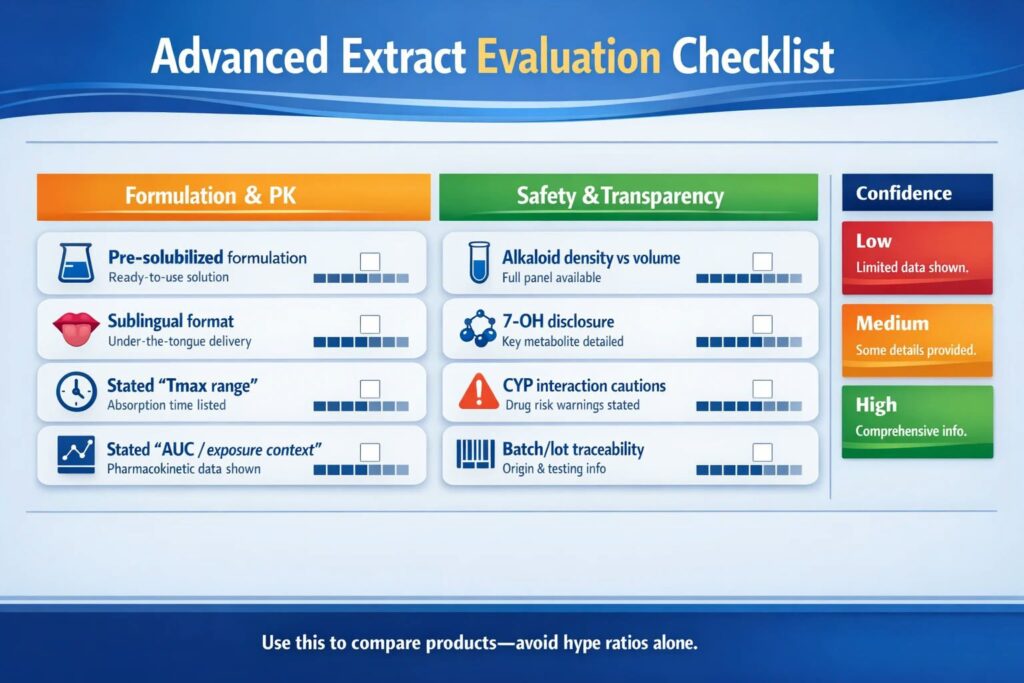
With a clear understanding of pharmacokinetics, you can move past simplistic marketing and evaluate products based on what truly matters. Instead of focusing on “potency ratios,” use a more sophisticated framework to assess quality and predict your experience.
The core question in the kratom powder vs extract decision should be based on biological efficiency.
- Formulation Type: Is it a liquid, powder, or capsule? This will be the primary determinant of its Tmax and bioavailability.
- Alkaloid Profile: Look for lab reports detailing the specific percentages of mitragynine and 7-OH. A high-quality kratom broad-spectrum extract will preserve a range of alkaloids, not just isolate one.
- Carrier/Solvent: For liquids, what is the base? Some formulations are designed for enhanced solubility and absorption.
- Transparency: Does the vendor provide clear, verifiable third-party lab results? This is the ultimate mark of a trustworthy source.
Laboratory Testing and Standardization
Independent laboratory testing plays a central role in evaluating premium kratom products because pharmacokinetic comparisons depend on reliable alkaloid measurements. Without standardized testing, comparing one formulation with another becomes significantly more difficult, regardless of the manufacturer’s potency claims.
Batch-specific laboratory analysis commonly measures mitragynine concentration, microbial contamination, heavy metals, and other quality indicators. These results allow consumers to interpret pharmacokinetic information using measurable analytical data rather than assumptions based on product descriptions.
Manufacturers that consistently publish third-party laboratory reports demonstrate a greater commitment to transparency and quality assurance than companies relying solely on generalized marketing statements.
Understanding Certificates of Analysis (COAs)
A Certificate of Analysis (COA) provides documented laboratory results for a specific production batch. Rather than describing a product in general terms, a COA allows consumers to verify measurable characteristics associated with the exact batch they intend to purchase.
A comprehensive COA commonly includes the product name, batch number, laboratory identification, testing methodology, alkaloid analysis, microbial screening, heavy metal testing, and testing dates. Matching the batch number displayed on the product with the laboratory report helps confirm that the analytical results correspond to the purchased item.
For consumers interested in kratom pharmacokinetics, Certificates of Analysis provide valuable context by verifying the standardized alkaloid concentrations that form the basis of pharmacokinetic comparisons.
Evaluating Standardized Extracts
Standardized extracts are manufactured to provide more consistent alkaloid concentrations between production batches. While traditional botanical materials naturally exhibit some degree of variation, standardized manufacturing processes attempt to reduce variability through controlled production methods and laboratory verification.
This consistency supports more meaningful pharmacokinetic comparisons because researchers and consumers can evaluate products using measurable alkaloid concentrations rather than estimated potency alone. As a result, standardized extracts frequently play an important role in scientific discussions surrounding kratom pharmacokinetics and product characterization.
Product Quality Beyond Potency
Consumers sometimes equate higher potency with higher quality, but pharmacokinetic evaluation involves considerably more than alkaloid concentration. Manufacturing practices, ingredient transparency, extraction methods, laboratory verification, packaging integrity, and batch consistency all contribute to overall product quality.
From a pharmacokinetic perspective, standardized manufacturing improves the reliability of product comparisons because it reduces unnecessary variability between production batches. This consistency benefits both consumers and researchers seeking reproducible analytical information.
Make Your Next Choice with Confidence
Understanding the pharmacokinetics of advanced kratom empowers you to be the architect of your own experience. By appreciating how absorption pathways, liver metabolism, and alkaloid half-life work together, you can select products that align precisely with your goals.
At Kratom-Online, we build our products on a foundation of transparency and quality. We source directly from trusted farms and provide comprehensive lab results so you know exactly what you’re getting. Explore our collection of premium extracts and enhanced powders, developed for the informed consumer who values purity and consistency.