
Kratom Alkaloid Testing: Advanced Analytical Techniques & Laboratory Standards
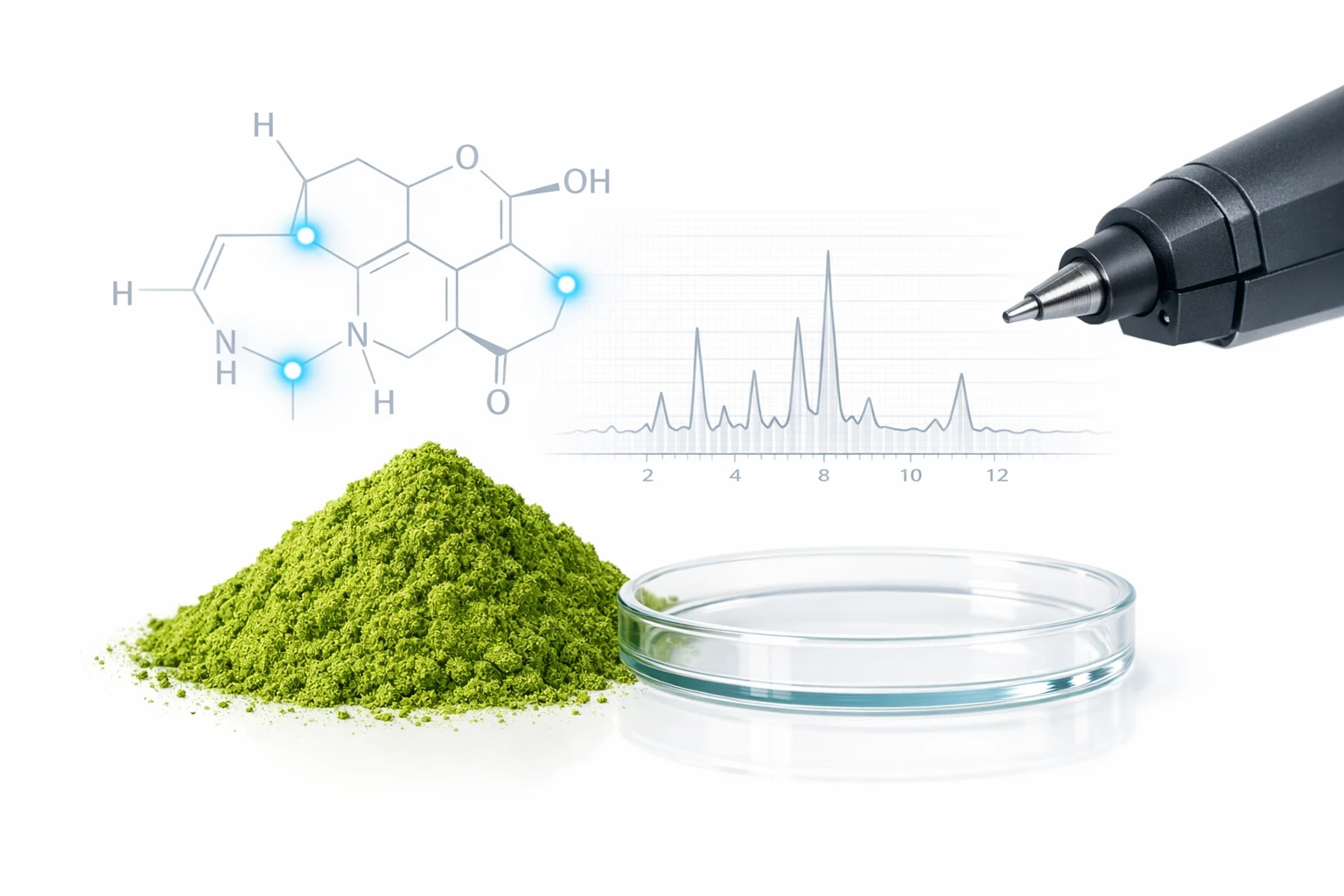
If you are evaluating kratom vendors in 2026, you already know that a basic Certificate of Analysis (COA) is no longer a differentiator—it is a baseline requirement. As the industry matures, the conversation has shifted from simply asking “Is this product tested?” to scrutinizing exactly how it is tested.
Sophisticated buyers, advocacy groups, and product formulators are realizing that standard lab testing leaves critical gaps in product verification. When comparing providers, the ability to accurately identify, quantify, and characterize the full alkaloid profile of a kratom product separates genuine premium vendors from those merely checking compliance boxes.
Welcome to the definitive guide on advanced analytical techniques for kratom. Here, we’ll break down the chemistry of trust, expose the vulnerabilities of standard testing, and provide you with a scientific rigor framework to evaluate your next purchase confidently.
Why Kratom Alkaloid Testing Matters
Laboratory testing plays a central role in product transparency, consumer confidence, and quality assurance throughout the kratom industry. While product labels often emphasize strain names or marketing terminology, laboratory analysis provides objective, measurable information that can be independently verified.
Comprehensive kratom alkaloid testing helps manufacturers confirm product consistency, detect contamination, validate production methods, and verify naturally occurring alkaloid profiles. For consumers, these laboratory results make it possible to compare products using scientific evidence rather than promotional claims alone.
As regulatory expectations and consumer awareness continue to evolve, understanding how kratom is tested has become just as important as understanding the plant itself.
Understanding the Kratom Testing Workflow
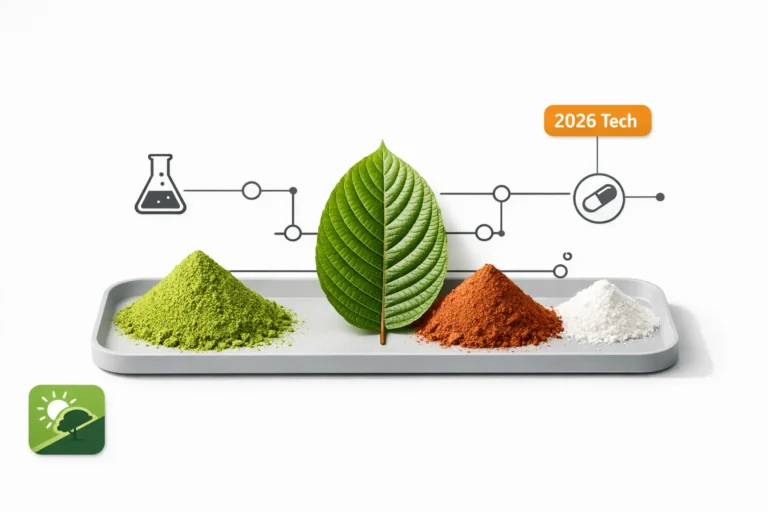
Every Certificate of Analysis begins long before a laboratory instrument analyzes a sample. Reliable testing depends on a carefully controlled workflow designed to produce accurate and reproducible results.
The process typically begins with representative batch sampling, followed by laboratory sample preparation that extracts alkaloids from the plant material. The prepared sample then undergoes instrumental analysis using validated analytical equipment before scientists review the data, perform quality-control checks, and generate the final Certificate of Analysis (COA).
Understanding this workflow helps consumers appreciate why laboratory quality depends not only on sophisticated instruments but also on proper sampling techniques, standardized preparation procedures, and validated analytical methods.
The Gold Standard Paradox: Why Standard HPLC is No Longer Enough
For years, High-Performance Liquid Chromatography (HPLC) has been touted as the gold standard for botanical testing. However, the Kratom (Mitragyna speciosa) plant features an incredibly complex botanical matrix. While basic HPLC is perfectly adequate for measuring the dominant alkaloid, Mitragynine, it struggles when tasked with identifying trace compounds at high resolutions.
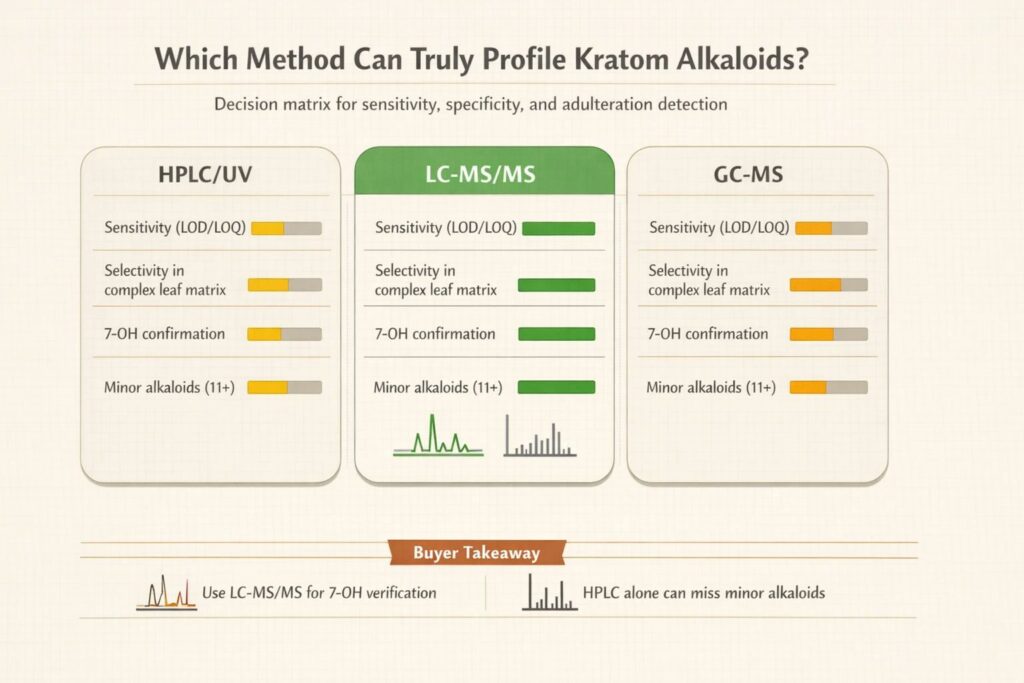
Today, the true industry benchmark is Liquid Chromatography with tandem Mass Spectrometry (LC-MS/MS).
Why the shift? Standard HPLC uses simple UV detectors that can be easily “confused” by overlapping plant pigments and lipids. LC-MS/MS, on the other hand, utilizes Electrospray Ionization and precise MRM (Multiple Reaction Monitoring) transitions. This means the machine physically shatters the molecules and measures their specific fragments, providing absolute certainty. When evaluating what factors determine the quality of kratom, ensuring your vendor’s lab relies on mass spectrometry for trace alkaloid verification is a critical first step.
Common Laboratory Testing Methods
Different laboratory instruments serve different purposes during kratom quality testing. Understanding these analytical techniques helps consumers interpret Certificates of Analysis with greater confidence.
HPLC (High-Performance Liquid Chromatography)
HPLC remains one of the most widely used methods for quantifying major alkaloids such as mitragynine. It offers reliable quantitative analysis for many routine quality-control applications.
LC-MS/MS (Liquid Chromatography-Tandem Mass Spectrometry)
LC-MS/MS combines chromatographic separation with highly specific mass analysis, allowing laboratories to accurately identify both major and trace alkaloids while minimizing analytical interference.
UHPLC (Ultra-High Performance Liquid Chromatography)
UHPLC operates at higher pressures than conventional HPLC, providing faster analysis, improved peak separation, and greater analytical efficiency for complex botanical samples.
GC-MS (Gas Chromatography-Mass Spectrometry)
Although GC-MS is generally unsuitable for routine kratom alkaloid profiling because many alkaloids are heat sensitive, it remains highly valuable for detecting residual solvents used during extraction processes.
ICP-MS (Inductively Coupled Plasma Mass Spectrometry)
ICP-MS specializes in detecting heavy metals such as lead, arsenic, cadmium, and mercury at extremely low concentrations, making it an essential component of comprehensive product safety testing.
Microbiological Testing
In addition to chemical analysis, laboratories routinely screen kratom products for microbial contamination, including Salmonella, Escherichia coli, yeast, mold, and other microorganisms that may affect product safety.
The “Big Five” vs. The Full Profile
Take a look at an average kratom COA, and you will likely see tests for two compounds: Mitragynine and 7-Hydroxymitragynine (7-OH). Some above-average labs might test for the “Big Five,” adding Paynantheine, Speciogynine, and Speciociliatine.
But a truly “Full Spectrum” product goes much deeper.
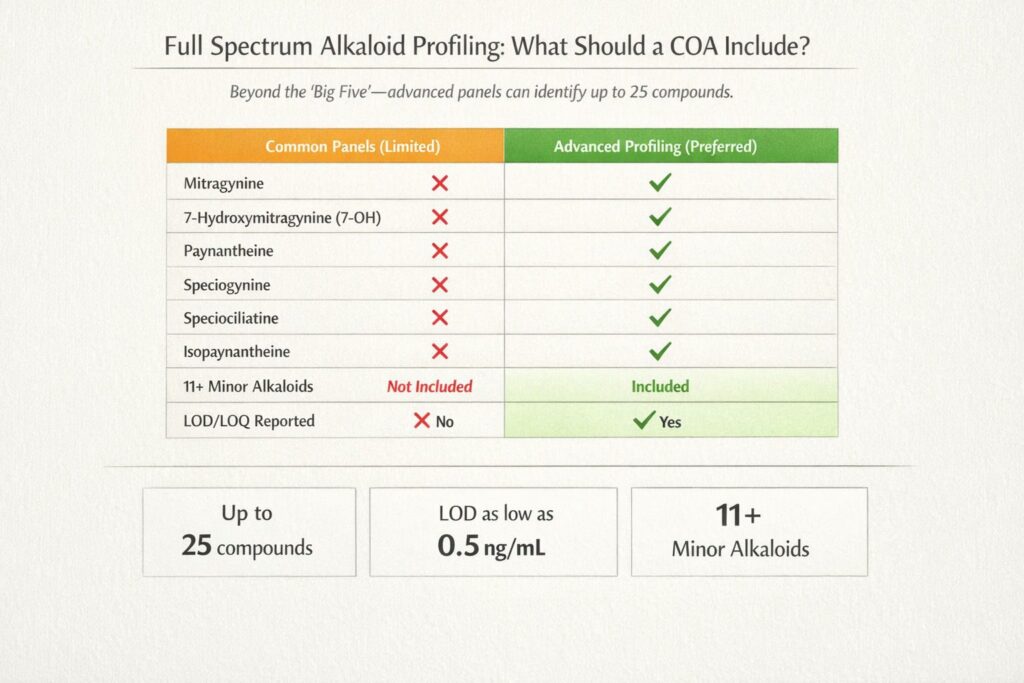
High-end laboratory profiling now identifies up to 25 unique alkaloid compounds, capturing the nuanced fingerprint of minor alkaloids like Isopaynantheine and Corynoxine. Modern analytical methods have achieved incredible sensitivity, reaching Limits of Detection (LODs) as low as 0.5 ng/mL. This granularity proves whether a product is a genuinely balanced botanical or a synthetically isolated shortcut.
The Chemistry of Trust: Matrix Effects and Extraction Loss
One of the most misunderstood aspects of lab testing is how the sample is prepared before it ever touches a machine. In chemistry, a “matrix effect” occurs when other components in the plant material interfere with the detection of the target alkaloids. Essentially, thick leaf matter can “hide” alkaloids from standard sensors.
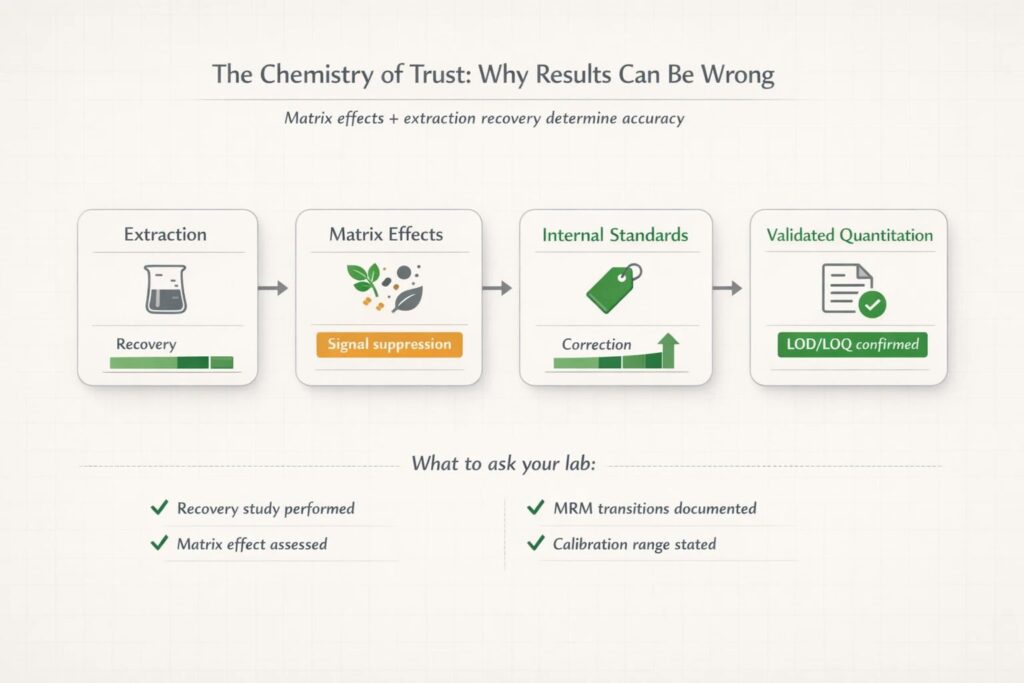
Many budget labs use a “dilute and shoot” method—simply soaking the powder in a basic solvent and running it. This drastically reduces extraction efficiency, resulting in inaccurate potency numbers. Furthermore, statistics show that approximately 15-25% of raw kratom fails initial microbial or analytical screens upon import. This high variance necessitates rigorous “hot spot” sampling protocols to ensure the 10-gram sample sent to the lab accurately represents the 1,000-kilo batch.
If you are upgrading your regimen and evaluating a highly concentrated product, like a potent kratom extract powder, understanding the extraction recovery methods of the vendor’s lab is paramount. An extract is only as safe and effective as the chemical precision used to create and test it.
How Laboratories Validate Results
Generating reliable laboratory data requires more than sophisticated instrumentation. Accredited laboratories perform extensive method validation before analytical results are reported to manufacturers or consumers.
Validation evaluates characteristics including accuracy, precision, repeatability, reproducibility, selectivity, linearity, recovery, and measurement uncertainty. Each analytical method must consistently produce dependable results across multiple testing conditions before it becomes part of routine quality-control procedures.
Laboratories also rely on calibration standards, certified reference materials, duplicate analyses, quality-control samples, and routine instrument verification to ensure reported alkaloid concentrations remain scientifically defensible. These validation procedures strengthen confidence in every Certificate of Analysis.
Detecting the Semi-Synthetic: The 7-OH Threshold
In recent years, the market has seen a surge in products boasting extremely high 7-Hydroxymitragynine (7-OH) levels. As an educated consumer, this should immediately trigger your internal evaluation radar.
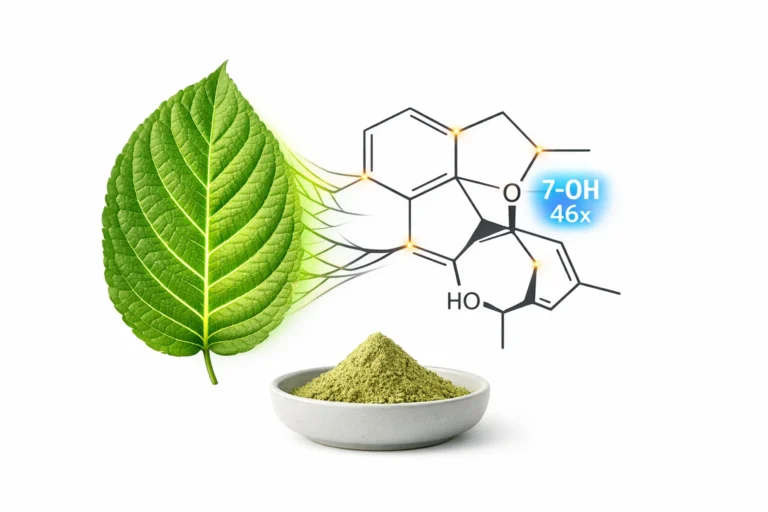
Naturally occurring 7-OH in unadulterated kratom leaf is incredibly low—typically less than 0.05% of the total alkaloid content.
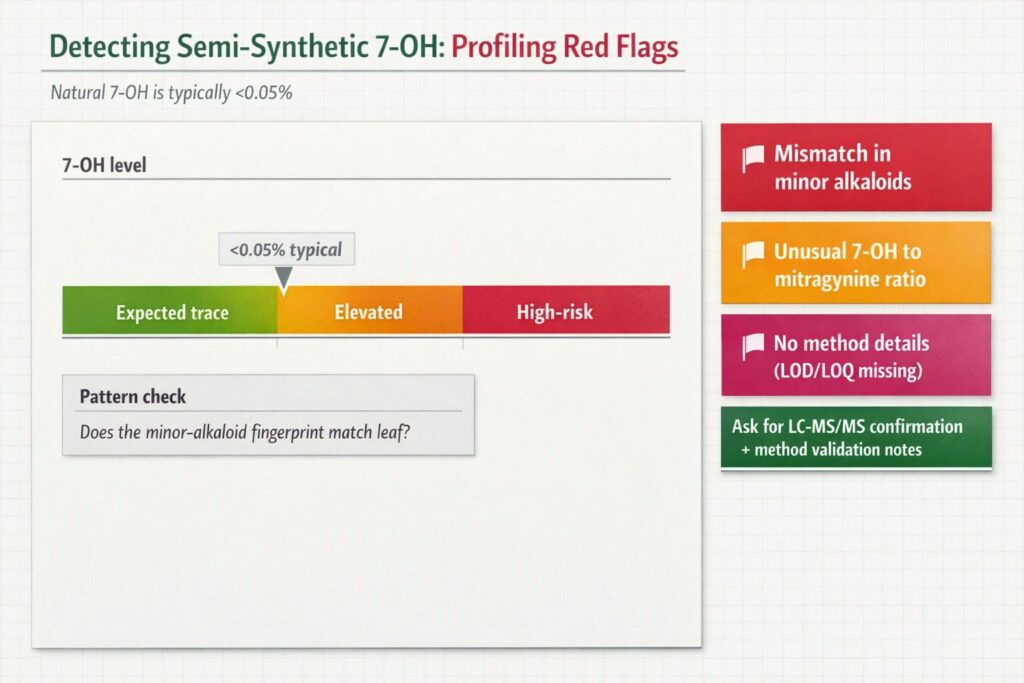
When a lab profile shows unusually high levels of 7-OH without the corresponding “minor alkaloid” markers, it is a glaring red flag for adulteration. This usually indicates that the Mitragynine was synthetically converted into 7-OH through chemical oxidation. Advanced LC-MS/MS profiling can spot the chemical “fingerprint” of this semi-synthetic process instantly.
For purists seeking natural, unadulterated energy and focus, maintaining this delicate, naturally occurring ratio is exactly why finding the best white maeng da kratom requires looking closely at comprehensive lab results rather than just marketing claims.
The ISO 17025 Fallacy
A common trap for buyers in the evaluation phase is seeing an “ISO 17025 Accredited” badge and assuming absolute safety. ISO 17025 is a standard for general laboratory competence—it is the floor, not the ceiling.
A laboratory can hold ISO 17025 accreditation for testing heavy metals in water, while simultaneously using an unvalidated method for testing kratom alkaloids. True scientific rigor requires “Method Validation.” This means the lab has rigorously proven that their specific analytical method (their solvent choices, run times, and machine calibrations) consistently and accurately measures kratom alkaloids without interference. Always look for labs that validate their specific kratom panels.
Reading a Kratom COA
A Certificate of Analysis should be interpreted as a comprehensive quality document rather than simply a potency report. Understanding the information presented allows consumers to evaluate products with greater confidence.
Begin by confirming the batch number and testing date to ensure the laboratory report corresponds to the exact product being purchased. Next, review the reported alkaloid concentrations, paying attention to both major and minor alkaloids when available.
The COA should also include contaminant testing, heavy metal screening, microbial analysis, laboratory identification, and analytical methodology. Together, these elements provide a much more complete assessment of product quality than alkaloid percentages alone.
Consumers should also verify that the laboratory report appears complete, professionally documented, and specific to the tested batch rather than relying on generic certificates that may not accurately represent current inventory.
Contaminant Testing Beyond Alkaloids
Although alkaloid profiling receives the most attention, comprehensive kratom alkaloid testing extends well beyond potency measurements. A complete laboratory evaluation also verifies product safety by screening for contaminants that cannot be detected through visual inspection alone.
Modern laboratories routinely analyze kratom products for heavy metals such as lead, arsenic, cadmium, and mercury using highly sensitive analytical techniques. Because kratom plants naturally absorb compounds from their growing environment, monitoring these elements is an essential component of quality assurance.
Microbiological testing is equally important. Independent laboratories commonly screen for Salmonella, Escherichia coli, yeast, mold, and other microbial contaminants that may affect product safety and stability. For extracted products, additional testing may evaluate residual solvents to verify manufacturing quality.
Taken together, alkaloid profiling and contaminant testing provide a more complete picture of overall product quality than potency measurements alone.
How Consumers Can Compare Laboratory Reports
Certificates of Analysis should be evaluated as complete scientific documents rather than simple marketing tools. Comparing laboratory reports across vendors helps consumers identify meaningful differences in quality assurance practices.
Look for batch-specific reports, recent testing dates, detailed alkaloid profiles, contaminant screening results, laboratory accreditation information, and clearly documented analytical methods. Vendors who publish complete laboratory documentation demonstrate a greater commitment to transparency than those providing only summary statistics or outdated reports.
Consumers should also be cautious of reports lacking batch identification, missing analytical methodology, or incomplete contaminant screening, as these omissions can make meaningful product comparisons difficult.
Limitations of Laboratory Testing
Even the most sophisticated analytical methods have practical limitations. Laboratory reports represent the specific sample submitted for testing rather than every gram contained within an entire production batch. Proper sampling procedures therefore remain critical for generating representative results.
Natural botanical variation also contributes to small differences between harvests. Environmental conditions, cultivation practices, drying methods, and storage conditions may influence alkaloid composition, meaning slight variability between batches should be expected even when products originate from the same supplier.
Analytical uncertainty is another normal aspect of laboratory science. Accredited laboratories establish acceptable measurement tolerances and continually verify instrument performance to ensure reported values remain scientifically reliable. Understanding these limitations allows consumers to interpret laboratory reports with realistic expectations rather than assuming absolute precision.
FAQ: Deciphering Technical Lab Reports
How can one identify high quality kratom using a lab’s COA?
When asking how can one identify high quality kratom, look past the total mitragynine percentage. Check the document for Limit of Detection (LOD) and Limit of Quantitation (LOQ) values. A transparent COA will list exactly how sensitive the equipment is. Furthermore, look for a comprehensive minor alkaloid breakdown rather than a simple pass/fail sheet.
Why isn’t Gas Chromatography-Mass Spectrometry (GC-MS) used for alkaloid profiling?
While GC-MS is excellent for analyzing residual solvents (like ethanol or acetone used in extraction), it relies on intense heat to vaporize the sample. Kratom alkaloids are thermally labile—meaning they break down and degrade under high heat. LC-MS/MS is performed in a liquid state, preserving the alkaloids for an accurate read.
What does “Matrix Interference” mean on my COA?
If a lab notes matrix interference, it means the natural waxes, lipids, and chlorophyll in the plant material disrupted the detector. This is common in basic HPLC testing and underscores why advanced sample prep (like Solid Phase Extraction) and LC-MS/MS instrumentation are critical for true accuracy.
Elevating Your Standards
Navigating the modern kratom market requires more than taking a vendor at their word. As analytical capabilities have evolved in 2026, so too must your evaluation criteria. By demanding advanced profiling—specifically LC-MS/MS validation, full 11+ alkaloid panels, and transparent extraction recovery metrics—you protect yourself from adulterated or mislabeled products.
At Kratom-Online, we understand that trust is earned through transparency. By prioritizing direct relationships with Southeast Asian farms and demanding rigorous, uncompromised testing standards, we ensure that every product you evaluate meets the highest threshold of scientific scrutiny. When you know exactly what is in your kratom, you can make decisions with absolute confidence.