
Kratom Myths Explained: Science, Safety & Facts in 2026
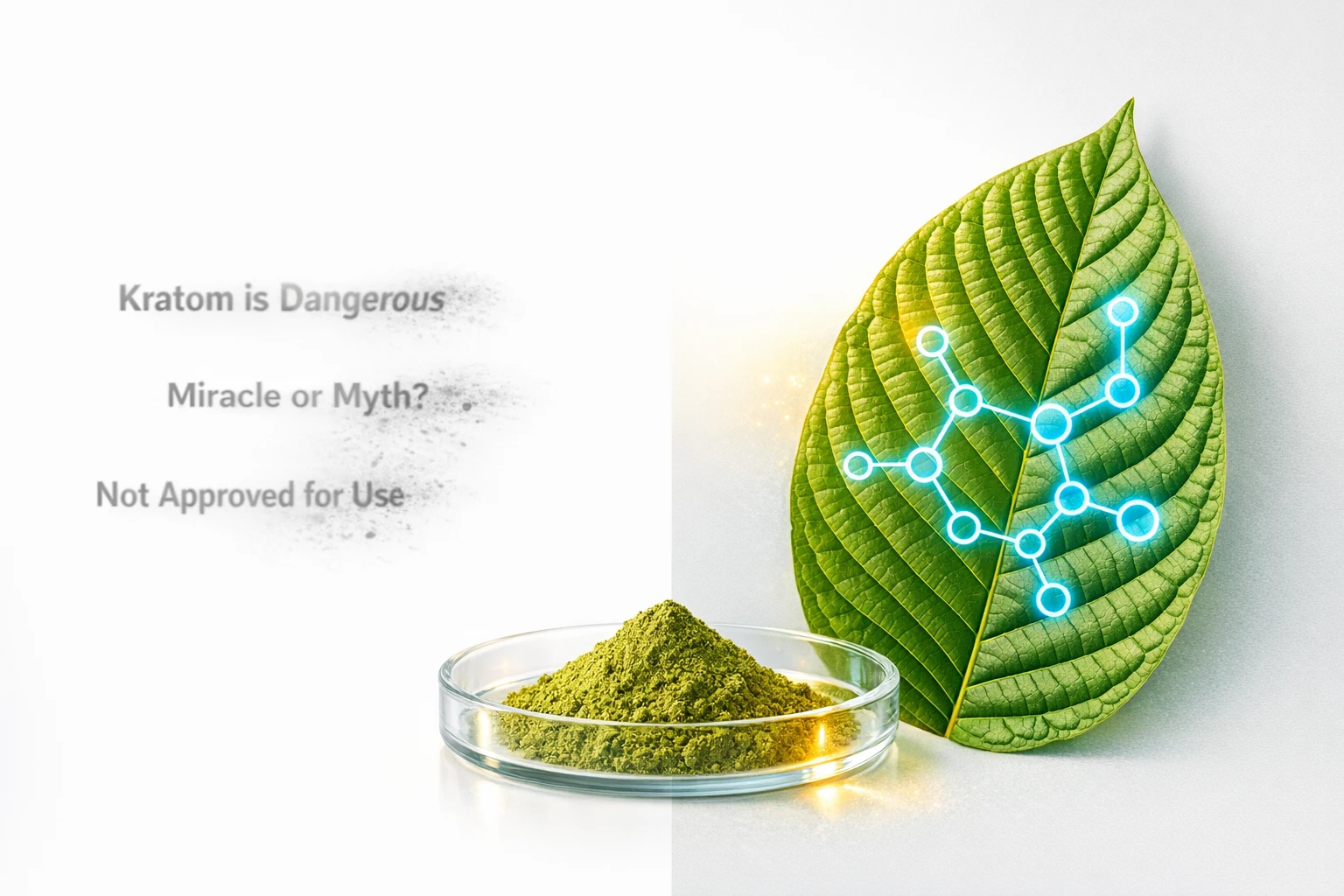
If you are currently evaluating whether kratom is the right choice for your lifestyle, you have likely encountered a fiercely polarized internet. On one side, authoritative health institutions issue sweeping warnings. On the other, passionate advocates and industry forums claim the botanical is entirely without risk.
As a discerning buyer in 2026, you don’t need alarmism, and you don’t need sugar-coated sales pitches. You need scientific neutrality.
The public understanding of Mitragyna speciosa has been heavily distorted by a failure to distinguish between natural, whole-leaf kratom and heavily processed, synthetic concentrates. By looking strictly at the latest clinical data, pharmacology, and chemical profiles, we can strip away the sensationalism. It’s time to debunk the most common misconceptions surrounding kratom’s safety, legality, and effects so you can make a confident, informed decision.
What Are Kratom Myths?
Kratom myths are widely repeated claims about Mitragyna speciosa that may oversimplify, exaggerate, or misrepresent current scientific evidence. Some myths portray kratom as completely harmless, while others suggest it is identical to highly dangerous narcotics. In reality, the available evidence is more nuanced and requires careful interpretation.
Many misconceptions develop because discussions frequently combine information about traditional whole-leaf kratom with reports involving highly concentrated extracts, adulterated products, or multiple substances. Distinguishing between these situations allows consumers to better understand what current research actually demonstrates.
Approaching kratom through evidence-based education rather than assumptions supports more informed purchasing decisions and encourages responsible product evaluation.
The “Opioid Myth”: Chemistry vs. Sensational Headlines
Perhaps the most pervasive myth is that kratom is simply a “legal opioid” analogous to synthetic narcotics. This fundamental misunderstanding stems from a lack of education regarding how kratom’s active alkaloids interact with the human brain.
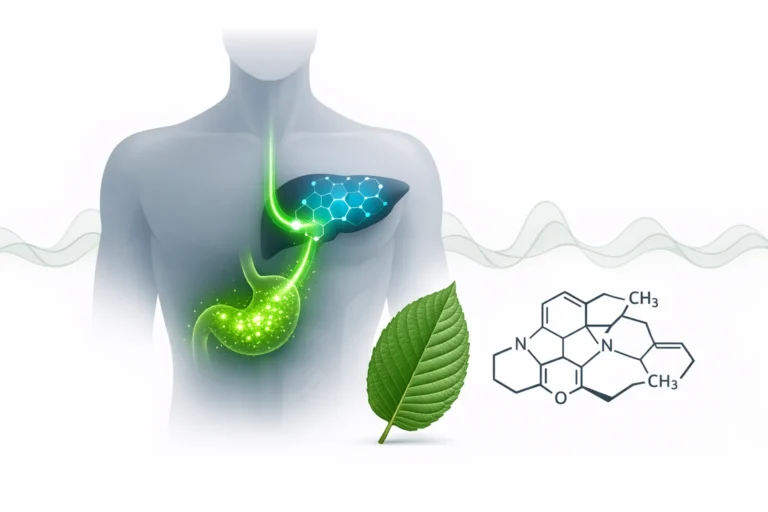
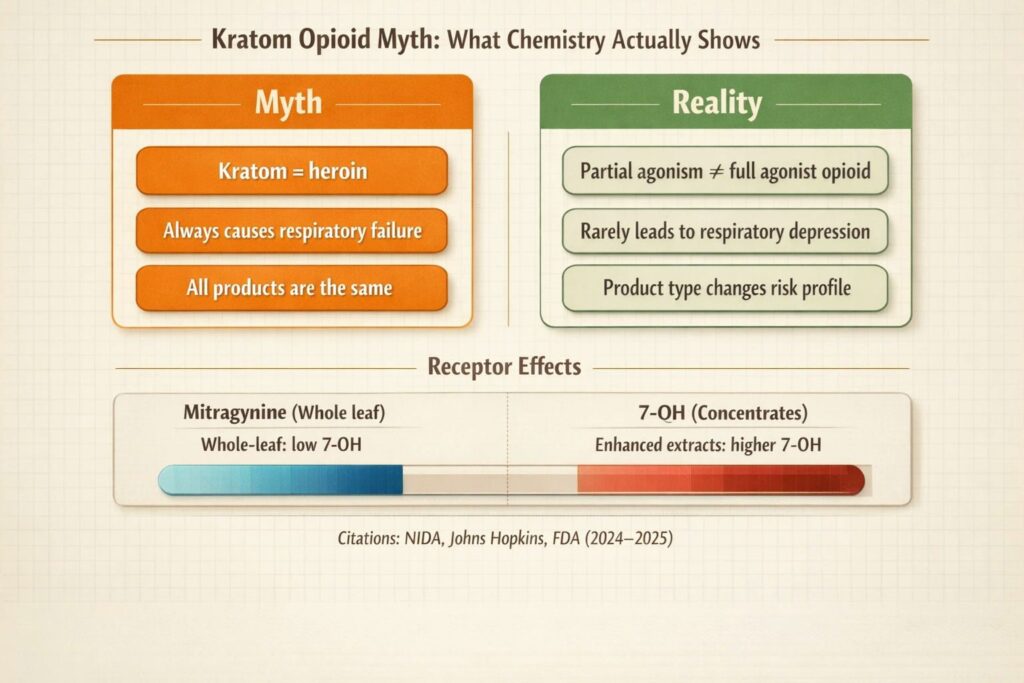
According to research from institutions like Johns Hopkins and the National Institute on Drug Abuse (NIDA), the primary alkaloid in natural kratom—Mitragynine—acts as a partial agonist at the mu-opioid receptors. This is a critical distinction. Traditional opioids (like fentanyl or oxycodone) are full agonists, which recruit beta-arrestin, a protein pathway directly linked to life-threatening respiratory depression.
Mitragynine, however, exhibits something called G-protein bias. Because it is only a partial agonist, it triggers a built-in “ceiling effect.” Once a certain threshold is reached, taking more natural kratom does not proportionally increase respiratory depression. This pharmacological safeguard is why comparing natural whole-leaf kratom to highly dangerous street narcotics is biologically inaccurate.
How Scientific Research Evaluates Kratom
Understanding kratom science requires recognizing that researchers use multiple forms of evidence. Laboratory studies investigate alkaloid chemistry and receptor activity, observational studies examine consumer experiences, while toxicological investigations evaluate adverse events and product composition. Each research method answers different questions and contributes a different piece of the overall picture.
Scientific conclusions also evolve as new evidence becomes available. Because kratom research continues to expand, recommendations may change over time as researchers gather additional information regarding pharmacology, safety, product quality, and patterns of use.
For consumers, the most balanced approach is to evaluate information from multiple credible sources while recognizing the limitations of any single study or headline.
The Safety & Toxicity Myth: Unpacking the 7-OH Threshold
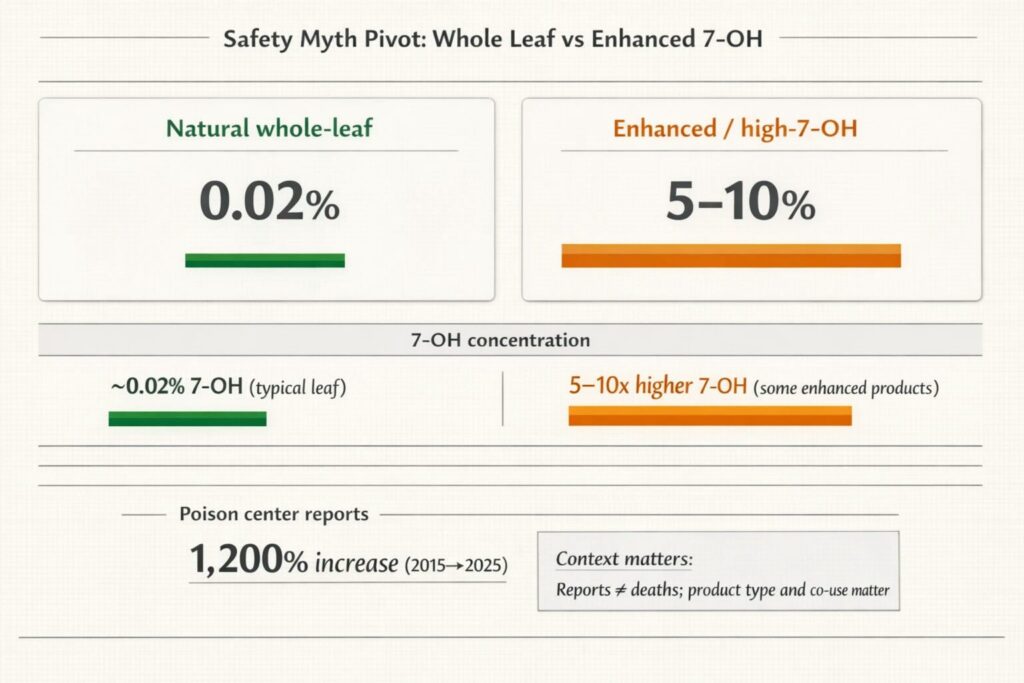
If natural kratom has a ceiling effect, why do headlines point to a surge in health concerns? U.S. poison center reports related to kratom exposures increased a staggering 1,200% over the last decade, jumping from 258 incidents in 2015 to 3,434 in 2025.
The answer lies in a secondary, much more potent alkaloid: 7-Hydroxymitragynine (7-OH).
In authentic, organically cultivated kratom leaf sourced directly from Southeast Asia, 7-OH exists in trace amounts—typically hovering around a mere 0.02% of the alkaloid profile. At this level, it contributes naturally to the plant’s profile without overriding the safety mechanisms of Mitragynine.
However, recent FDA (2024-2025) reports and warning letters highlight a dangerous trend in the unregulated market: hyper-concentrated 7-OH extracts masquerading as standard kratom. Some of these commercial extracts contain 5 to 10 times the natural amount of 7-OH. Unlike Mitragynine, concentrated 7-OH acts more like a full agonist, stripping away the plant’s natural safety ceiling.
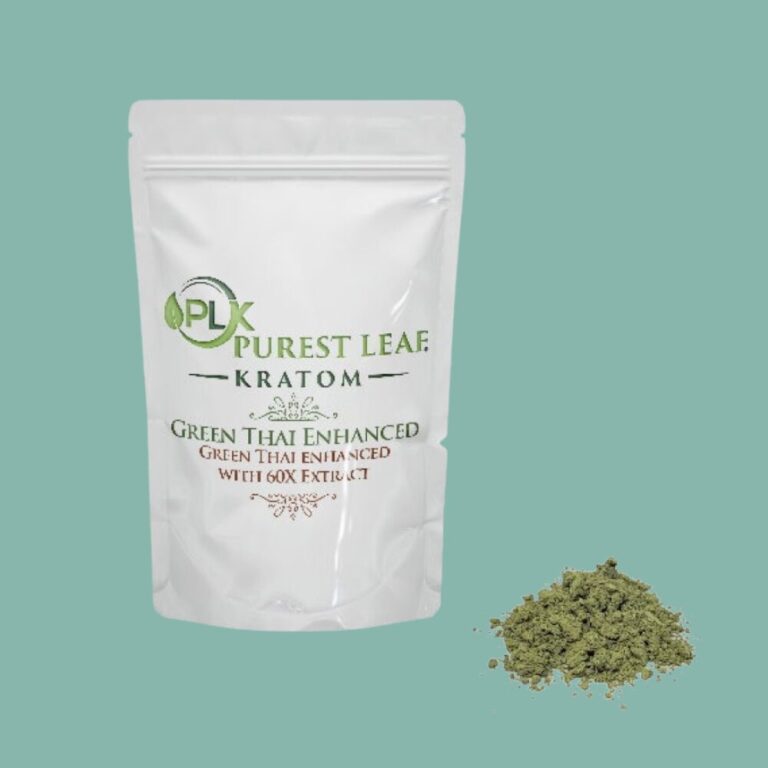
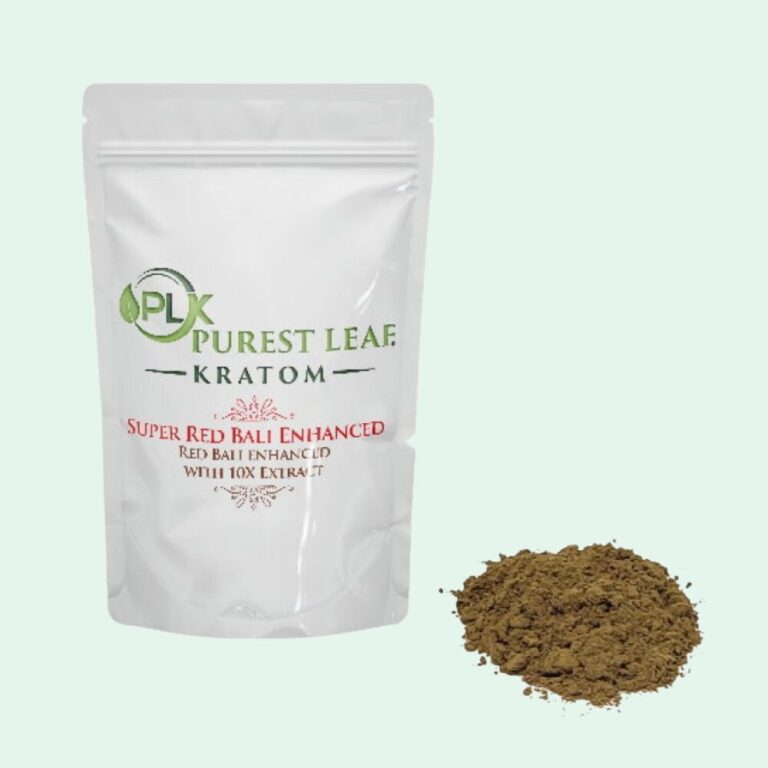
This is why understanding what you are buying is non-negotiable. For experienced users looking for more potency than standard leaf, stepping up to a carefully tested, transparently sourced enhanced kratom powder can provide a stronger alkaloid profile safely, provided the exact concentrations are documented and verified. The danger lies not in the plant itself, but in undisclosed, chemically manipulated products sold by middlemen who prioritize profit over transparency.
Understanding Natural Leaf vs. Concentrated Extracts
One of the largest contributors to modern kratom myths is the assumption that all kratom products are chemically identical. In reality, whole-leaf powders, standardized extracts, and highly concentrated alkaloid products differ significantly in composition, potency, and intended use.
Traditional whole-leaf kratom contains a naturally occurring spectrum of more than 40 alkaloids that work together as part of the plant’s overall chemical profile. Extracts, by comparison, concentrate selected alkaloids, resulting in substantially different potency and serving requirements. Understanding these distinctions helps consumers interpret research findings more accurately and avoid treating every kratom product as interchangeable.
Recognizing product differences also helps explain why scientific studies sometimes report varying outcomes. Research evaluating whole-leaf products should not automatically be assumed to apply equally to highly concentrated extracts or other specialized formulations.
The Fatal Flaw in the Data: The Poly-Substance Reality
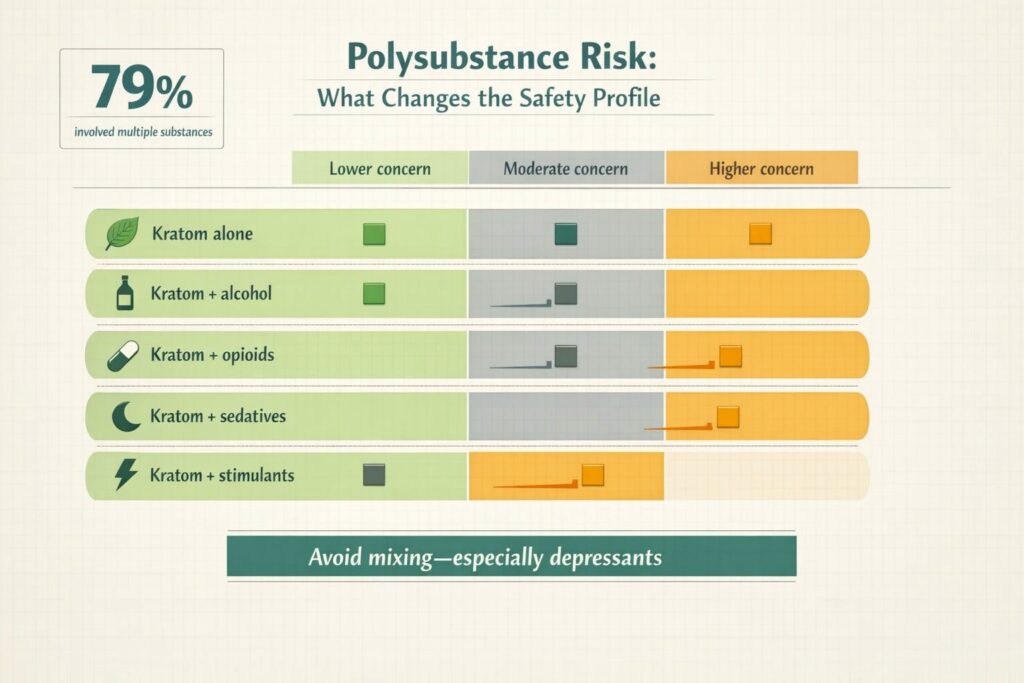
When media outlets report on kratom-related fatalities, they frequently omit a crucial piece of context that drastically changes the risk assessment for the average user.
According to the latest CDC Morbidity and Mortality Weekly Report (MMWR) data spanning into 2025, a retrospective analysis shows that 79% of kratom-associated deaths involved multiple substances.
The myth that natural kratom alone is a fatal substance falls apart under clinical scrutiny. The true danger emerges in the “poly-substance” reality. Mixing kratom with central nervous system depressants, excessive alcohol, or prescription medications like SSRIs and traditional opioids alters how the liver metabolizes these compounds, leading to dangerous toxicities.
For the responsible adult consuming pure, unadulterated kratom leaf by itself, the safety profile is fundamentally different from the tragic outcomes often cited in sensationalized news reports.
The Legality vs. Regulation Myth: Is Kratom Safe If It’s in a Gas Station?
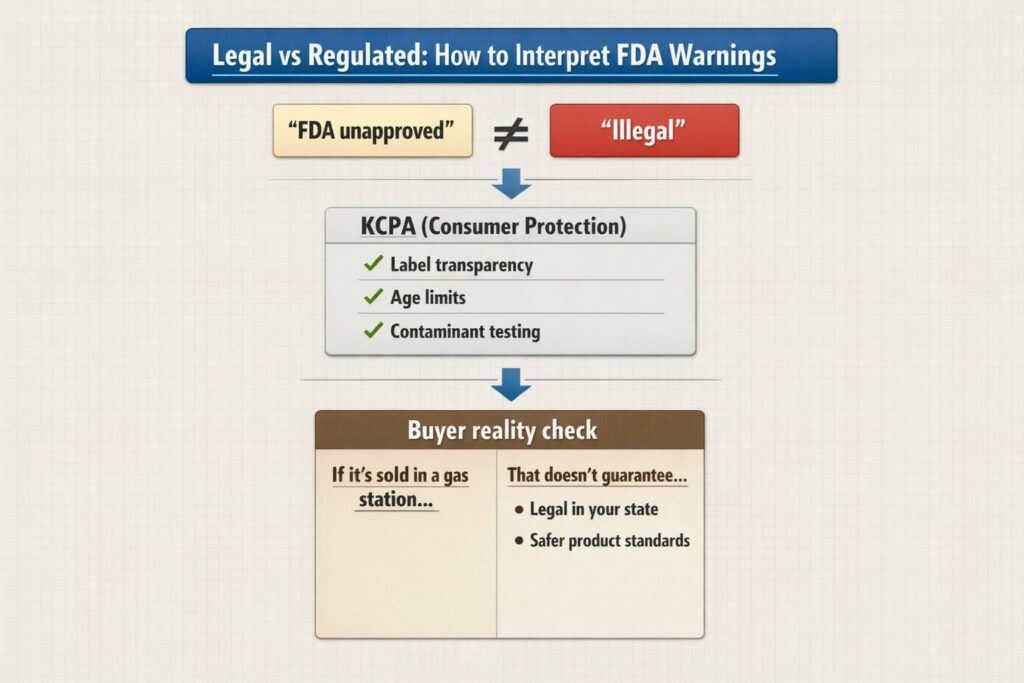
A common misconception among new buyers is equating legality with regulatory approval. Consumers often think, “If I can buy this kratom shot at my local convenience store, it must be approved and safe.”
This is categorically false. While kratom is federally legal in the United States, it is considered “FDA Unapproved.” This lack of federal oversight means the burden of quality control falls entirely on the vendor and the consumer.
The industry’s answer to this regulatory gap is the Kratom Consumer Protection Act (KCPA), which is currently being passed state-by-state. The KCPA enforces strict manufacturing standards, bans the dangerous spiking of 7-OH, mandates age restrictions, and requires clear labeling.
Because many states have not yet passed the KCPA, the convenience store market is flooded with cheap, mass-produced extracts from questionable middlemen. True safety and consistency are found by bypassing these retail intermediaries and sourcing directly from trusted vendors who voluntarily adhere to KCPA standards, offering complete transparency and third-party lab testing for purity and freshness.
How Product Quality Influences Safety
Product quality is one of the strongest variables influencing consumer confidence. Two products carrying similar names may differ substantially depending on cultivation methods, processing, storage conditions, and quality control procedures.
Responsible vendors typically invest in batch-specific Certificates of Analysis (COAs), heavy metal screening, microbial testing, alkaloid verification, and transparent sourcing information. These objective quality indicators allow consumers to evaluate products using measurable laboratory data rather than relying solely on branding or marketing claims.
Supply chain transparency also contributes to product consistency. Companies that work directly with Southeast Asian farming partners often provide greater traceability from cultivation through final packaging, helping consumers better understand product origin and manufacturing practices.
Understanding the Current Regulatory Landscape
The regulatory environment surrounding kratom continues to evolve at both national and international levels. While some jurisdictions have adopted consumer protection legislation or quality standards, others continue to review available scientific evidence before implementing new policies.
In the United States, the Kratom Consumer Protection Act (KCPA) represents one of the primary legislative efforts aimed at establishing manufacturing standards, labeling requirements, age restrictions, and consumer protections. Because adoption varies by state, consumers should remain aware of local regulations when purchasing or possessing kratom products.
Internationally, regulations also differ considerably, with some countries allowing regulated access while others maintain restrictions or prohibitions. Understanding these legal differences helps consumers interpret news reports within the appropriate regulatory context rather than assuming a single global standard exists.
Addiction vs. Dependence: Understanding Habit-Forming Nuances
Many academic sites frame kratom as hopelessly addictive, while some industry advocates claim it carries zero risk of habituation. The scientific truth sits in the middle.
We must differentiate between addiction (a psychological compulsion characterized by destructive behavior to obtain a substance) and dependence (a physical adaptation to a substance over time).
Kratom can be habit-forming. Regular, daily use of kratom can lead to physical dependence, just as daily caffeine or SSRI use does. However, clinical definitions and user experiences consistently show that the withdrawal profile for whole-leaf kratom is statistically and experientially different—and generally far milder—than the severe withdrawals associated with traditional opioids.
Understanding dosage ceilings, practicing moderation, and treating the botanical with respect are the keys to mitigating dependence risks.
Common Kratom Misconceptions
Although scientific understanding of Mitragyna speciosa continues to evolve, several misconceptions remain common among both new and experienced consumers. Separating evidence-based information from assumptions allows buyers to evaluate products more confidently.
Myth: All kratom products are the same.
Reality: Whole-leaf powders, standardized extracts, enhanced products, and highly concentrated formulations differ significantly in alkaloid composition, serving recommendations, and manufacturing processes. Product labels alone do not always communicate these differences, making independent laboratory testing especially important.
Myth: Natural automatically means completely safe.
Reality: Natural origin does not eliminate the need for responsible serving practices, quality control, or awareness of potential interactions. Product quality, individual health factors, and responsible use all contribute to the overall safety profile.
Myth: If kratom is legal, every product on the market meets the same quality standards.
Reality: Legal availability does not necessarily indicate standardized manufacturing or laboratory verification. Quality assurance varies among vendors, making Certificates of Analysis (COAs), contaminant testing, and sourcing transparency valuable evaluation tools.
Myth: Scientific research has already answered every question about kratom.
Reality: Research continues to develop. While scientists have learned much about kratom pharmacology and alkaloids, ongoing studies continue to examine long-term safety, product standardization, and regulatory approaches.
How to Evaluate Kratom Information Online
The amount of information available online makes it difficult for consumers to distinguish credible educational resources from sensational headlines or promotional content. Evaluating information critically helps reduce confusion and supports evidence-based decision-making.
When reviewing kratom information, consider whether the source:
- References peer-reviewed scientific literature or recognized research institutions.
- Clearly distinguishes between whole-leaf products and concentrated extracts.
- Explains study limitations instead of presenting absolute conclusions.
- Provides balanced educational information rather than relying solely on emotional language.
- Supports claims with transparent laboratory data, regulatory documentation, or scientific evidence where appropriate.
Comparing multiple credible sources provides a more complete understanding than relying on a single article, headline, or social media discussion.
Frequently Asked Questions (FAQ)
What exactly is the “Ceiling Effect” in Kratom?
The ceiling effect refers to the pharmacological property of Mitragynine. Because it is a partial agonist, its effects tap out at a certain dosage. If a user consumes more natural leaf past this threshold, they are more likely to experience nausea (often called the “wobbles”) rather than an increase in dangerous respiratory depression.
How do I know if my kratom has dangerous levels of 7-OH?
The only way to know the alkaloid profile of your product is through third-party laboratory testing. Unregulated gas-station shots often hide their alkaloid content. Always purchase from transparent, direct-to-consumer online vendors who clearly document the natural alkaloid concentrations of their powders and capsules.
Are enhanced kratom products inherently dangerous?
No, enhanced products are not inherently dangerous if they are produced responsibly. Legitimate enhanced powders use naturally derived extractions to slightly elevate the alkaloid profile for experienced users who require a smaller volume of powder. The danger lies strictly in synthesized, hyper-concentrated products designed to mimic hard narcotics.
Does the FDA’s refusal to approve kratom mean it should be avoided?
Not necessarily. The FDA does not approve dietary supplements or most natural botanicals; they only evaluate them for safety issues post-market. The FDA’s warnings are primarily targeted at contaminated products and the dangerous rise of synthetic 7-OH extracts, highlighting the critical need for consumers to buy from verified, high-quality sources.
—
Your Next Steps: Making a Confident Choice
Evaluating kratom doesn’t have to feel like navigating a minefield of misinformation. When you strip away the myths, the science reveals a remarkable botanical that, when used responsibly and sourced correctly, offers significant utility.
The key to a safe and effective kratom experience is eliminating the unknown. That means avoiding questionable retail environments and middleman markups in favor of direct sourcing. By choosing a provider committed to product transparency, fast fulfillment, and rigorous standards for consistency, you ensure that what you see on the label is exactly what you receive in your order.
Take control of your kratom journey by exploring products that prioritize pure, documented, and naturally cultivated Southeast Asian leaf. When you choose quality and education over convenience-store hype, you empower yourself to experience kratom exactly as nature intended.