
Kratom Alkaloid Profiles: Comparing Strains, Chemistry, and Laboratory Analysis
If you’ve spent any time researching kratom online, you’ve likely run into the same generic marketing claims over and over. You’re told that white veins are for mornings, reds are for evenings, and greens are somewhere in between. But as you evaluate your options and try to find a product that delivers consistent results, surface-level advice simply isn’t enough.
You don’t just need a strain recommendation—you need to understand the pharmacological “why” behind how different batches affect your body.
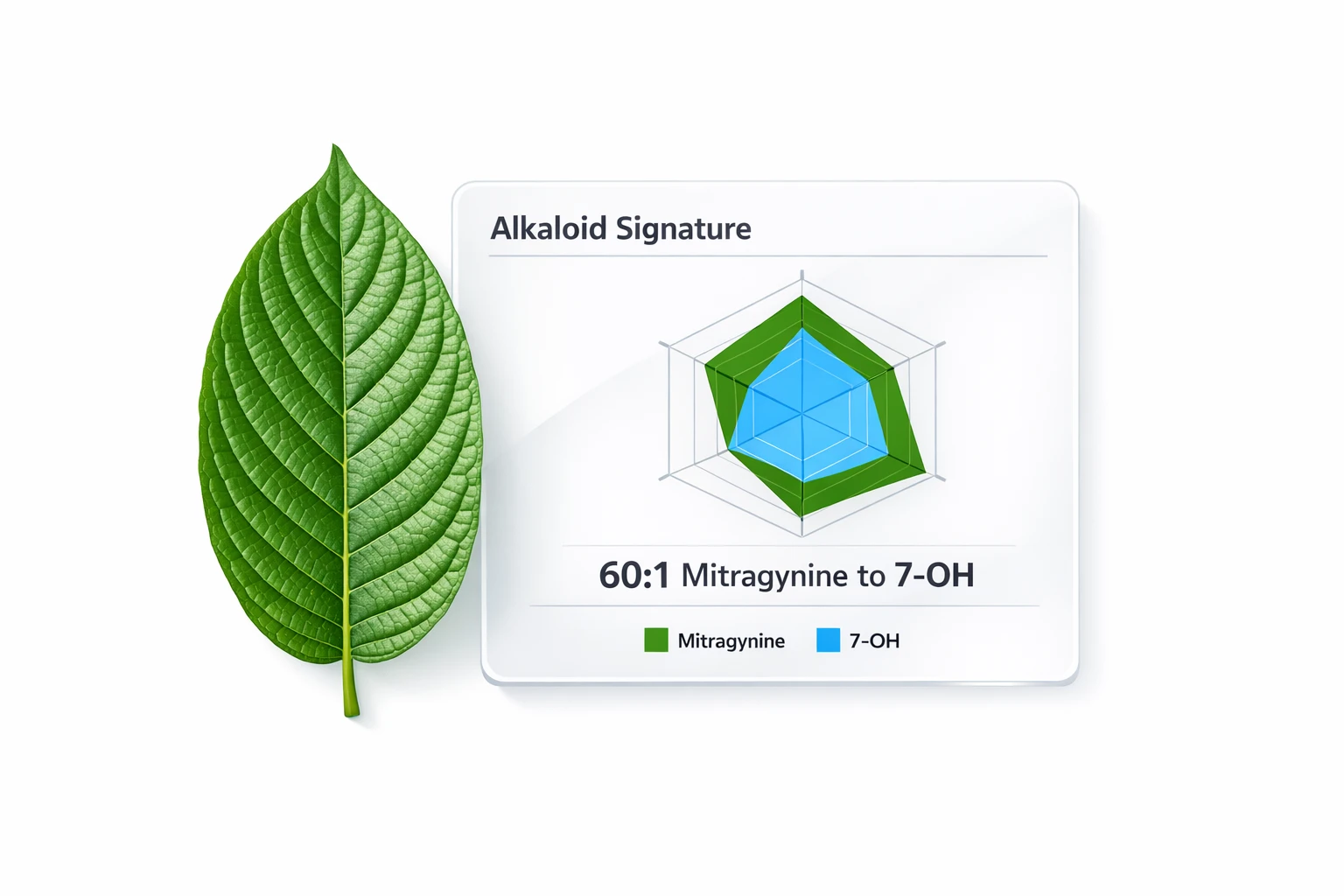
The kratom industry is evolving rapidly in 2026, and the most informed buyers are no longer shopping by vein color alone. Instead, they are looking at Alkaloid Signatures. Every batch of kratom possesses a unique chemical fingerprint. By understanding the ratios of major compounds like Mitragynine to 7-Hydroxymitragynine (7-OHM), as well as the presence of crucial minor alkaloids, you can completely remove the guesswork from your buying process.
This guide provides a scientific deep dive into kratom’s chemical architecture, helping you interpret lab reports, compare alkaloid profiles, and confidently select the precise botanical balance you’re looking for.
What Are Kratom Alkaloid Profiles?
Kratom alkaloid profiles describe the measurable composition and relative concentration of naturally occurring alkaloids found within a specific batch of Mitragyna speciosa. Rather than focusing on a single compound, an alkaloid profile considers the broader chemical fingerprint created by multiple interacting alkaloids.
Laboratory techniques such as High-Performance Liquid Chromatography (HPLC) allow manufacturers and independent laboratories to quantify these compounds with greater precision. The resulting analytical data helps consumers compare botanical products using standardized measurements instead of relying exclusively on traditional strain names or vein colors.
As standardized laboratory testing becomes more common, kratom alkaloid profiles provide an increasingly reliable framework for evaluating consistency, transparency, and product quality.
Why Alkaloid Profiles Matter
Alkaloid profiles offer a more comprehensive method for comparing kratom than visual appearance or strain classification alone. While vein color remains a useful botanical identifier, laboratory-tested alkaloid concentrations provide objective information that supports more consistent product evaluation.
Because alkaloid concentrations naturally vary between harvests, growing conditions, and processing methods, understanding these profiles helps explain why two products marketed under the same strain name may produce different laboratory results. This emphasis on measurable chemistry reflects the industry’s growing movement toward standardized botanical evaluation.
Understanding Botanical Chemistry
Botanical chemistry examines the naturally occurring compounds produced by plants and how these compounds contribute to measurable chemical composition. Within Mitragyna speciosa, dozens of alkaloids interact to create the overall chemical profile identified through laboratory analysis.
In addition to alkaloids, kratom contains numerous phytochemicals that contribute to its botanical complexity. While alkaloids remain the primary focus of laboratory standardization, understanding the broader chemical composition provides additional context when comparing products across different harvests and production batches.
What is an Alkaloid Signature?
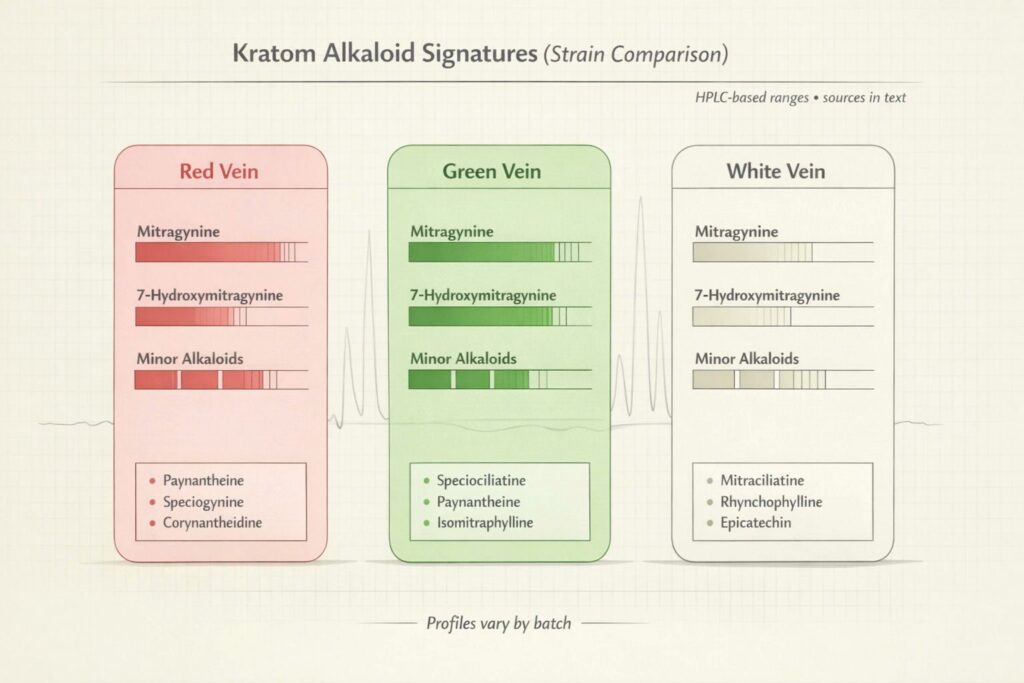
An alkaloid signature refers to the specific proportion and concentration of active plant compounds within a batch of kratom (Mitragyna speciosa). While researchers have identified over 40 distinct alkaloids in the kratom leaf, the overarching experience you feel is dictated by how these compounds interact with each other in your system.
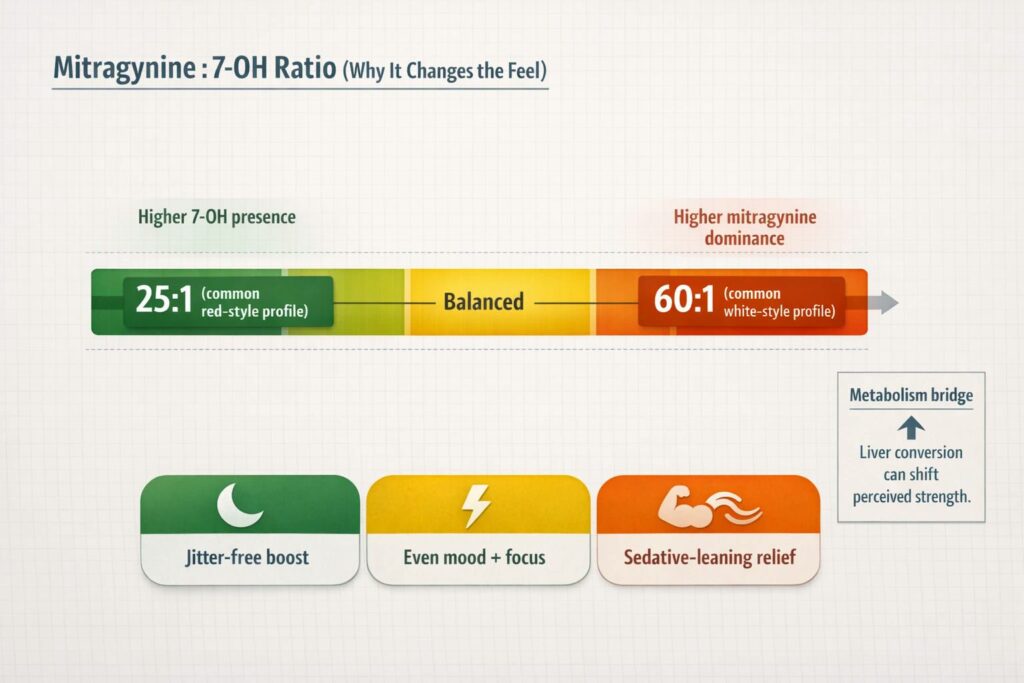
Most vendors only highlight total mitragynine, but true product evaluation requires a ratio-based approach. For instance, comparing the Mitragynine to 7-OHM balance helps you predict whether a product will lean toward an energizing boost or soothing relief.
Understanding Chemotypes
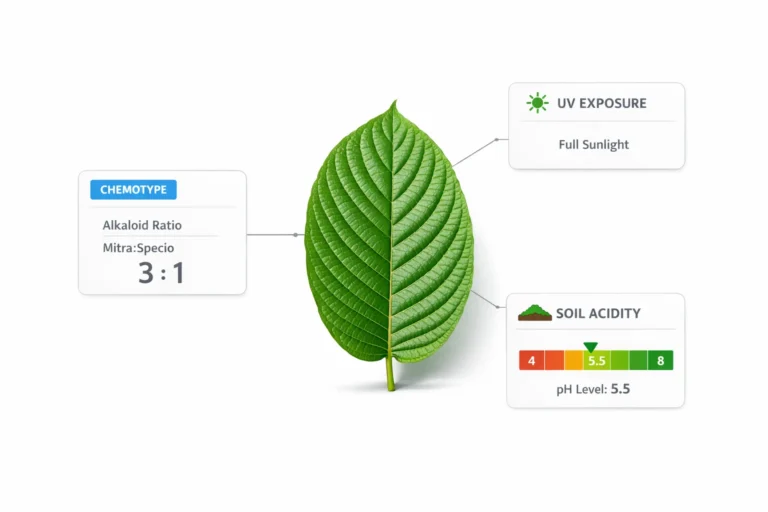
A chemotype describes a naturally occurring chemical variation within the same plant species. Although two kratom plants may appear botanically similar, environmental conditions, genetics, cultivation practices, harvesting methods, and post-harvest processing can produce noticeably different alkaloid profiles.
Recognizing chemotypes helps explain why laboratory-tested alkaloid concentrations sometimes vary between batches marketed under identical strain names. Rather than viewing this variation as inconsistency alone, chemotypes demonstrate the natural chemical diversity found within botanical products.
The “Metabolism Bridge”: Why Your Liver Matters More Than the Strain
Have you ever wondered why a strain that works perfectly for your friend barely affects you? The answer lies in your liver.
A phenomenon we call the “Metabolism Bridge” explains how kratom actually processes in the human body. As highlighted in foundational research by Kruegel et al. (2019), Mitragynine itself isn’t responsible for the most potent relief-oriented effects. Instead, an enzyme in your liver known as CYP3A4 converts Mitragynine into the much more powerful 7-Hydroxymitragynine (7-OH).
Because genetics dictate how much of the CYP3A4 enzyme your liver produces, your personal metabolism heavily influences the end result. If you are a “fast metabolizer,” your body converts Mitragynine to 7-OH efficiently, likely resulting in a heavier, more soothing experience. If you are a slow metabolizer, you may primarily feel the jitter-free, uplifting effects of the base mitragynine. Understanding this metabolic conversion helps you realize that finding the right mitragynine content in kratom powder percentage isn’t just about raw power—it’s about matching the chemical input to your biological machinery.
Comparing Major Alkaloids
Although mitragynine and 7-hydroxymitragynine receive the greatest attention, kratom alkaloid profiles encompass a much broader collection of naturally occurring compounds. Minor alkaloids such as Speciociliatine, Speciogynine, Paynantheine, Corynoxine, Rhynchophylline, Mitraphylline, and Isomitraphylline all contribute to the plant’s chemical diversity and help define individual batch characteristics.
Modern laboratory analysis increasingly evaluates these compounds to provide a more comprehensive understanding of botanical composition. Expanding analysis beyond mitragynine alone supports more detailed product comparisons while reinforcing the importance of complete alkaloid profiling within standardized laboratory testing.
Decoding Major Kratom Strains by Their Alkaloid Data
When we move past marketing hype and look at High-Performance Liquid Chromatography (HPLC) data, the real differences between strains become clear.
Green Malay: The Benchmark for Potency
Chromatographic data consistently reveals why Green Malay is a staple for so many users. According to data published in Natural Product Communications (Leon et al., 2018), specific Green Malay harvests can yield a staggering 59.7% Mitragynine of the total alkaloid extract. This makes it an extraordinary benchmark for potency. Because it is highly concentrated with the primary alkaloid but retains a balanced minor alkaloid profile, it’s often the base material utilized when crafting a potent kratom extract powder.
Red Bali vs. Red Maeng Da: A Case Study in Chemical Diversity
When comparing maeng da vs bali kratom, evaluating the chemical diversity is fascinating. Red Bali is renowned for its complex alkaloid shape, often featuring 24 or more identifiable minor alkaloids. This broad diversity creates a synergistic “entourage effect,” which is why it is heavily favored for comprehensive relief. Red Maeng Da, conversely, generally shows a more tightly clustered alkaloid signature, favoring a higher Mitragynine concentration alongside specific oxindole alkaloids, producing what users often describe as “daytime relief.”
White Vein Varieties: High-Ratio Energizers
If you’re evaluating white vein kratom for focus, the secret lies in the ratio. Lab analyses frequently show that premium White veins have an extreme 60:1 Mitragynine to 7-OH ratio. Because 7-OH is so remarkably low in these profiles, the sedative properties are essentially muted, allowing the adrenergic interactions of the dominant mitragynine to shine through, providing a clean, sustained boost.
How Alkaloid Profiles Influence Product Consistency
One of the greatest advantages of modern laboratory testing is its ability to measure consistency across production batches. Kratom alkaloid profiles provide manufacturers with quantitative benchmarks that can be used to compare raw botanical material before products reach consumers.
Natural variation remains an inherent characteristic of botanical products because environmental conditions, seasonal harvests, soil composition, rainfall, genetics, and post-harvest handling all influence alkaloid development. Rather than eliminating this variation, standardized manufacturing seeks to understand, document, and manage it through analytical testing.
By comparing alkaloid profiles throughout sourcing and production, manufacturers can identify batches with similar chemical characteristics, resulting in more consistent finished products and greater confidence in laboratory-reported specifications.
The Unsung Heroes: Minor Alkaloids That Shape Your Experience
Most users stop reading the lab report after looking at Mitragynine. But the minor alkaloids—which often comprise 10-20% of the total alkaloid profile—are the real architects of the kratom experience.
Here is a glossary of the crucial minor powerhouses you should look for:
- Speciociliatine (The “GI Regulator”): A vital compound that often mirrors mitragynine in quantity but binds differently in the body. It plays a significant role in smooth muscle relaxation and gastrointestinal regulation.
- Corynoxine (The “Mental Calm” Oxindole): This minor alkaloid is an oxindole that influences the dopamine system, helping to smooth out the jittery edges of high-mitragynine profiles and providing mental clarity.
- Rhynchophylline (The “NMDA Antagonist”): A unique angle that most surface-level blogs entirely miss. Rhynchophylline acts as an NMDA receptor antagonist, meaning it plays a pivotal role in preventing tolerance buildup over time while promoting neuro-calmness.
- Paynantheine & Speciogynine: Often making up nearly a fifth of the profile combined, Speciogynine acts as a natural anxiety modulator, while Paynantheine serves as a smooth muscle relaxant. Together, they dictate the physical comfort level of the strain.
Understanding Laboratory Analysis
Modern laboratory analysis has become one of the cornerstones of quality assurance throughout the botanical industry. Analytical techniques such as High-Performance Liquid Chromatography (HPLC) enable laboratories to separate, identify, and quantify individual alkaloids with remarkable precision.
Unlike generalized product descriptions, laboratory analysis generates objective chemical data that manufacturers, retailers, and consumers can compare across different batches. Standardized analytical methods also improve reproducibility by reducing subjective interpretation during product evaluation.
As kratom quality standards continue to mature, laboratory testing increasingly supports product transparency, standardized manufacturing, and independent verification of alkaloid profiles.
How to Read a Kratom Certificate of Analysis (COA) Like an Expert
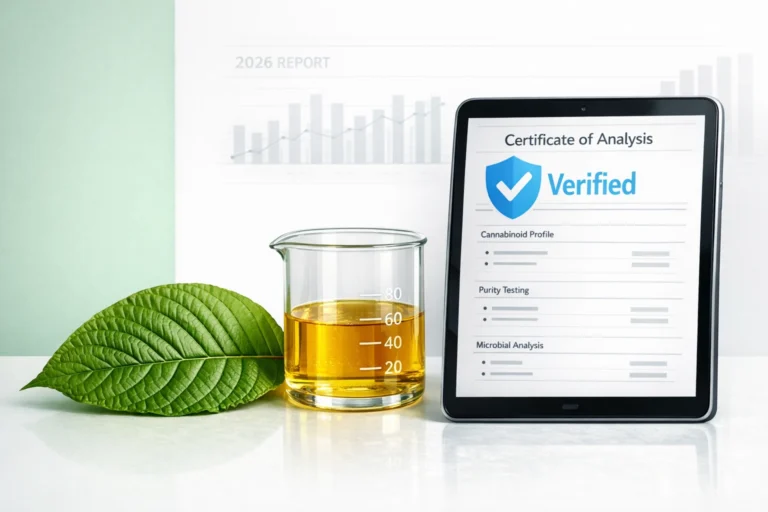
Because kratom is an unregulated botanical, your strongest defense against low-quality or altered products is knowing how to interpret a Certificate of Analysis (COA). A trustworthy vendor will always provide transparent, third-party lab testing.
Here is how you decode it:
1. The Adulteration Red Flag: The 0.02% Rule
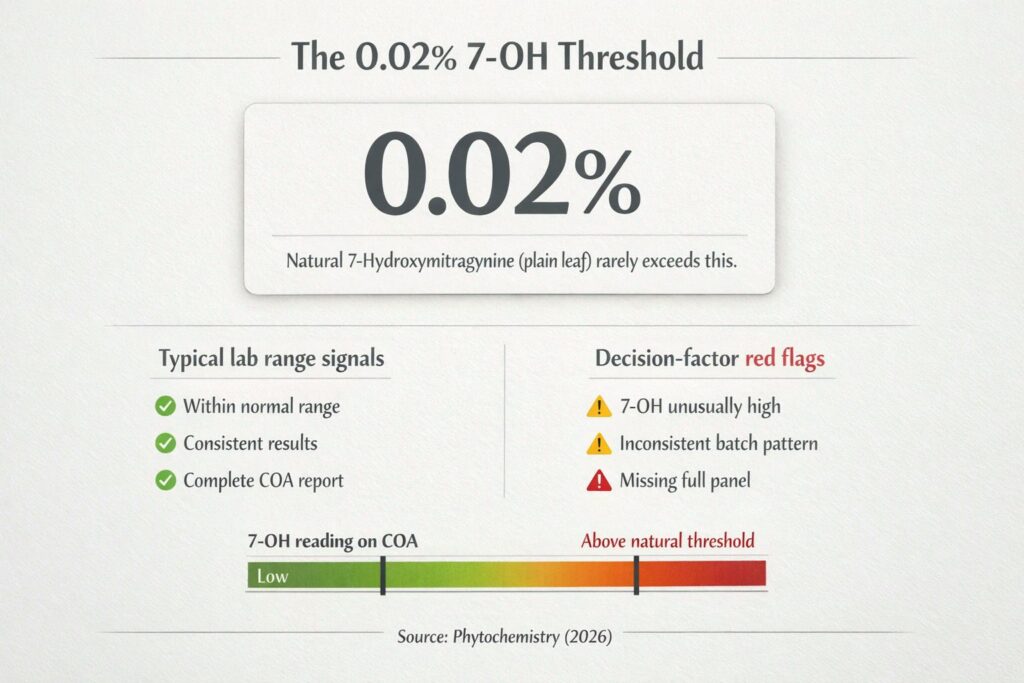
The most critical safety and evaluation marker you need to know in 2026 is the 0.02% Rule. According to recent quantitative analyses of commercial products published in Phytochemistry (Avula et al., 2026), naturally occurring 7-Hydroxymitragynine (7-OHM) rarely exceeds 0.02% in plain leaf kratom powder.
If you view a COA for plain leaf powder and the 7-OH content is significantly higher than this threshold, it is a massive “Decision Factor” signal. It usually indicates that the product has been artificially oxidized or spiked with chemical isolates. Knowing the natural baseline ensures you are buying pure, unaltered botanicals.
2. Establishing the Baseline
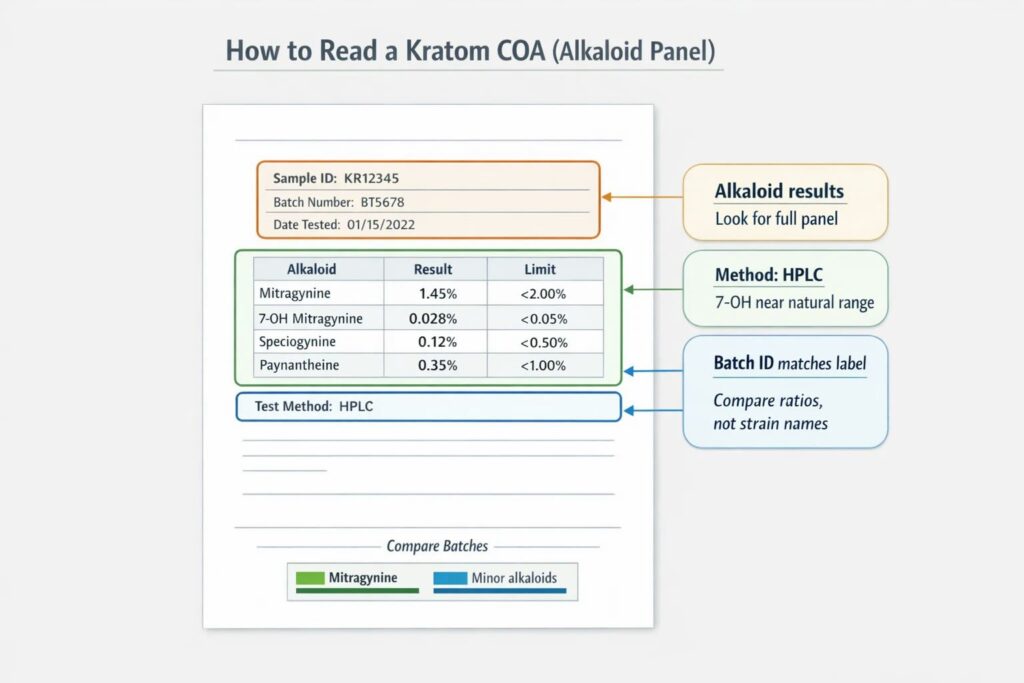
Check the mitragynine content in kratom leaf percentage. A high-quality, unenhanced powder generally tests between 1.0% and 1.8% Mitragynine by volume. If it drops below 1%, the leaf was likely harvested too early or degraded during drying.
3. Reviewing the Testing Methods
Look closely at the top of the lab report. You want to see “HPLC” (High-Performance Liquid Chromatography). This is the gold standard for separating and quantifying individual alkaloids accurately. Additionally, ensure the batch ID on the COA directly matches the batch ID printed on your product’s packaging.
Evaluating Product Quality
High-quality kratom products are distinguished not only by their alkaloid profiles but also by the transparency of their manufacturing and testing practices. Independent laboratory verification provides measurable evidence supporting product identity, chemical composition, and batch consistency.
Consumers should prioritize vendors that publish batch-specific Certificates of Analysis, disclose testing methodologies, and provide documentation covering alkaloid concentrations alongside contaminant screening. This level of transparency supports more informed purchasing decisions while encouraging higher manufacturing standards throughout the industry.
Although botanical variation is natural, standardized quality assurance practices help manufacturers maintain greater consistency across harvests while reinforcing confidence in laboratory-reported specifications.
Frequently Asked Questions (FAQ)
What is a normal 7-OH percentage for safe kratom?
In unenhanced, plain leaf kratom powder, natural 7-Hydroxymitragynine levels hover around 0.005% to 0.02%. Anything significantly above 0.02% in a non-extract product should be treated as a red flag for artificial adulteration.
Why do some strains make me jittery while others don’t?
It comes down to the minor alkaloids and the Mitragynine-to-7-OH ratio. Strains lacking the minor oxindole Corynoxine (which promotes mental calm) or containing highly disproportionate levels of adrenergic-stimulating mitragynine can cause a jittery feeling. Seeking a more chemically diverse strain like Red Bali can mitigate this.
Does kratom interact with other supplements or medications?
Yes. Because the CYP3A4 liver enzyme is heavily responsible for converting mitragynine into 7-OH, any other substance that inhibits or induces this enzyme (such as grapefruit juice or certain medications) can drastically alter how your body processes the alkaloids. Always research CYP3A4 interactions or consult a medical professional if you are taking medications.
Next Steps: Making Your Informed Choice
Transitioning from choosing kratom based on “vein color” to evaluating it based on “alkaloid signatures” is what separates casual buyers from informed consumers. You now know that a 60:1 ratio favors clean energy, that minor alkaloids like Speciociliatine and Rhynchophylline orchestrate the nuance of your experience, and that the 0.02% rule protects you from adulterated products.
As you finalize your purchasing decision, prioritize vendors that align with these strict scientific realities. Look for suppliers who source directly from Southeast Asian farms, eliminate middlemen to preserve freshness, and publish full-panel, batch-specific HPLC lab results. When you shop with complete transparency, you aren’t just buying kratom—you are investing in consistent, verified well-being.