
Kratom Potentiation Guide: The Science Behind Getting More From Less
Many users explore kratom potentiation with a simple goal: making their supply last longer to save money. But most guides overlook a critical scientific trade-off that can unintentionally weaken the very effects you’re trying to enhance. They list common kitchen ingredients without explaining the complex pharmacology at play.
This guide is different. We will move beyond simple lists to explore the mechanisms behind potentiation, including the risks and rewards. You will learn how to make informed decisions that prioritize both safety and effectiveness, based on current scientific understanding. Before you consider any combination, it’s essential to understand the risk profile.
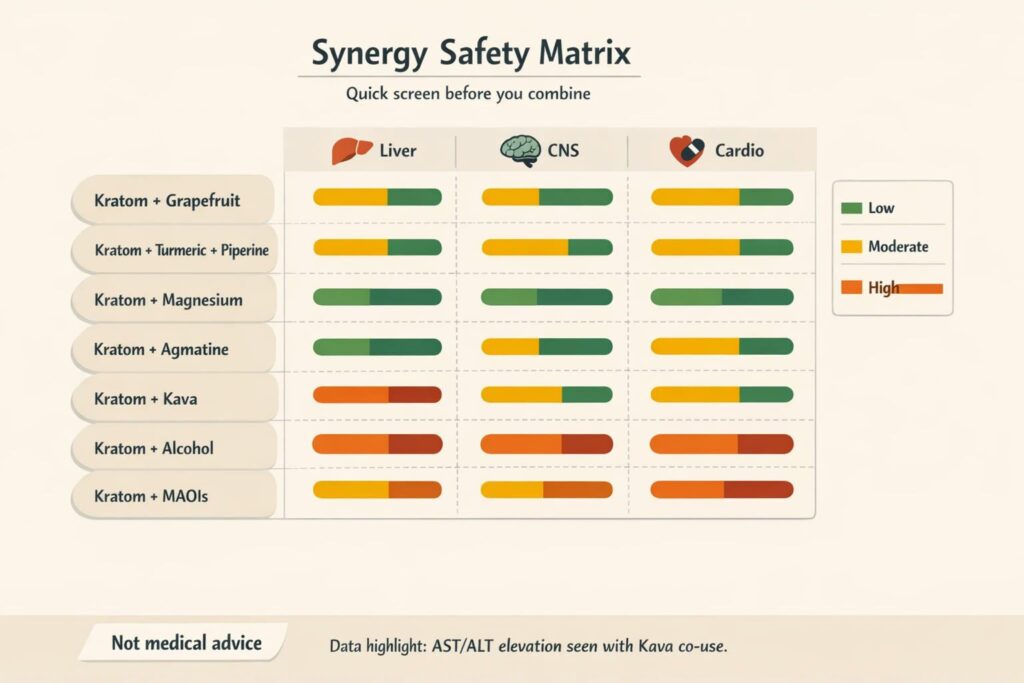
Use this matrix to quickly rule out high-risk combinations (especially alcohol, MAOIs, and kava blends) before experimenting with any potentiation approach.
What Is Kratom Potentiation?
Kratom potentiation refers to techniques intended to increase or extend the effects of kratom by influencing alkaloid absorption, metabolism or tolerance. Users commonly explore potentiation to reduce serving size, improve efficiency or extend duration, but different methods work through different biological mechanisms.
Understanding these mechanisms is important because some potentiators may increase duration while reducing peak intensity, while others may introduce additional safety considerations through interactions with metabolic enzymes or prescription medications.
How Kratom Potentiation Works
Understanding how kratom is processed by the body provides important context for evaluating different potentiation techniques. Rather than assuming every method produces the same outcome, users should consider how metabolism influences both potency and duration.
To understand potentiation, you need to know about two key alkaloids: mitragynine and 7-hydroxymitragynine. Mitragynine is the most abundant alkaloid in the kratom leaf, but the more potent 7-OHM is largely responsible for the plant’s most sought-after effects.
Your body converts mitragynine into 7-OHM using a liver enzyme called CYP3A4. Here’s where it gets complicated.
Many common “potentiators,” like grapefruit juice, work by inhibiting this very enzyme. While this slows the overall clearance of kratom from your system (making the effects last longer), it can also block the crucial conversion of mitragynine to the more powerful 7-OHM. This creates a paradox: you may achieve a longer duration but sacrifice the peak intensity of the experience.
It’s a trade-off between how long the effects last versus how strong they feel. Separately, kratom’s primary alkaloid, mitragynine, is a potent inhibitor of another enzyme, CYP2D6. This creates a significant risk of interaction with common medications, which we’ll cover in the safety section.
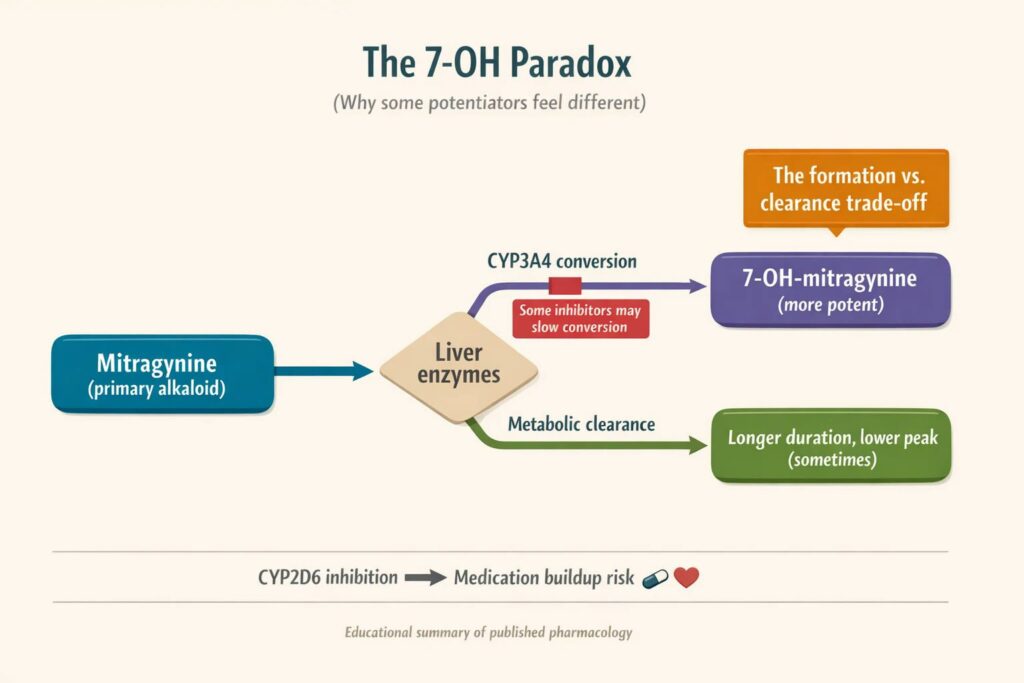
This visual explains why an inhibitor can extend duration yet reduce the “kick”—and why CYP2D6 medication interactions are a separate, serious concern.
Understanding Kratom Metabolism
Kratom’s primary alkaloids undergo complex metabolism before producing their full effects. Individual differences in enzyme activity, genetics, food intake and concurrent medications can all influence how users respond to the same serving size.
This variation explains why potentiation techniques may produce different outcomes for different individuals, even when using identical products.
Recognising these differences helps users make more informed decisions instead of relying solely on anecdotal recommendations.
Common Kratom Potentiators Explained
Not every potentiator works in the same way. Some influence metabolic enzymes, others improve alkaloid extraction, while some are intended to support long-term tolerance management rather than increase immediate potency.
With the science in mind, let’s categorize potentiators by their mechanism of action. Always start with a lower dose of kratom when combining it with any new substance. For a broader look at how different kratom consumption methods affect absorption and intensity, our guide on optimizing your experience is a useful baseline before factoring in any potentiation adjustments.
Tier 1: Metabolic potentiators (enzyme inhibitors)
These substances work by occupying the liver enzymes responsible for breaking down kratom alkaloids, potentially extending their duration.
- White Grapefruit Juice: The most well-known potentiator. It contains furanocoumarins that inhibit CYP3A4. Note that ruby red grapefruit juice is less effective.
- Turmeric with Black Pepper: Curcumin (in turmeric) is a mild enzyme inhibitor, but its effect is significantly amplified by piperine (in black pepper), which improves its bioavailability.
- Black Seed Oil (Nigella sativa): Contains thymoquinone, another compound known to interact with metabolic pathways, though its specific action on kratom metabolism requires more research.
Consideration: Remember the paradox. These may extend duration but blunt the peak by slowing the conversion to 7-OHM.
Natural vs Metabolic Potentiation
Not all potentiation methods work by altering liver enzymes. Some approaches improve alkaloid extraction or absorption, while others focus on managing tolerance over time rather than directly increasing potency.
Understanding these differences helps users choose methods based on their goals instead of assuming every potentiator produces identical effects.
Tier 2: Physical potentiators (alkaloid extraction)
This approach focuses on physically breaking down the plant matter to make the alkaloids more readily available for absorption.
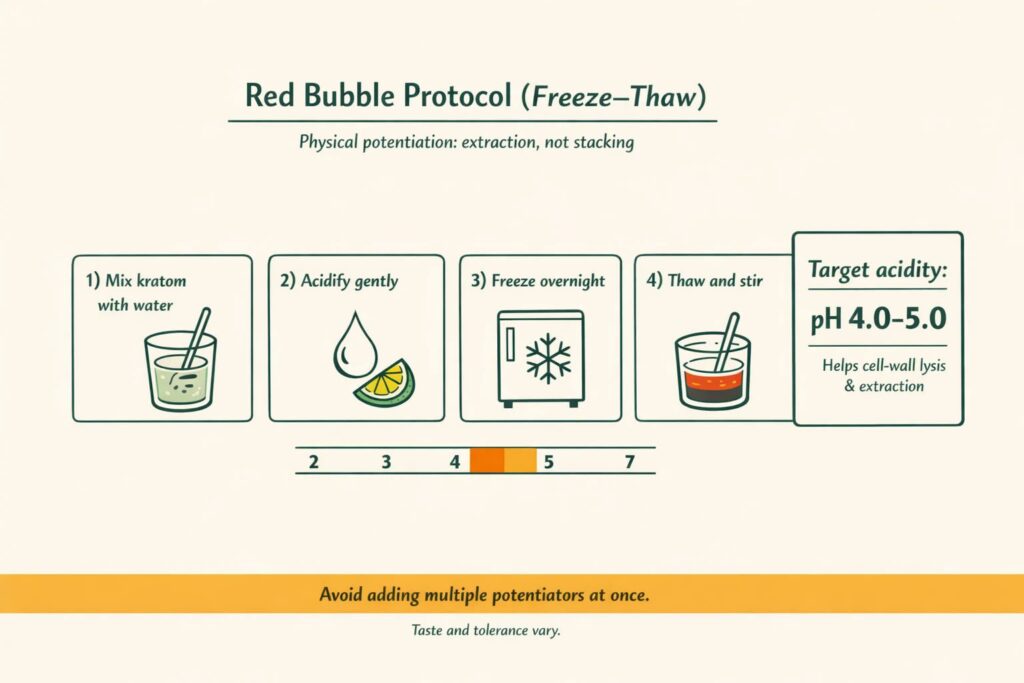
- The “Red Bubble” Freezing Method: This community-vetted technique uses acid and a freeze-thaw cycle to lyse the plant’s cellulose cell walls. When done correctly, it can release alkaloids into the water before you even consume it.
The key is achieving the correct acidity. Research suggests an optimal pH of 4.0-5.0 is most effective for this process. A few drops of lemon juice or apple cider vinegar are usually sufficient to hit this target without making the mixture too acidic.
This walkthrough makes the Red Bubble method reproducible—especially the pH range—so readers can evaluate a “physical” potentiation option without risky stacking.
Tier 3: Tolerance buffers (receptor sensitivity)
These supplements don’t directly boost kratom’s effects but may help manage tolerance over time, allowing you to achieve desired effects with a smaller amount.
- Agmatine Sulfate: A compound that may interact with NMDA receptors in the brain, which are involved in developing tolerance to certain substances.
- Magnesium Glycinate: Magnesium is an NMDA antagonist and a common supplement for overall wellness. Anecdotally, users report it helps mitigate tolerance build-up and reduces side effects like muscle tension.
Kratom Potentiation and Tolerance Management
Many users explore potentiation as an alternative to continually increasing serving size. However, long-term effectiveness is often better supported through responsible tolerance management, occasional breaks and consistent serving practices rather than relying exclusively on potentiators.
Viewing potentiation as one part of a broader approach may help maintain more consistent results over time while reducing unnecessary experimentation.
Unsafe Kratom Potentiation Combinations
Understanding which combinations present elevated risk is just as important as understanding potential benefits. Safety should always take priority over increasing potency or duration.
The search for more intense experiences has led to the rise of commercial shots and homemade concoctions combining kratom with other substances. These carry significant, often hidden, risks. Before experimenting with any combination, reviewing the general principles of safe and responsible kratom use is strongly recommended.
The danger of kava and kratom blends
Products like “Feel Free” or homemade “Lizard Juice” often combine kratom with kava. While both are used for relaxation, they are processed by the liver. Data from poison control centers is concerning: a 2026 CDC report showed that co-exposure to kava and kratom was associated with a 6.3% elevation in liver enzymes (AST/ALT). For comparison, exposure to kratom alone was linked to only a 1.7% elevation. This suggests a synergistic stress on the liver that users may not be aware of.
The medication interaction danger zone
Perhaps the most critical safety concern is kratom’s interaction with prescription medications. As established in a 2021 Frontiers in Pharmacology study, mitragynine is a potent inhibitor of the CYP2D6 enzyme, with an IC50 value of approximately 2.2 µM.
This enzyme is responsible for metabolizing up to 25% of all common medications, including:
- Many antidepressants (SSRIs, tricyclics)
- Beta-blockers used for heart conditions
- Certain antipsychotics and opioids
By inhibiting this enzyme, kratom can cause these medications to build up in your bloodstream to toxic levels. If you are taking any prescription medication, especially those listed above, you should not attempt to potentiate kratom and must consult with your doctor.
Other high-risk combinations to avoid completely include:
- Alcohol: Both are central nervous system depressants, and the combination can lead to dangerous levels of respiratory depression.
- MAOIs (Monoamine Oxidase Inhibitors): A class of antidepressants that can have unpredictable and severe interactions with kratom’s alkaloids.
Why Drug Interactions Matter
Because kratom alkaloids may influence enzymes involved in drug metabolism, combining kratom with prescription medications or other substances should always be approached cautiously.
Individuals taking prescription medicines should consult a qualified healthcare professional before attempting any potentiation strategy.
How to Use Kratom Potentiators More Safely
Responsible potentiation begins with reducing serving size, changing only one variable at a time and allowing sufficient time to evaluate the effects before making further adjustments.
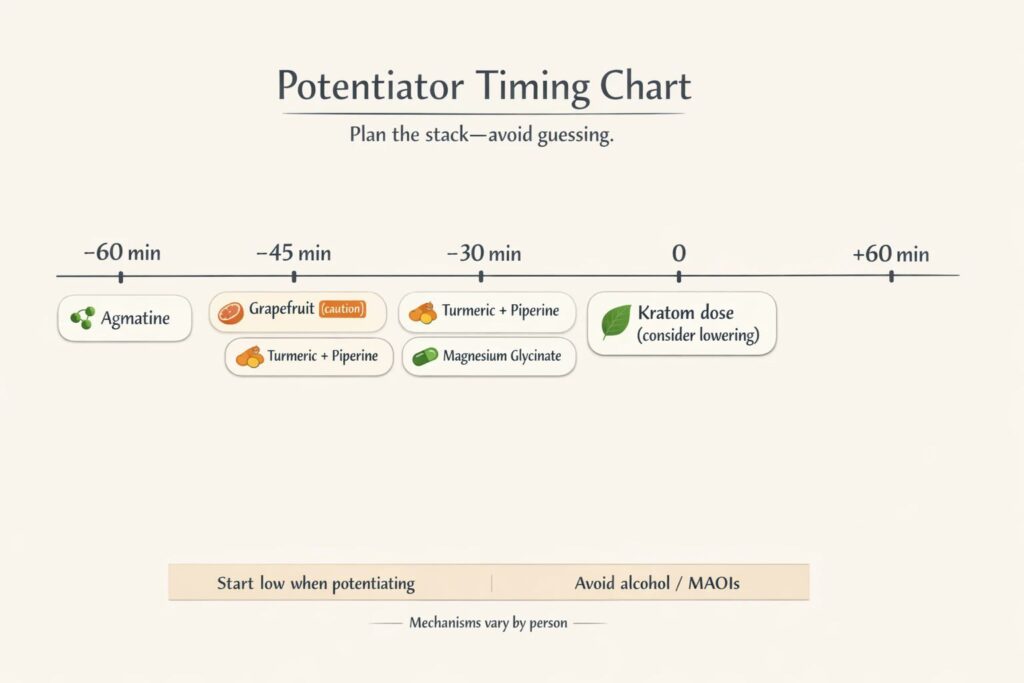
If you choose to experiment with lower-risk potentiators, timing is everything. Using a potentiator requires adjusting your standard kratom dose downward to account for the enhanced effects. Start with at least 25-50% less than your usual amount.
A simple timing plan helps you evaluate what to take when—and highlights where lowering your kratom dose may be the safer, more cost-efficient move.
Choosing a Responsible Potentiation Strategy
Responsible potentiation begins with understanding product quality, serving size and individual tolerance rather than searching for increasingly powerful combinations.
A consistent routine supported by transparent, laboratory-tested products generally provides more predictable outcomes than repeatedly combining multiple potentiators.
Taking a gradual, evidence-informed approach also helps reduce unnecessary risks while improving long-term consistency.
Why Product Quality Matters More Than Potentiation
No potentiation technique can compensate for poor-quality kratom. Consistency begins with sourcing products that provide transparent alkaloid information and independent laboratory testing.
Potentiation can be a useful tool for managing tolerance and cost, but it cannot make up for a low-quality product. The most reliable way to ensure a consistent and effective experience is to start with fresh, pure kratom powder from a trusted source. For those seeking a more concentrated option, our range of enhanced kratom products delivers a significantly higher alkaloid concentration, making potentiation less necessary to begin with.
When you buy kratom online from a vendor committed to transparency, you get a product that is lab-tested and properly sourced. At Kratom-Online, we believe that providing clear information and high-quality products sourced directly from dedicated farms is the most important step in our customers’ journey. A better starting material means you can rely on the product itself, not complex combinations, for the effects you seek.