
Kratom Side Effects: A Practical Guide to Taste, Nausea and the Wobbles
The online conversation around kratom often feels divided. On one side, you have clinical authorities listing potential side effects with stern warnings. On the other, you have forum threads filled with anecdotal advice that can be hard to verify. This leaves a critical gap for the user who isn’t asking “Is this risky?” but “Is this feeling normal, and how do I fix it?”
This guide is designed to fill that gap. It’s a troubleshooting protocol for the most common friction points of kratom consumption: the challenging taste, occasional nausea, and the disorienting “wobbles.” We’ll move beyond simple warnings to provide actionable, science-backed solutions that help you optimize your experience and make informed decisions. For a broader framework, the general principles of safe and responsible kratom use are a valuable starting point before diving into any troubleshooting strategy.
What Are the Most Common Kratom Side Effects?
Kratom side effects vary depending on serving size, product quality, individual tolerance and consumption method. While many users tolerate kratom well when using appropriate serving sizes, temporary effects such as nausea, dizziness, bitter taste and the “wobbles” are among the most commonly reported experiences.
Most of these effects can often be reduced through proper hydration, serving adjustments, improved product quality and choosing the most appropriate consumption method. Understanding why these side effects occur helps users make more informed decisions rather than relying solely on anecdotal advice.
How to Manage Common Kratom Side Effects
The majority of mild side effects can often be addressed by identifying the underlying cause rather than simply treating the symptom. A structured troubleshooting approach helps users respond more confidently while avoiding unnecessary changes to their routine.
If you’re feeling unwell right now, start here. These are the most common, high-probability fixes for immediate relief from nausea or dizziness.
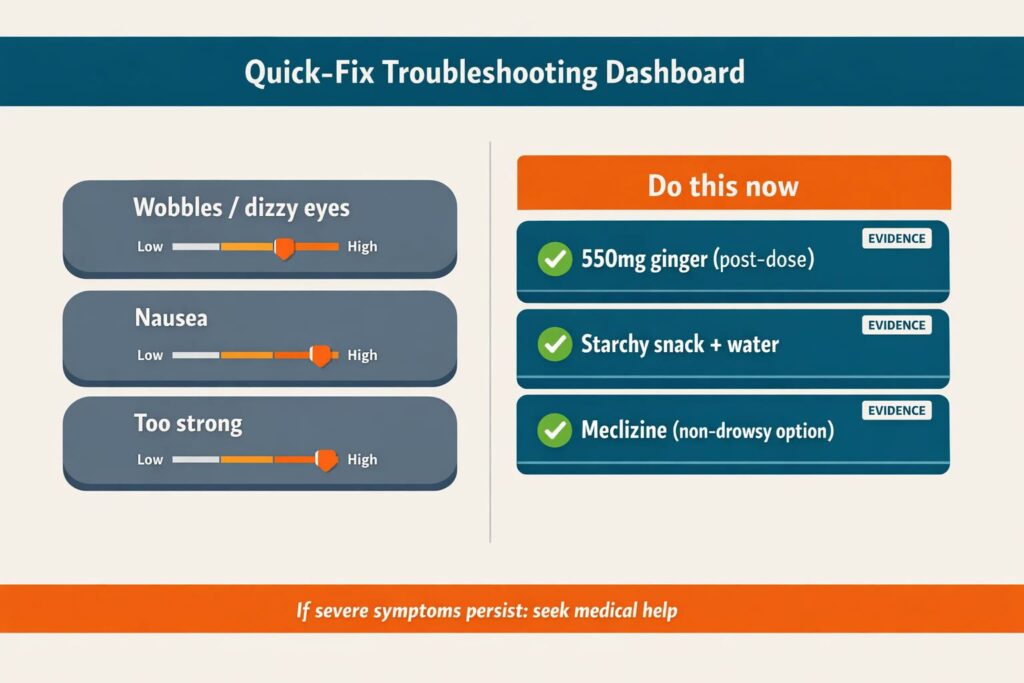
A fast, harm-reduction protocol: match what you’re feeling to the highest-probability fix—ginger, food/water, or a non-drowsy option—plus a clear escalation rule.
- For Nausea: The community “gold standard” is 550mg of ginger root, taken as a capsule. Research from user communities suggests this specific dose is highly effective at blocking the signals that trigger nausea.
- For Dizziness or “Wobbles”: First, drink a glass of water and have a small, starchy snack like crackers or a piece of bread. Dehydration and an empty stomach are common culprits.
- A Non-Drowsy Aid: Many experienced users turn to Meclizine, an over-the-counter medication for motion sickness, as a preventative measure. Unlike other antihistamines, it’s typically non-drowsy and can help manage dizziness.
Why Kratom Side Effects Occur
Many common kratom side effects are influenced by serving size, hydration, stomach contents and alkaloid concentration rather than the plant itself. Taking larger amounts than necessary, consuming kratom on an empty stomach or using inconsistent products may increase the likelihood of unwanted effects.
Recognising these contributing factors allows users to adjust their routine methodically instead of assuming every negative experience is unavoidable.
Why Kratom Tastes Bitter and How to Improve It
The characteristic bitterness of kratom is a natural result of its alkaloid profile rather than an indication of poor product quality. Understanding why the flavour occurs makes it easier to choose the most effective method for reducing it.
The intense bitterness of kratom powder is often the first and biggest hurdle for new users. This isn’t just a strong flavor; it’s a specific biochemical reaction. The alkaloids and tannins in the plant leaves bind to TAS2R bitter taste receptors on your tongue, sending a strong “avoid” signal to your brain.
Simply adding sugar often isn’t enough; it just adds sweetness on top of the bitterness. A more effective approach is to either chemically neutralize the taste or bypass the taste receptors entirely.
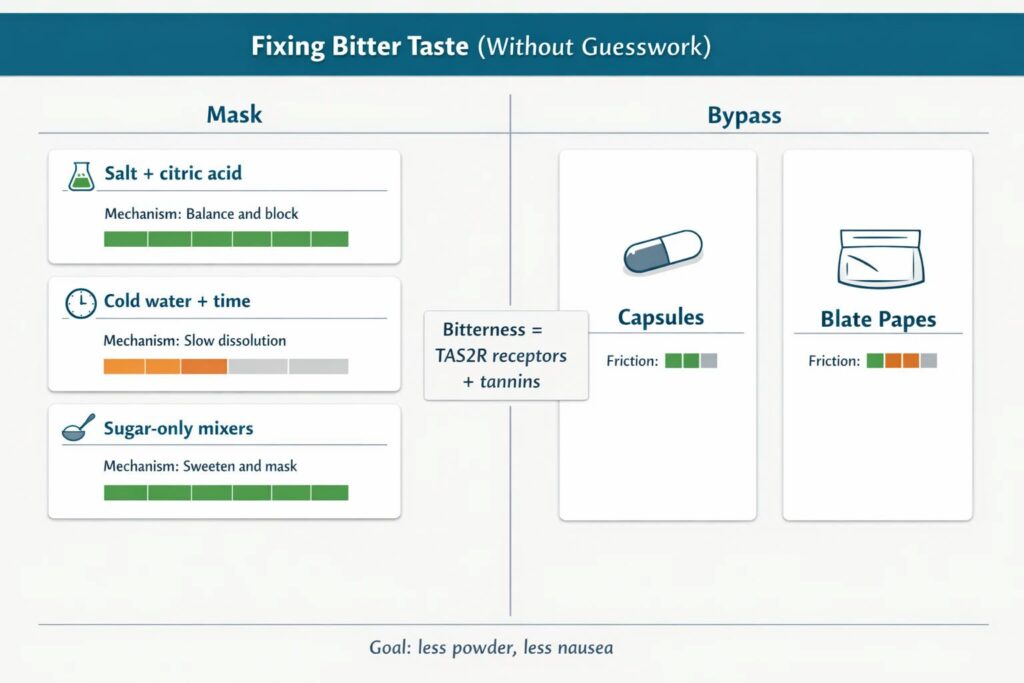
See which taste solution matches your tolerance for effort: chemical masking (salt + acid) versus bypass options that remove the taste problem entirely.
1. Chemical Masking with Acid and Salt
Citrus juices like orange or grapefruit juice do more than just cover the taste. The citric acid actually increases the solubility of kratom’s alkaloids, making them easier for your body to absorb. Adding a tiny pinch of salt can also help trick your taste receptors and cut the bitterness.
2. Bypassing Taste Entirely
For many, the most effective solution is to prevent the powder from touching their tongue in the first place.
- Capsules: The simplest method, capsules offer a pre-measured, taste-free experience.
- Blate Papes: These are edible, tasteless films made from potato starch. You parachute the powder inside, dip it in water, and swallow it. This method delivers the powder quickly without any of the bitterness.
Choosing the Best Consumption Method
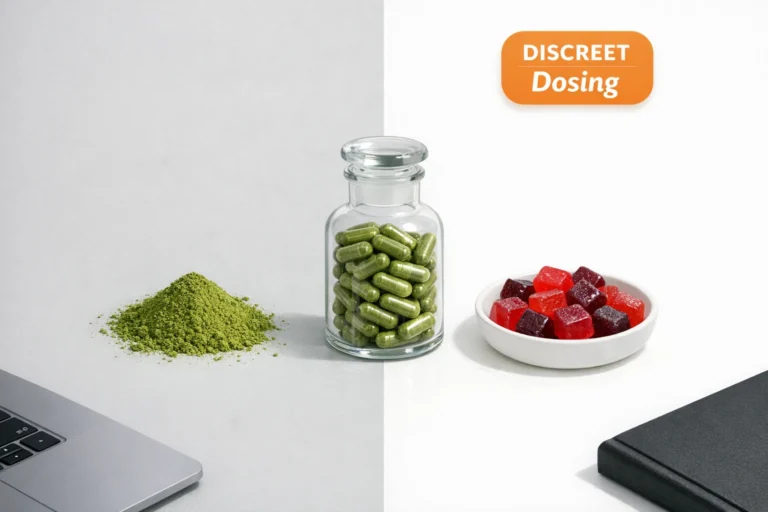
Different kratom consumption methods can influence both user experience and the likelihood of certain side effects. Capsules eliminate bitterness, filtered teas reduce plant material, while tinctures and extracts provide concentrated alternatives that require careful serving size management.
Selecting the right format often improves comfort while making routine use more consistent.
How Better Absorption May Help Reduce Kratom Side Effects
Improving absorption is not simply about increasing potency. In many cases, it allows users to achieve their desired outcome while consuming less plant material, which may help reduce digestive discomfort.
Many consumption issues are dose-dependent. The more powder you consume, the higher the risk of nausea or GI discomfort from the raw plant fiber. The goal of optimization isn’t just to achieve a stronger effect, but to get your desired outcome with the least amount of powder necessary.
This is where understanding absorption science becomes critical.
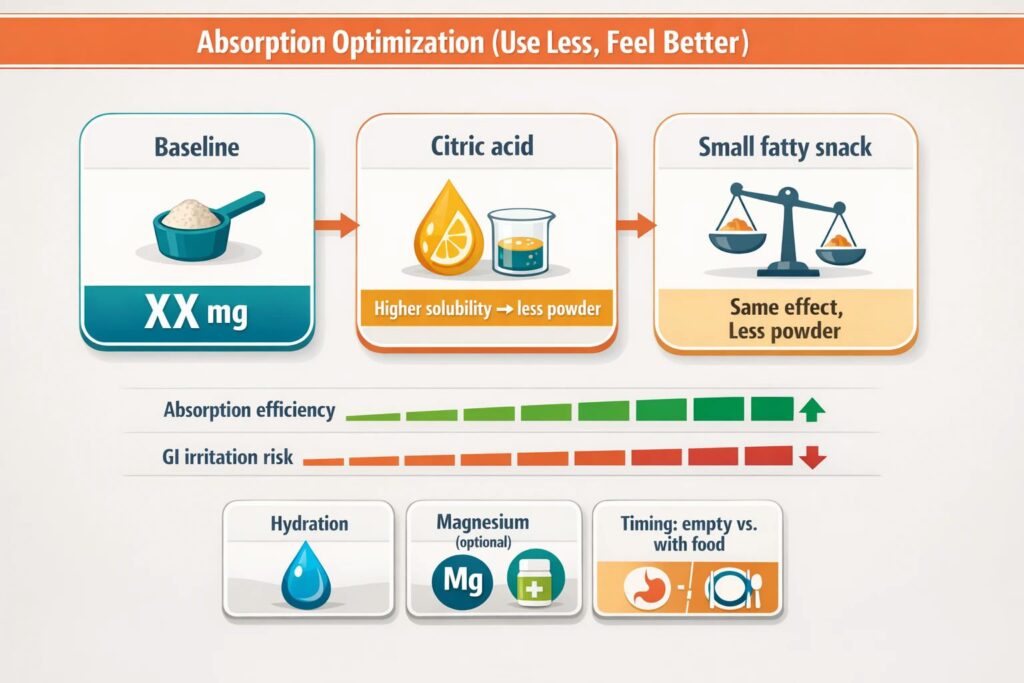
Optimization isn’t just “stronger”—it’s cleaner. Improve solubility and support digestion so you can aim for the same outcome with less powder.
Here is a simple hierarchy of effective potentiators versus common myths:
What Works (Science-Backed):
- Citric Acid: As mentioned, acidic liquids like lemon or grapefruit juice can help break down alkaloids for better absorption.
- A Small Fatty Snack: Taking your kratom with or after a small snack containing healthy fats, like a spoonful of peanut butter, can help prevent a sudden “crash” and may aid in the absorption of certain alkaloids.
What Might Help (Anecdotal Support):
- Magnesium: Some users report that taking a magnesium supplement can reduce tolerance buildup over time, though this is primarily based on community experience.
- Filtering Plant Matter: For many, the source of GI discomfort is the raw plant fiber itself. Switching from a “toss and wash” method to brewing a filtered kratom tea can make a significant difference. Using a French press or a fine-mesh strainer ensures you get the alkaloids without consuming the dense powder.
By focusing on these optimization techniques, you can achieve consistent results while minimizing the amount of plant material you consume, which is a key step in reducing nausea. Finding a trusted source for high-quality kratom powder ensures the product you start with is clean and potent, making optimization more effective.
Hydration and Digestive Comfort
Hydration plays an important role in reducing several commonly reported side effects associated with kratom powder. Drinking sufficient water before and after consumption may help minimise dizziness while supporting digestion of plant material.
Many experienced users also find that consuming kratom alongside a light meal improves overall comfort compared with taking it on an empty stomach.
Understanding the Kratom Wobbles
Although the “wobbles” can feel alarming, they are generally recognised by experienced users as an indication that the serving size exceeded current tolerance or that a particular batch has a different alkaloid profile.
One of the most unsettling experiences for users is the “wobbles.” This is a state of dizziness and disorientation where focusing your eyes becomes difficult. The clinical term for this involuntary eye movement is nystagmus.
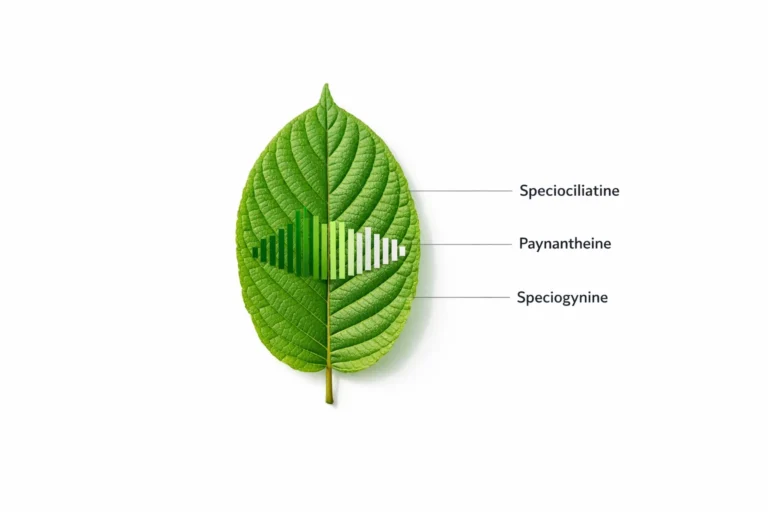
It’s a sign that you’ve taken too much for your current tolerance level, but it’s often more complex than that. Experienced users have found that the wobbles can be highly batch-dependent. A new batch, even at a familiar dose, might trigger them. This suggests the effect is linked to a specific alkaloid profile in that particular harvest, potentially one with a higher concentration of 7-hydroxymitragynine or other less common alkaloids.
If you experience the wobbles, the best course of action is to stop, sit down, hydrate, and have a snack. The feeling will pass. More importantly, take it as a data point: that specific dose of that specific batch is too much for you.
How to Reduce the Risk of the Kratom Wobbles
The most effective way to reduce the likelihood of the wobbles is to begin with conservative serving sizes, particularly when trying a new batch or product format. Natural variation in alkaloid content means that two seemingly similar products may not produce identical effects.
Keeping notes on serving size, batch information and individual response can help identify personal tolerance patterns over time and reduce the likelihood of repeating an uncomfortable experience.
How Product Quality Influences Kratom Side Effects
Consistent manufacturing and independent laboratory testing play an important role in reducing unexpected variability between products.
While adjusting your dose and method is crucial, sometimes a bad experience isn’t your fault. The quality and consistency of your product are paramount. A questionable batch can cause disproportionate side effects. Before your next dose, use this checklist to ensure you’re starting with a safe, reliable product.
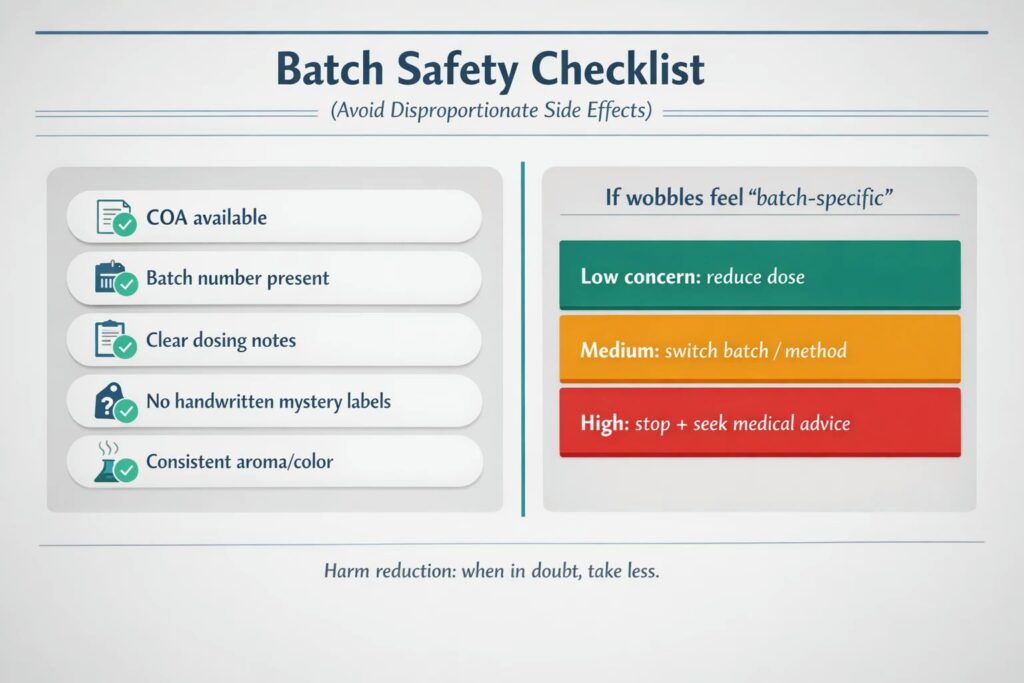
Not every bad experience is “you.” Use this checklist to spot questionable batches and choose the safest next move—reduce, switch, or stop and get help.
Managing your kratom experience is a process of refinement. By understanding the science behind its effects and applying a systematic approach to troubleshooting, you move from guesswork to confident control. You learn to listen to your body, respect the substance, and prioritize quality.
This knowledge empowers you to build a routine that works for you, minimizing the friction points so you can focus on the benefits. The first step is always ensuring you’re using a product from a trusted vendor — explore our full lab-tested selection at Kratom-Online and find the right product for your needs.