
Decoding Kratom Extract Potency: Understanding Ratios, Alkaloids, and Safe Dosing in 2026
If you are currently evaluating kratom extracts, you have likely run into a wall of confusing terminology. You see labels boasting “50x” or “100x” alongside products highlighting specific “MIT percentages” and “Full Spectrum” yields. How do you know what you are actually buying, and more importantly, how do you dose it safely without experiencing the uncomfortable side effects known as the “wobbles”?
The online kratom market has entered a massive standardization shift in 2026. The days of buying mystery powders based on flashy marketing multipliers are ending. Today, maximizing your experience and protecting your wallet requires understanding exactly how to translate raw alkaloid data into practical dosage calculations.
Let’s cut through the marketing noise and look at the exact science of kratom potency ratios, alkaloid concentrations, and what it takes to compare solutions like an industry expert.
The Standardization Shift: Moving Beyond the “X” Multiplier
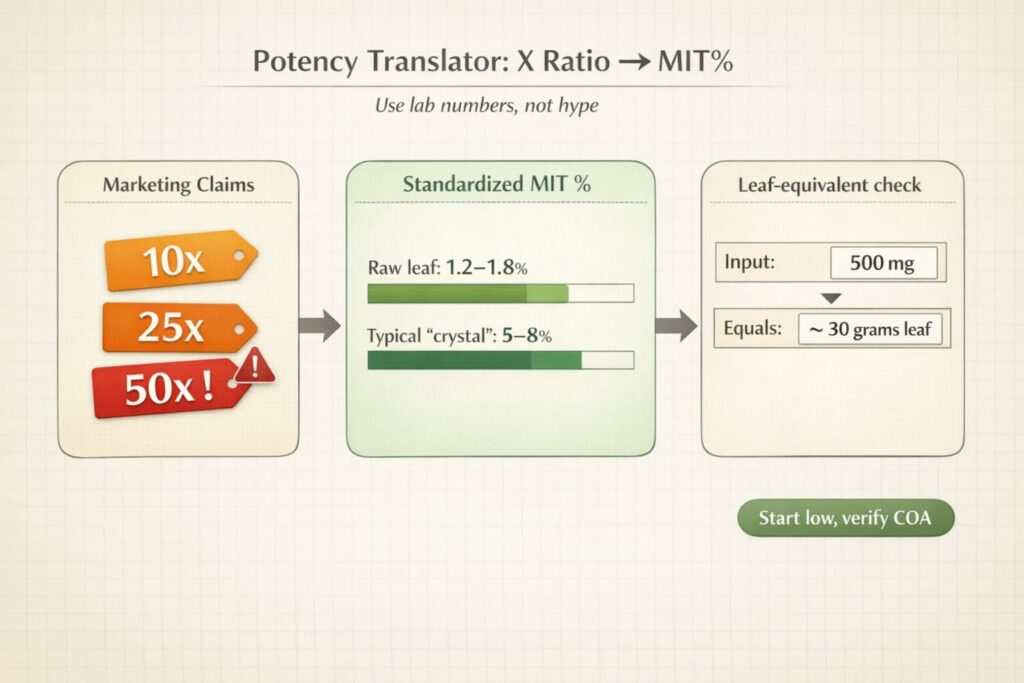
For years, the industry standard for extract marketing was the “X” ratio. A bottle labeled “10x” implied that 10 grams of raw kratom leaf were used to create 1 gram of the final extract.
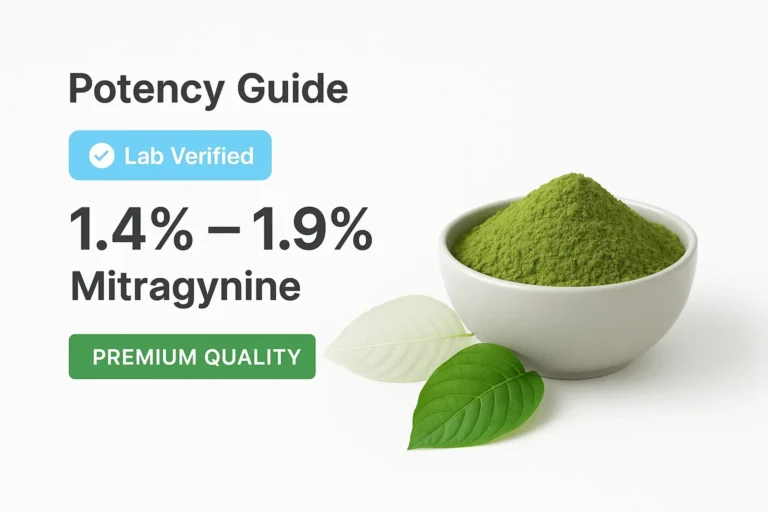
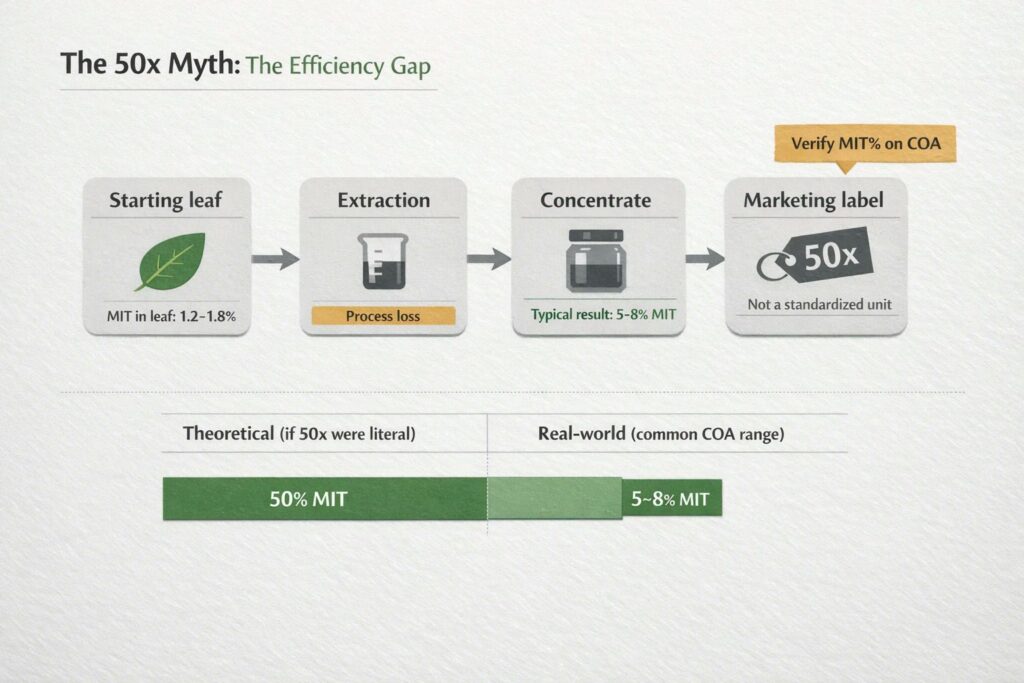
While this sounds straightforward, it is fundamentally flawed. Not all starting material is created equal. The mitragynine content in kratom powder percentage natively ranges between 1.2% and 1.8% in standard raw leaf. If a manufacturer starts with weak, old leaf containing only 0.8% mitragynine, their “50x” extract will be significantly weaker than a “20x” extract made from premium, direct-sourced, farm-fresh powder.
This discrepancy is why the industry’s most trusted vendors have moved toward standardizing alkaloid percentages. Knowing the exact percentage of active alkaloids is the only reliable way to evaluate strength and value.
The “50x” Myth Debunked: Understanding the Efficiency Gap
One of the biggest misconceptions in the kratom world is the assumption of 100% extraction efficiency. If you take 50 grams of standard leaf with a typical mitragynine content in kratom powder percentage of 1.5%, perfectly extracting all of it into 1 gram should theoretically give you a product that is 75% mitragynine.
In reality, extraction loss changes the math completely. This is known as the “Efficiency Gap.”
During the extraction process, solvents, heat, and filtration naturally degrade and leave behind a portion of the alkaloids. Many legacy “50x crystal” products on the market actually only test between 5% and 8% MIT. So, while the manufacturer really did use 50 grams of leaf to make your gram of extract, the biological effect you feel is nowhere near 50 times stronger. When you are looking for a potent kratom extract powder, you should be looking for high alkaloid retention, not just a high input-to-output ratio.
Alkaloid Deep Dive: Mitragynine vs. 7-Hydroxymitragynine
To evaluate an extract properly, you have to understand the two primary alkaloids driving the experience: Mitragynine (MIT) and 7-Hydroxymitragynine (7-OH).
Mitragynine (The Engine)
Mitragynine makes up roughly 66% of the alkaloid profile in raw leaf. It is the primary driver of the uplifting, energizing, and mood-boosting effects that most users seek during the day. When standardizing extracts, MIT is the baseline metric for potency.
7-Hydroxymitragynine (The Braking System)
While 7-OH exists in trace amounts in raw leaf (usually less than 0.05%), it plays an oversized role in relaxation and soothing properties. Interest in 7-OH isolated products is skyrocketing in 2026, showing a 12.3% compound annual growth rate (CAGR). The reason for this demand—and the need for intense caution—comes down to potency. Research from Grand Medical Specialists indicates that 7-Hydroxymitragynine has a receptor binding affinity roughly 13 times more potent than traditional morphine.
The “Full Spectrum” Challenge
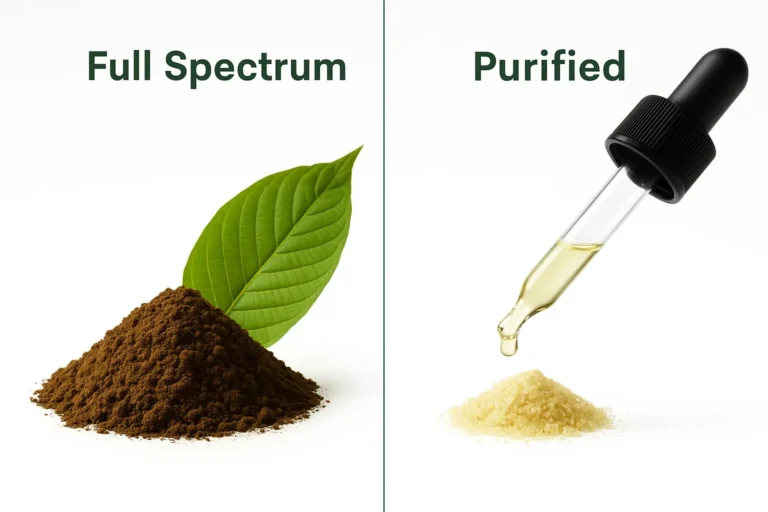
Full-spectrum products currently hold a massive 54.2% market share because users want the “entourage effect” of all 40+ alkaloids working together. However, achieving a true full-spectrum extract in a laboratory is exceptionally difficult due to solvent physics. Polar solvents (like ethanol) pull different compounds than non-polar solvents. A high-quality full-spectrum extract often requires dual-extraction methods to capture both ends of the spectrum, which is why reviewing lab tests is critical.
How to Read a Kratom COA Like an Expert
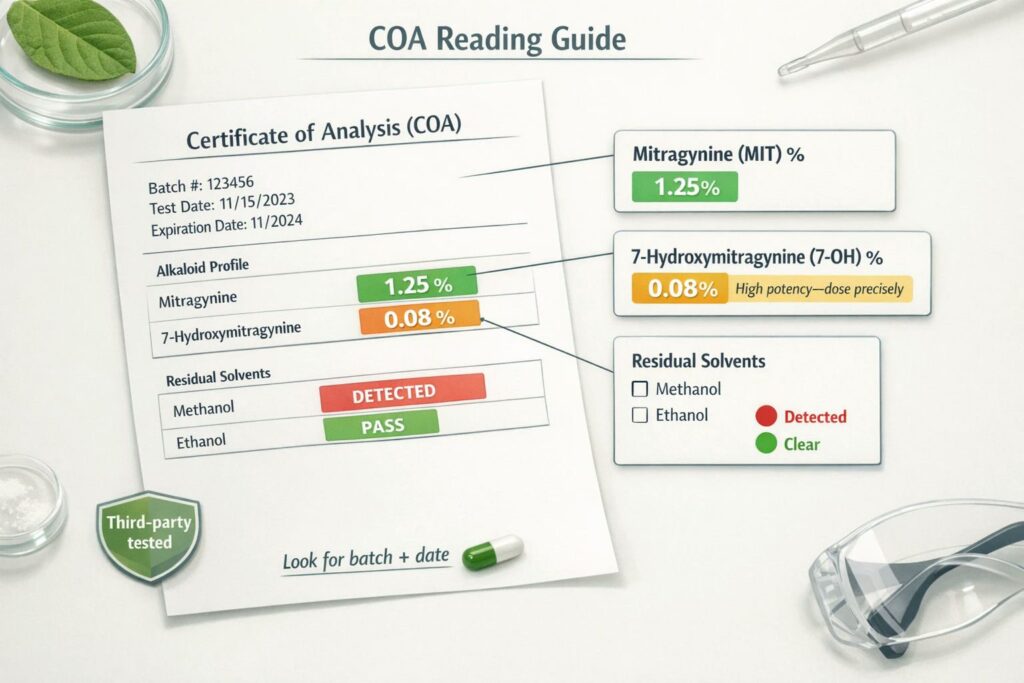
A Certificate of Analysis (COA) is your definitive proof of both potency and safety. Relying on packaging labels is a gamble; reading the COA is a guarantee.
When reviewing a lab report for kratom extracts, look for these three non-negotiables:
- Standardized MIT% and 7-OH%: Ensure the percentages match what is advertised on the packaging.
- Residual Solvents: This is critical for extracts. The extraction process uses chemicals like methanol, ethanol, or even butane. The COA must show a “Pass” for residual solvents, proving the final product was properly purged. “Dirty” extracts often give themselves away with harsh chemical odors or unnatural food dyes meant to mask impurities.
- Heavy Metals and Biologicals: Concentrating alkaloids also means you risk concentrating lead, arsenic, and salmonella if the starting leaf wasn’t tested first.
Translating Extracts to Powder: Dosage & Safety Protocols
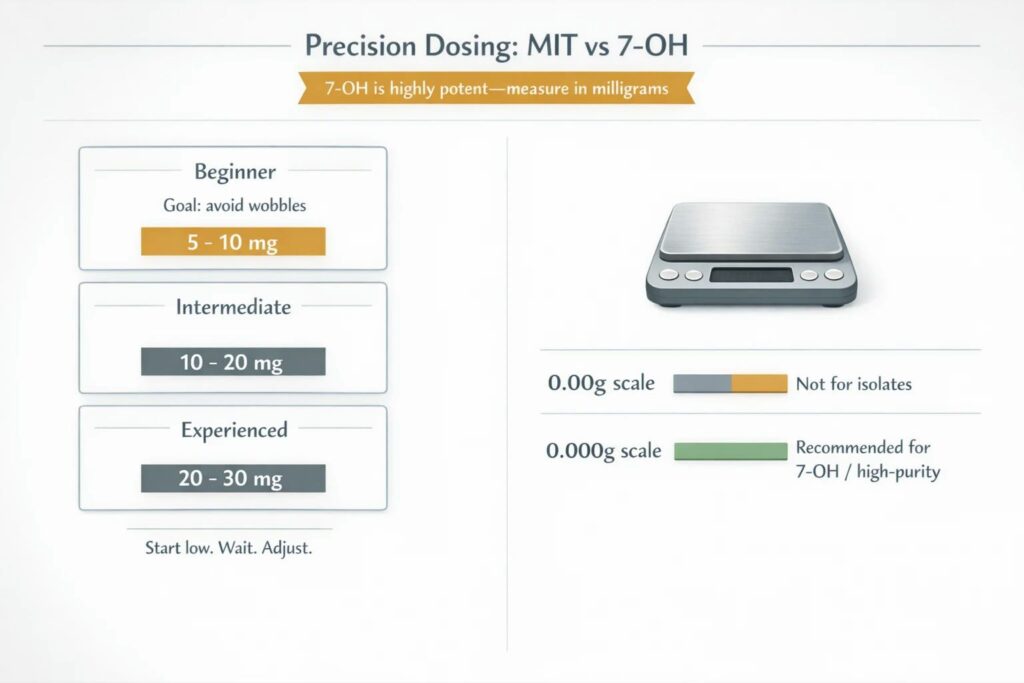
The number one friction point for users switching to extracts is determining their dose. Taking too much extract results in “the wobbles”—nausea, dizziness, and loss of eye focus.
To convert your typical powder dose to an extract, you must calculate total milligrams of Mitragynine.
- Standard dose calculation: If you take 4 grams of plain leaf (assuming average 1.5% MIT), you are consuming 60mg of Mitragynine.
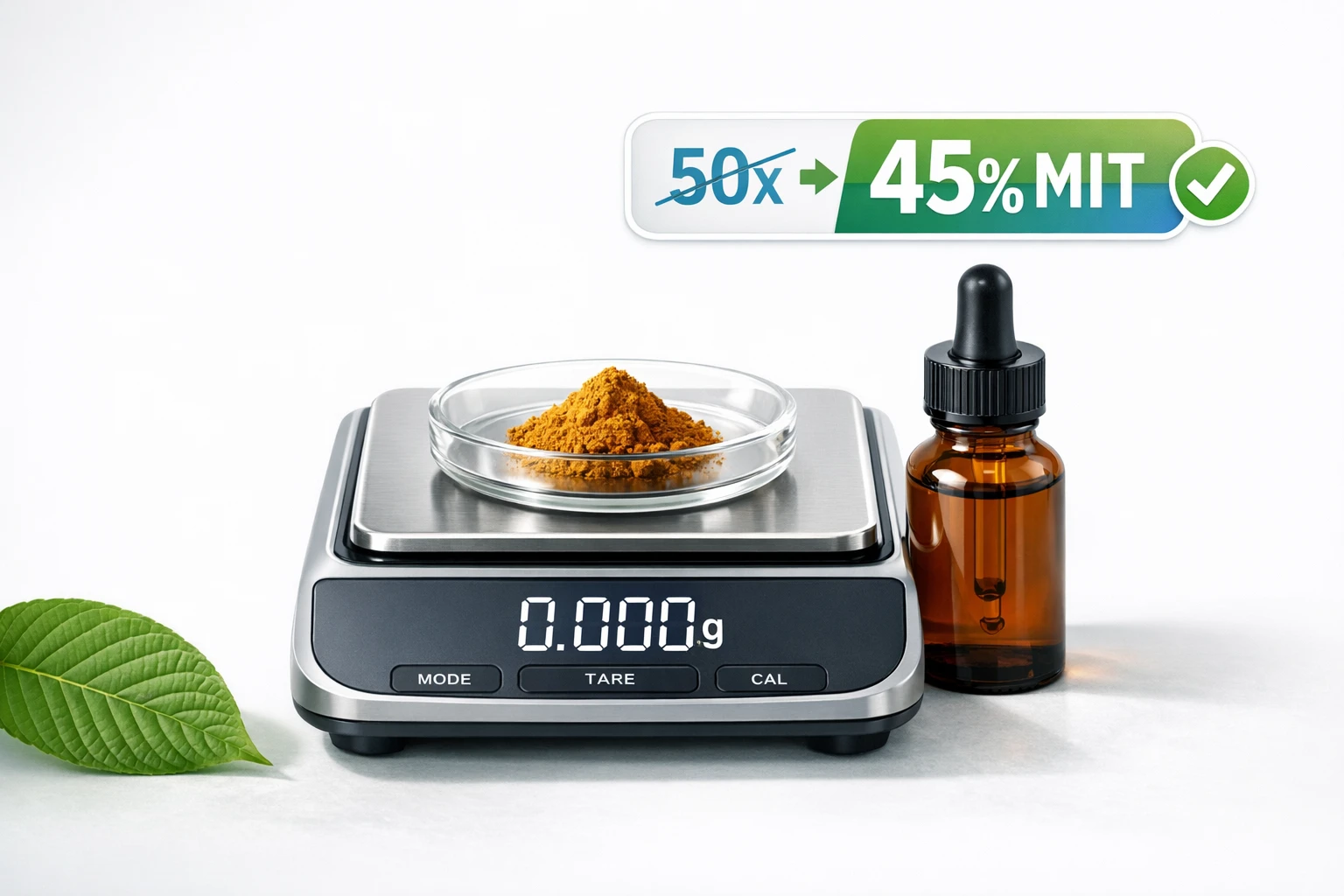
- Extract application: If you buy an extract that contains 45% Mitragynine (450mg per gram), you only need about 0.13 grams of that extract to match your standard powder dose.
The Milligram Scale Requirement
This brings us to a vital safety standard: kitchen scales and standard digital scales (measuring to 0.00g) are not precise enough for high-potency extracts. If you are handling a 90% kratom alkaloid extract, a standard scale’s margin of error could mean accidentally taking double your intended dose. You must use a true analytical milligram scale (0.000g precision) to measure safely.
Format Comparison: Making the Right Choice
When weighing the kratom powder vs extract decision, the format you choose dictates the onset speed, duration, and convenience of your experience.
- Liquid Shots and Tinctures: Offer the fastest absorption. The alkaloids are already suspended in liquid, meaning they bypass the digestion breakdown required for powders. Ideal for rapid onset, but typically the most expensive per milligram of MIT.
- Extract Powders: Offer the best Alkaloid Density Per Dollar. They are incredibly cost-efficient but require strict measurement protocols and a milligram scale.
- Enhanced Powders: The perfect middle ground. These products blend standard leaf with high-potency extract. This gives you the full-spectrum benefits of raw leaf with a standardized, predictable boost of MIT.
Frequently Asked Questions
Are extracts inherently more dangerous than regular kratom powder?
Extracts are not inherently dangerous, but they leave zero room for measurement errors. Because the alkaloids are highly concentrated, eyeballing your dose will almost certainly result in taking too much, leading to nausea or “the wobbles.” Precise measurement with a milligram scale is mandatory.
Will taking kratom extracts ruin my tolerance for plain leaf?
Yes, if abused. Extracts flood your receptors with high levels of mitragynine. If you use extracts daily without adjusting your dose down, your tolerance will skyrocket, rendering standard powder ineffective. Most experienced users reserve extracts for specific days or mix them sparingly with plain leaf.
Why do some extracts smell heavily of alcohol or chemicals?
A strong chemical odor is a massive red flag. It indicates the manufacturer failed to properly purge the residual solvents (like ethanol or methanol) used during the extraction process. Always demand a transparent COA that includes a solvent screen.
Making Confident Purchasing Decisions
Understanding the math behind kratom extracts is the line between an optimal experience and an uncomfortable one. As the industry evolves in 2026, the brands that rely on vague “50x” multipliers are being left behind by educated consumers who demand standardized alkaloid percentages and verifiable lab results.
At Kratom-Online, we eliminate the middlemen and the marketing fluff. By sourcing directly from organic farms in Southeast Asia and maintaining rigorous third-party testing protocols, we provide clear, documented, premium kratom extracts. You aren’t just buying potency; you are buying transparency, consistency, and the exact information you need to dose with confidence.